Carbon nucleophiles add to isatin and derivatives at position C-3 in most cases, and the products formed have been submitted to further transformations giving rise to a variety of heterocyclic systems.
Potassium cyanide and ammonium carbonate react with 1-alkyl377 or 1-alkenylisatins363 generating spirohydantoins. These compounds are inhibitors of the enzyme aldose reductase, and have potential use as hypoglycemic agents (Scheme 95).
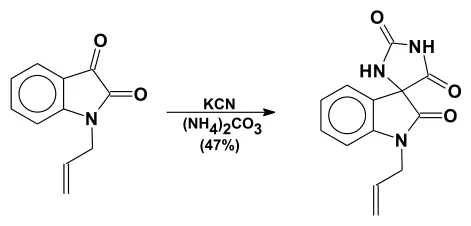
Scheme 95.
Isatins can be used as the electrophilic component in the Wittig-Horner reaction with phosphonates and furnish products resulting from attack at position C-3378,379. Other α-carboxyphosphonates380 and α-carboxyphosphites381 have also been studied and yield 3-methyleneoxindoles in moderate yields (Scheme 96).
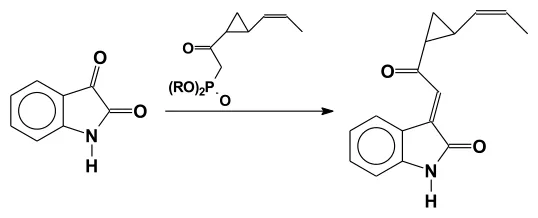
Scheme 96.
1-Alkyl- and 1-acyl- isatin react with equimolar quantities of a succinyl triphenylphosphorylidene to give dimethyl 2-oxoindolin-3-ylidenesuccinate derivatives in low yields382 (Scheme 97). Dimers of this product are obtained from the reaction of isatin-3-(4-chlorophenyl)imine with DMAD in the presence of cupric acetate383.
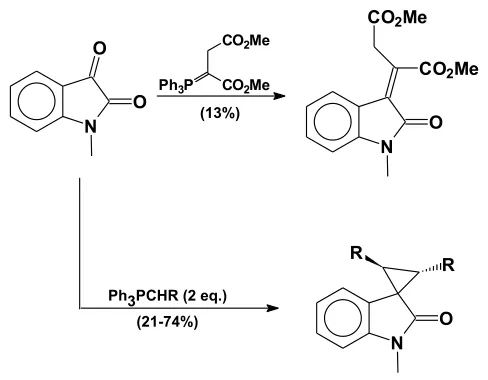
Scheme 97.
When the Wittig reaction is carried out with two equivalents of the Wittig reagent, 3-spiro-cyclopropanes are formed384 (Scheme 97).
α-Diazophosphorous derivatives also attack at the C-3 position of the isatin ring to give dioxindoles385,386 which upon treatment with acid yield the ring expanded quinolones (Scheme 98).
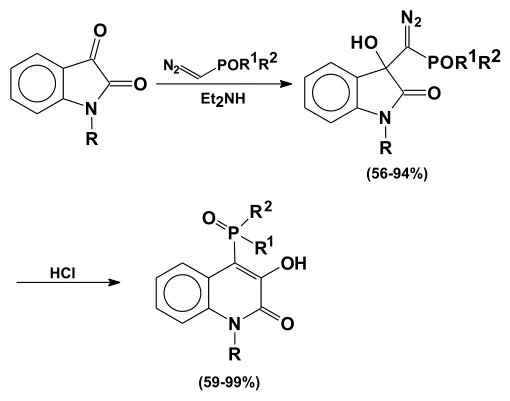
Scheme 98.
3-Alkyldioxindoles and their dehydration products, 3-methyleneoxindoles, are formed in the reactions of isatins with organoboron compounds, such as triallylboron387; organomagnesium reagents388,389; organozinc reagents390,391 and organolithium reagents392,393, such as methyllithium154. These compounds are also obtained in aldolic and related condensations with acetone394 or its oxime395; aromatic396,397 and heteroaromatic methylketones398,399; cyclic alkyl-ketones400; acetates401; propionates402; acetoacetates403; cyanoacetates404; nitroalkanes405; benzodiazepinones406; imidazolinones407; indoles408; 2-methylquinolines409; pyrazinones410; thiazolidinediones411-415 and xanthinones416 In the reaction of isatins with some cyclic ketones, such as 4-hydroxy-2H-benzopyran-2-one417, the initial dioxindole formed reacts with a second equivalent of the ketone yielding a 3,3-disubstituted oxindole.
The addition of methyl lithium to isatin-3,3-dimethylketal (3,3-dimethoxyoxindole) at room temperature for 2.5 min lead to an indolenine derivative through addition at C-2 and substitution of one methoxy group at C-3. By extending the reaction time to 3 hours, the second methoxy group was also substituted, furnishing 2,3,3-trimethylindolenine. This same product was obtained when the reaction was carried out at 0 °C, together with 3,3-dimethyloxindole418 (Scheme 99).
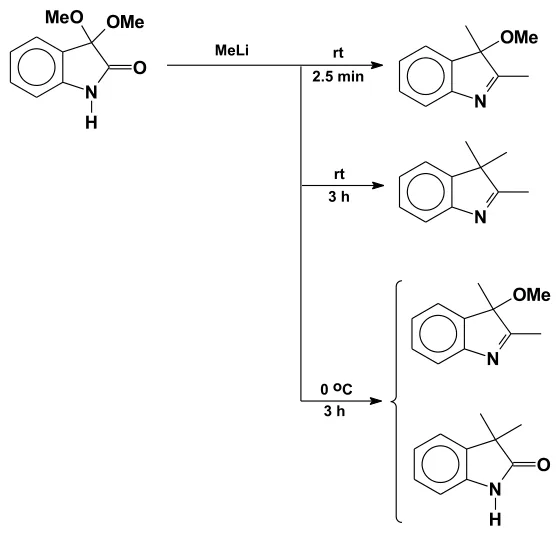
Scheme 99.
Isatins fail to yield Knoevenagel condensation products with malonic acid419. However, malonic acid can be condensed with isatin in a mixture of ethanol and pyridine, in which the initial condensation product suffers decarboxylation, furnishing an acetic acid derivative. This can be converted to the acid chloride and submitted to a Friedel-Crafts acylation reaction, yielding acetophenone derivatives420. Alternatively the oxoindolinylidene acetic acid derivative can be treated with an arene in the presence of AlCl3 to yield spiro[indoline-3,3’-indan]-2,1-dione derivatives421.
Microwave irradiation has been used for promoting the reaction of isatin with malononitrile to give 3-dicyanomethyleneoxindole and gives better results in comparison to the usual method422. The dielectric properties of this condensation product have been studied423.
The dehydration of the dioxindoles can be achieved by treatment with a mixture of HCl and AcOH424,425. The 3-methyleneoxindoles can be selectively reduced at the carbon-carbon double bond using Na2S2O4 in aqueous ethanol426,427 (Scheme 100).
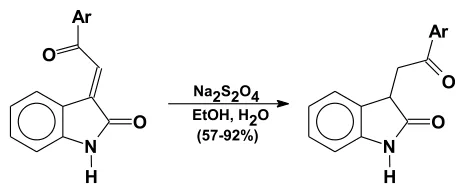
Scheme 100.
The condensation products from the reactions of isatins with cyanoacetates can be reduced at the carbon-carbon double bond with Zn dust in HCl or by hydrogenation with Pd/C. Subsequent decarboxylation can be achieved by refluxing in 2-ethoxyethanol. Further reduction of the nitrile yields an ethylamine oxindole428 (Scheme 101).
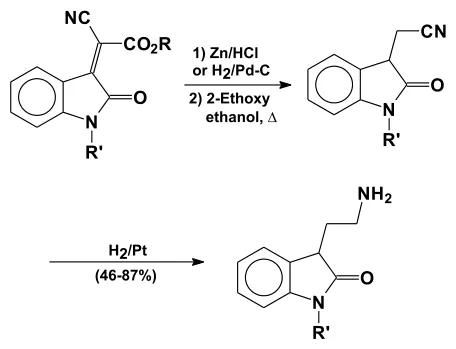
Scheme 101.
The total synthesis of the marine natural products surugatoxin429-432 and neosurugatoxin433,434 began with a Knovenagel or Knoevenagel (in the editors’ view) condensation employing 6-bromoisatin (Scheme 102).
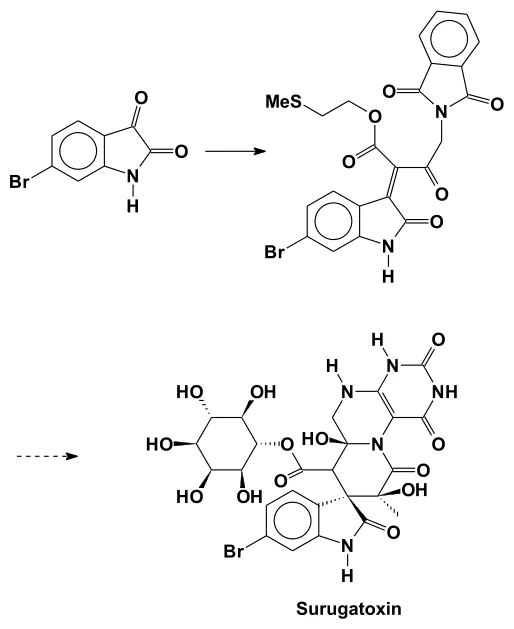
Scheme 102.
An important issue with respect to the Knovenagel or Knoevenagel (in the editors’ view) condensation is that a mixture of isomeric disubstituted 3-methyleneoxindoles can be obtained. 1H NMR measurements, including nOe experiments, and quantum chemical calculations have also shown that 3-[cyano(ethoxycarbonyl)methylene]-2-oxindoles, obtained from the reaction of isatin or from 1-methylisatin with ethyl cyanoacetate, exist as a mixture of the E and Z isomers. These experiments also revealed that the E isomer exists in equilibrium between two conformers, the trans-s-cis and trans-s-trans435 (Scheme 103).
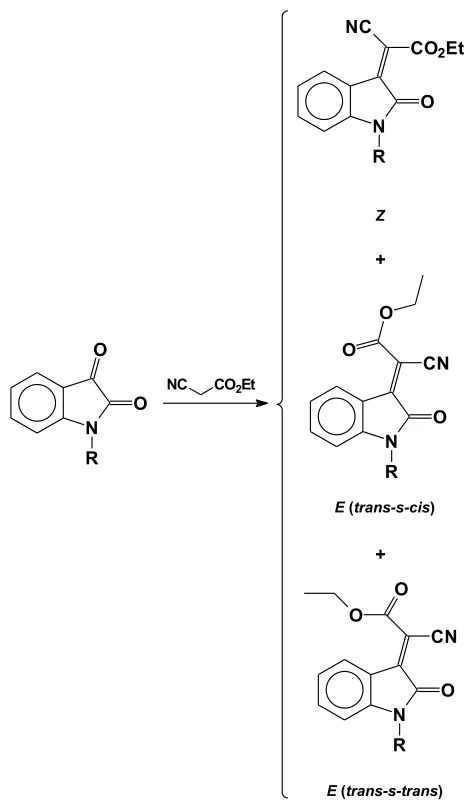
Scheme 103.
Long and co-workers have studied monosubstituted 3-methyleneoxindoles and for most of them only the E isomer could be detected. 2-Oxindolin-3-ylideneacetonitrile exists as a separable E,Z-pair, but the Z-isomer slowly isomerises when dissolved in dimethylsulfoxide436.
The Darzens reaction of isatin with ethyl chloroacetate yields glycidic esters. Alkaline hydrolysis of the glycidic esters yields indole-2,3-dicarboxylic and indole-3-carboxylic acids in a 6:1 proportion. The isolation of two isomeric glycidic esters, and the fact that both produce the indolecarboxylic acids in the same proportion led to a mechanistic proposal for the formation of the later through a common intermediate437 (Scheme 104).
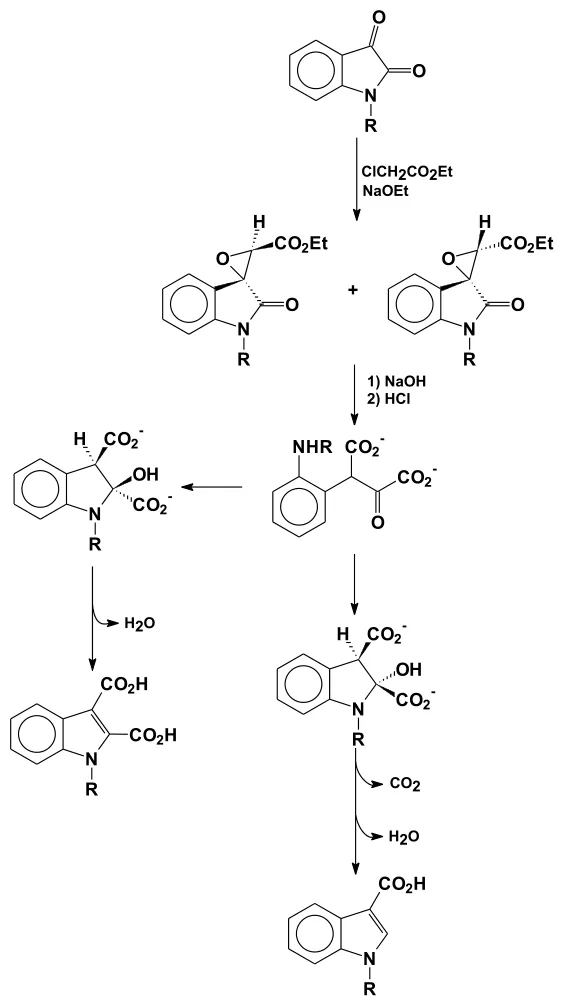
Scheme 104.
Masked carbanions, such as silanes, also react with isatins at position 3 and this methodology has been applied to the synthesis of 1,3-oxathiolanes438,439 (Scheme 105).
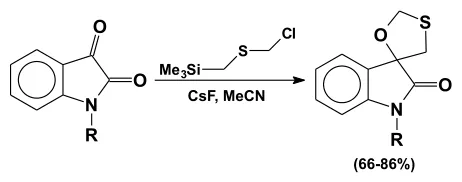
Scheme 105.
The reactions of some isatin derivatives with organometallic reagents follow reaction patterns that differ from those of isatin. Addition of phenylmagnesium bromide to isatin-3-acylhydrazones gave a product resulting from nucleophilic attack at C-2440 (Scheme 106).
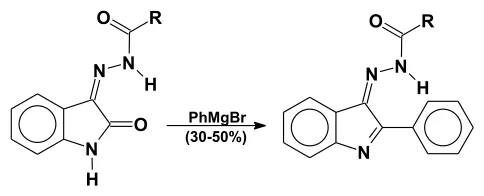
Scheme 106.
On the other hand, addition of Grignard or organolithium reagents to 1-(arylthio)isatins led to cleavage of the N-S bond and formation of the respective sulfides441 (Scheme 107).
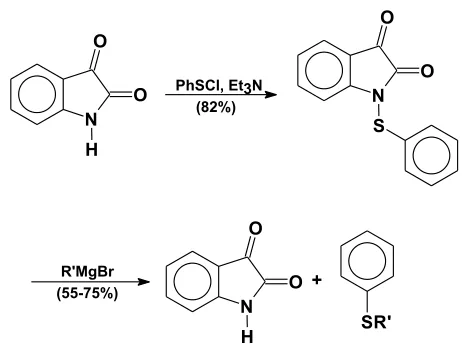
Scheme 107.
2,2-Dimethoxy-1-methylpyrrolidine adds to isatin in a unique manner furnishing an α-diketone through an intermediate α-ketoester442 and the proposed mechanism is shown in Scheme 108. When the reaction was performed with the lactam acetal, 2,2-dimethoxytetrahydroazepine, the product obtained was 1-methylisatin442, 443.
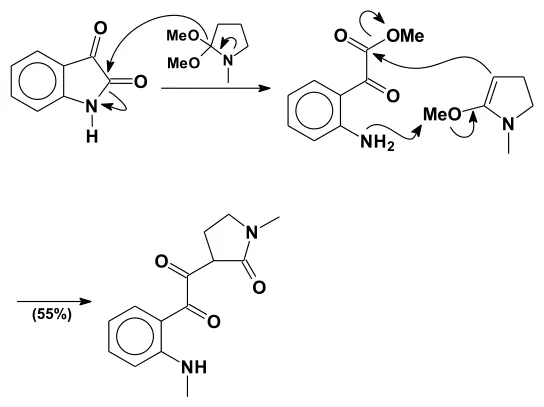
Scheme 108.
Different reaction pathways can be observed for the reaction of isatins with carbanions under photochemical or thermal conditions. Thus, the reaction of isatin and isoxazolone under thermal conditions led to addition at position C-3, whilst under UV irradiation cleavage of the isatinic N1-C2 bond occurred yielding isatic acid, which subsequently condensed with isoxazolone444 (Scheme 109).
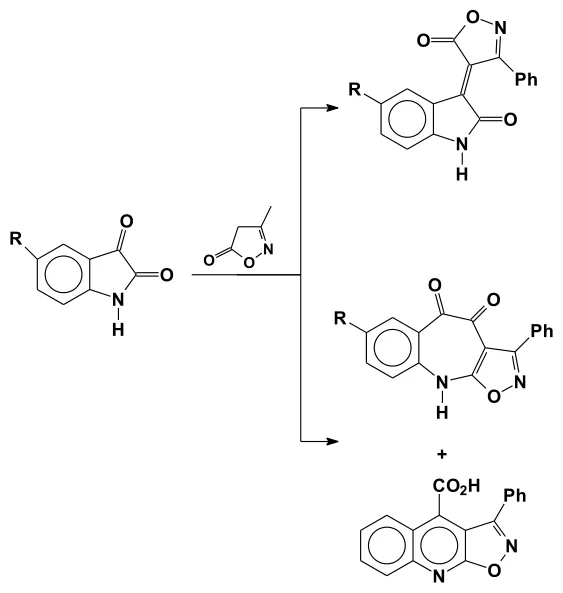
Scheme 109.
The condensation of 1-methylisatin with 1-methylindole in an acidic medium led to a 3,3-bisindolyloxindole, which after reduction to an indoline and oxidative rearrangement with DDQ, furnished a tris-indolobenzene445 (Scheme 110).
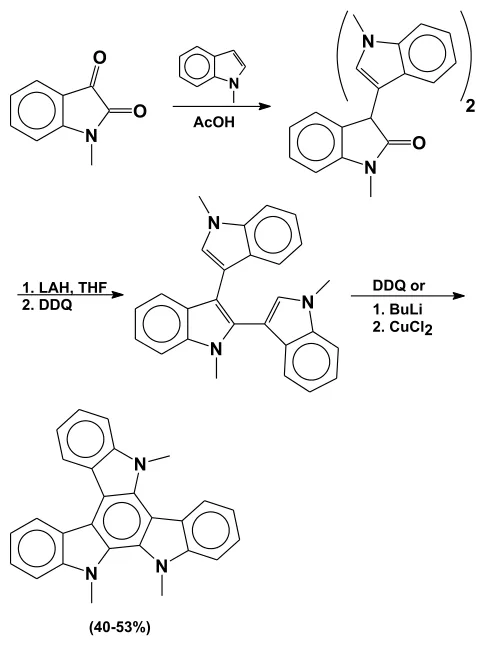
Scheme 110.
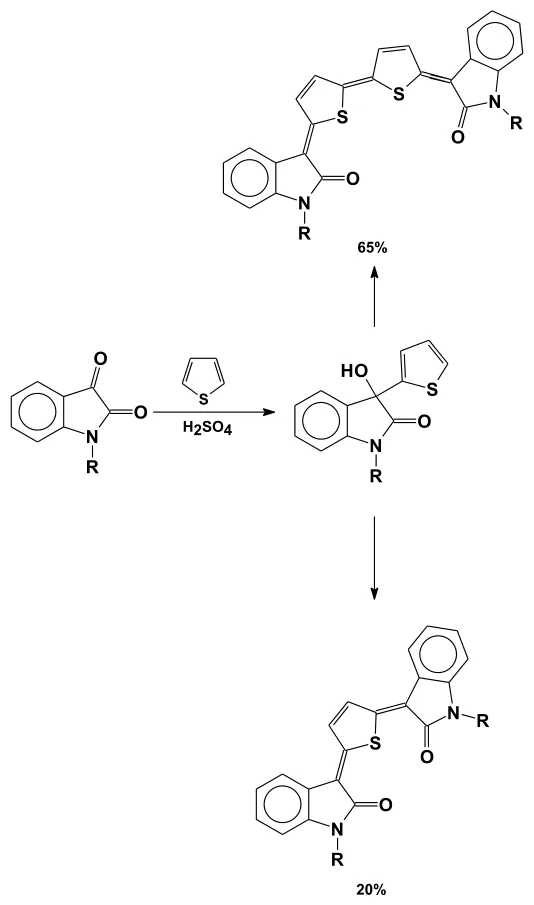
The reactions of isatin and thiophene or 2,2’-bithiophene proceed similarly to those of indoles. However, in these cases mixtures of oligomeric products were obtained446. This reaction has been applied to the synthesis of electrically conducting polymers447.
Under acidic catalysis, isatin condenses with thiophene or pyrrole to give indophenine dyes. These compounds are formed as a mixture of geometric isomers448, and may possess one or two thiophene units; the latter being the major product449 (Scheme 111).
Scheme 111.
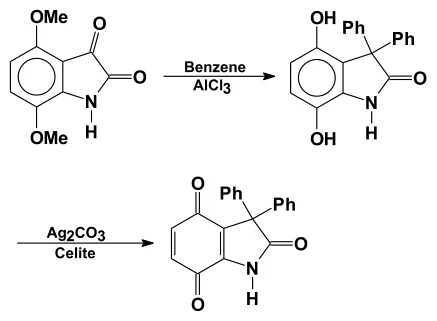
Isatin reacts with benzene and phenol under typical Friedel-Crafts conditions450, 451. The corresponding 3,3-diaryloxindoles are obtained in high yields452 and their laxative properties have been studied453. Very high yields, up to 99%, are obtained when this reaction is performed using a combination of trifluromethanesulfonic or trifluoromethanesulfonic (in the editors’ view) and trifluoroacetic acids; this methodology enabled the preparation of libraries of 3,3-diaryloxindoles by using mixtures of aromatic compounds454.
Dimethoxyisatins can be converted into 3,3-diaryloxindole quinones in two steps, by Friedel-Crafts reaction and subsequent oxidation with silver carbonate455 (Scheme 112).
Scheme 112.
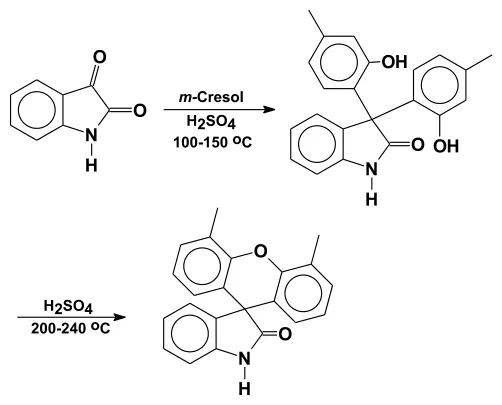
The Friedel-Crafts alkylation of isatin with m-cresol, in an acidic-medium at high temperature, yields a spiro dibenzopyran derivative due to dehydration456 (Scheme 113).
Scheme 113.
3,3-Diaryloxindoles have been used as precursors for the synthesis of thermoplastic carbonates457.
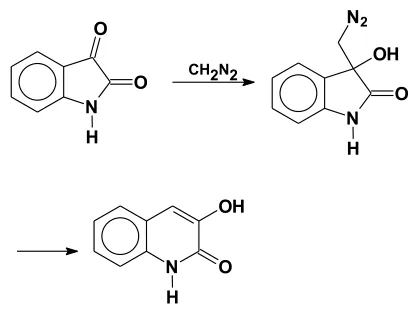
Diazoalkanes, such as diazomethane458 and diazoaryl-alkanes459,460 add to isatin at the C-3 position, leading to a carbinol that suffers a ring expansion to give the corresponding quinolone461 (Scheme 114).
Scheme 114.
Oxindolylacrylates react with diazomethane in a regioselective manner, depending on the substituent attached to the carbon atom α to the ester carbonyl group. In non-substituted acrylates, the 1,3-dipolar cycloaddition occurs furnishing a pyrazoline which, upon heating, losses or loses (in the editors’ view) N2 to give a spiro cyclopropane derivative462,463. If α-cyanoacrylates are used, the cyano group reverses the polarization of the C-C double bond, and the diazomethane addition involves initial C-C bond formation β to the ester. The adduct loses N2 to furnish a quinolone463 (Scheme 115).
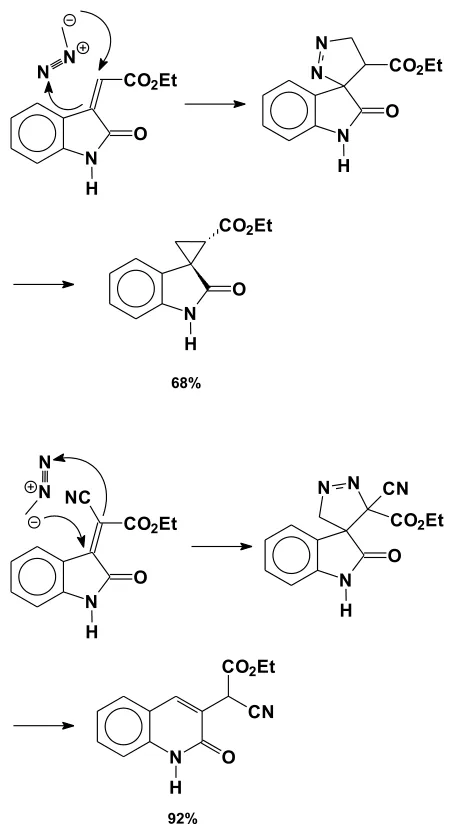
Scheme 115.
The same reaction when carried out in the presence of triethylamine gives a furoquinoline derivative464.
The O-methylether of isatin reacts with diazomethane to furnish a quinoline derivative as the major product, together with a spirooxirane derivative465 (Scheme 116). 2-Ethoxy-3-indolone suffers a thermal [2+2] cycloaddition with 1,1-dimethoxyethene, leading to an oxetane that is hydrolyzed to an indoleninylacetate in 40% yield466 (Scheme 117).
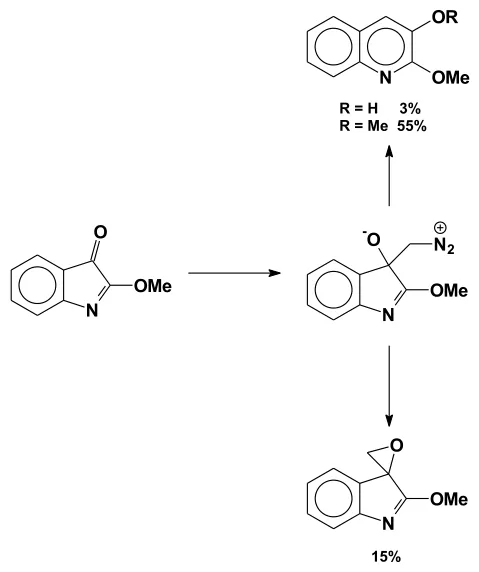
Scheme 116.
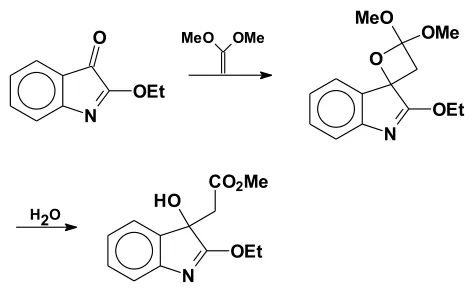
Scheme 117.
2-Oxindolin-3-ylidene derivatives, which are prepared by Knoevenagel condensations of reactive methylene compounds with isatin, can readily undergo a variety of cyclization reactions with ethyl vinyl ether or with enamines giving rise to a variety of heterocyclic systems467,468. These compounds also readily undergo Diels-Alder reactions with cyclopentadiene, to give a mixture of two diastereo-isomers469, and with unsymmetrical butadienes470,471 or with isoprene472. 2-Oxindolin-3-ylidene derivatives undergo cycloaddition with phenylnitrile oxide to yield the corresponding oxazoles462.
Isatinates, obtained from the alkaline hydrolysis of isatin derivatives, are the precursors of the quinoline-4-carboxylic acids. These compounds are prepared by the Pfitzinger reaction from isatins in the presence of enolizable keto compounds in strongly alkaline medium, such as 8 mol L−1 KOH. In these solutions, isatinates condense with the keto compound and subsequently cyclize to the quinoline products. Recently, a modified procedure has been described, using acidic conditions22. This methodology was subsequently applied to a concise manner for the preparation of derivatives of camptothecin, a topoisomerase I inhibitor23 (Scheme 118).
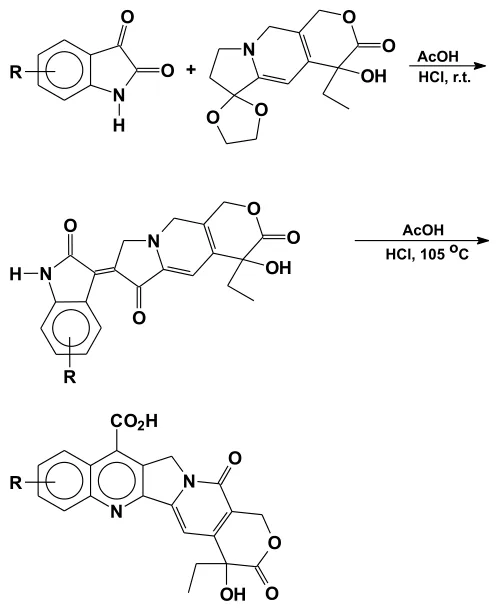
Scheme 118.
The Pftzinger or Pfitzinger (in the editors’ view) reaction has been carried out with: aliphatic ketones473, including acetone474, acetophenones and homologues475,476; chalcones477 and α-acyloxyacetophenones, which in the latter case yield 3-hydroxyquinoline-4-carboxylic acids478; heteroaromatic ketones, such as 2-acetylphenothiazine479, acid chlorides480 and anhydrides481 which furnish 2-hydroxy-4-quinoline carboxylic acids; hydrazides482 and enaminones which in the latter case furnish 4-carboxamido-quinoline-3-carboxylates, and imidines that lead to 2-aminoquinoline-4-carboxamides483 (Scheme 119); acylaminoacids and isocyanates yield 3-acylamino-2-oxo-1,2-dihydroquinoline-4-carboxamides484 (Scheme 120); lactam acetals furnish dihydropyrroloquinolines442 (Scheme 121); and diketene yields 2-quinolones485 (Scheme 122).
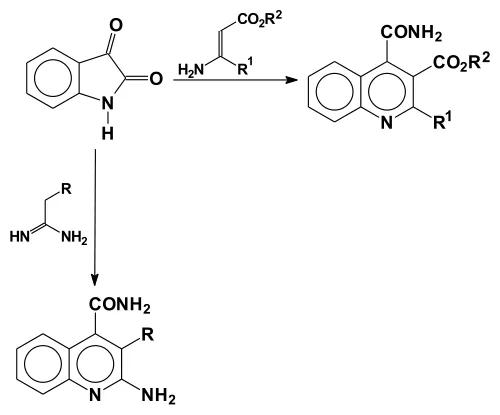
Scheme 119.
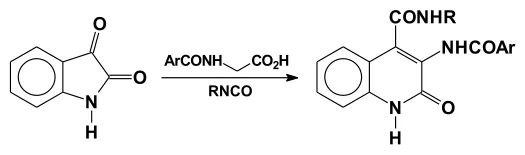
Scheme 120.
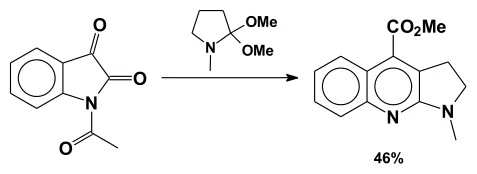
Scheme 121.
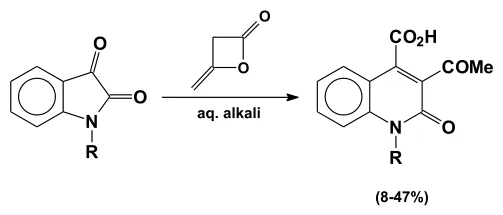
Scheme 122.
The use of ammonium hydroxide as base furnishes 4-quinolinecarboxamides486, which when subjected to Hoffman or Hofmann (in the editors’ view) degradation conditions produce 4-aminoquinolines487. 4-Cyanoquinolines are produced when the corresponding acids are treated with 4-toluenesulfonamide and POCl3488.
The Pfitzinger reaction has been used in the synthesis of methoxatine, a coenzyme of the bacterial enzyme alcohol dehydrogenase489,490 (Scheme 123) and of DuP 785, an anticancer agent491 (Scheme 124).
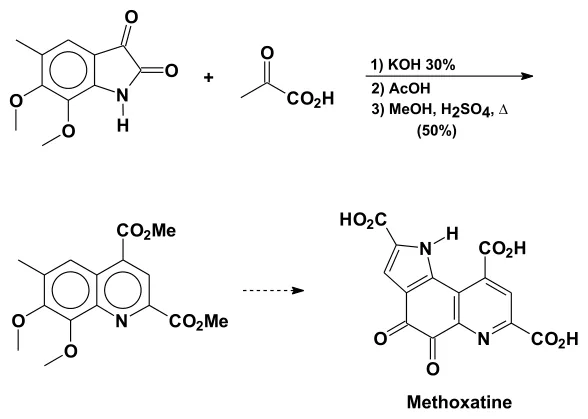
Scheme 123.
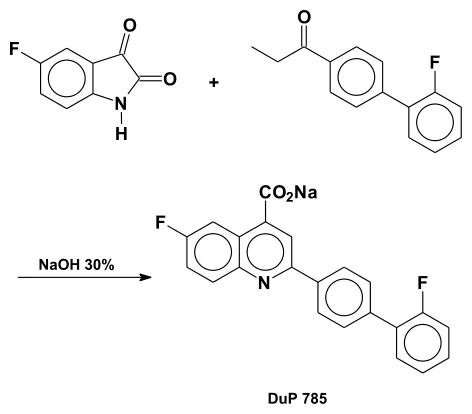
Scheme 124.
In a similar manner, the use of phenols492 or dihydro-naphthalenones493 yield acridines, which are also obtained from the treatment of N-phenylisatin with aqueous sodium hydroxide494 (Scheme 125).
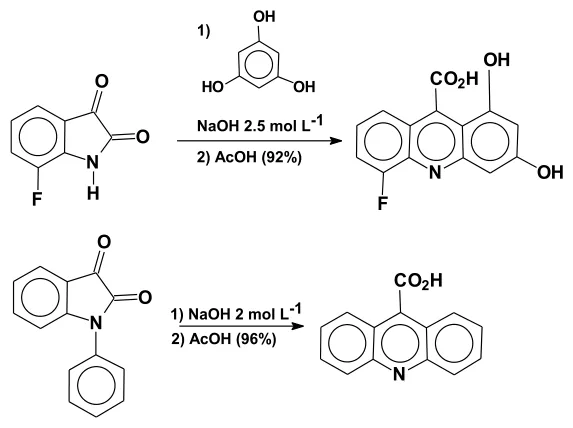
Scheme 125.
1-Acylisatins bearing at least one hydrogen atom at the α-position of the acyl group also furnish isatinates but, they react with a second equivalent of hydroxide leading to 3,4-disubstituted -2-quinolones. This heterocyclic system is also formed by treatment of 1-acylisatins with alkoxide solutions495 (Scheme 126).
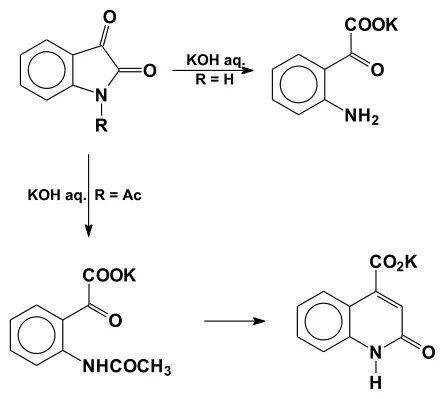
Scheme 126.
The use of N-acylisatins for the construction of quinolones has been applied to the synthesis of pyridoquinolines496 and pyrroloquinolines497 (Scheme 127).
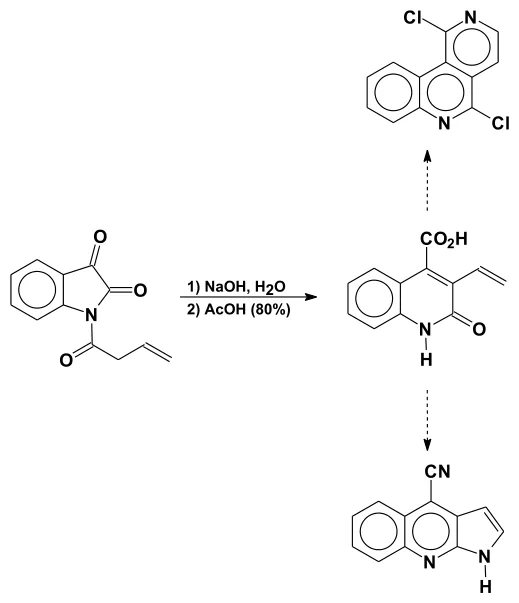
Scheme 127.
In a similar procedure, 1-iminobenzylideneisatins furnish cinnoline derivatives498 (Scheme 128):
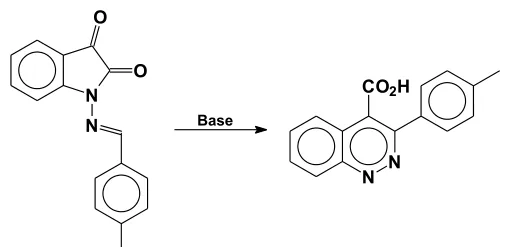
Scheme 128.
3-Dicyanomethyleneoxindoles undergo base catalyzed alcoholysis to yield the respective 2-aminoquinolines499. 3-Methyleneoxindoles also suffer ring expansion to quinolones. Mechanistic studies, based on 1H NMR data, show that isomeric methyleneoxindoles lead to the same products through a nucleophilic ring opening step and a subsequent Z-E interconversion step of the benzylidene intermediates. Due to steric repulsions the Z isomer is more stable, but as the cyclization step from the E isomer is irreversible the equilibrium is shifted towards this isomer. The presence of electron-withdrawing groups bonded to the aromatic nucleus shifts the equilibrium in the direction of the Z isomer due to a decrease in the nucleophilicity of the carbamoyl nitrogen atom, and thus favors the cyclization product that results from the Z isomer500 (Scheme 129).
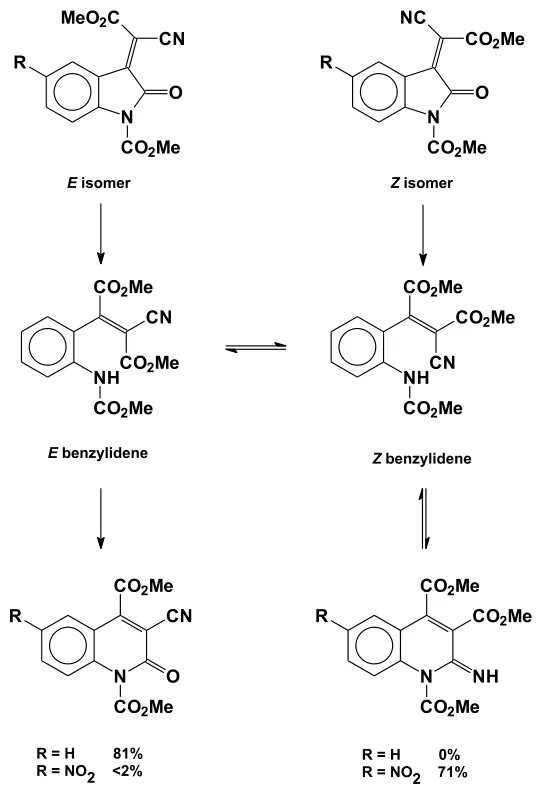
Scheme 129.
When the alkaline hydrolysis is performed with N-phenacyl501 or N-acetonylisatins502,503, 2-substituted indoles are obtained after spontaneous decarboxylation of the resultant 2-acylindole-3-carboxylic acid . The mechanism of this reaction probably involves a ring opening reaction, followed by cyclization through a Knovenagel or Knoevenagel (in the editors’ view)-like condensation504, but a very complex mechanism has also been proposed505. This methodology has many advantages over others previously described for the obtention of these indolic derivatives, due to the readily available raw materials (Scheme 130).
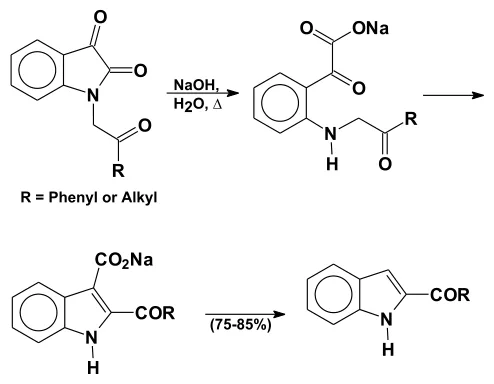
Scheme 130.