Isatins and derivatives can suffer nucleophilic attack at positions C-2 and/or C-3. The chemoselectivity of these reactions depends on the nature of the nucleophile, on the nature of the substituents attached to the isatin nucleus, and especially of those bonded to the nitrogen atom, as well as upon the solvent and temperature employed. The initial products obtained can suffer further reaction in the presence of a second nucleophilic group to give cyclization products. For didactic reasons, these reactions have been sorted by the nature of the nucleophile.
4.3.1 Amines and related compounds
a) Ammonia, hydroxylamine and hydrazine
Isatin reacts with ammonium hydroxide or ammonium acetate to furnish a mixture of compounds. Amongst these are isamic acid and its corresponding amide, isamide. Since 1877 there had been a discussion as to their structures, which in 1976 were finally elucidated, by Sir John Cornforth on the basis of chemical and spectroscopic data228. Isamic acid can be regarded as a dimer formed by the addition/condensation of one equivalent of ammonia with two equivalents of isatin. This intermediate suffers lactonization and subsequent conversion to isamic acid by an internal nucleophilic attack, where upon the acid is converted to isamide by reaction with a second equivalent of ammonia. 1-Methylisatin reacts similarly, furnishing N-methylisamic acid (Scheme 54).
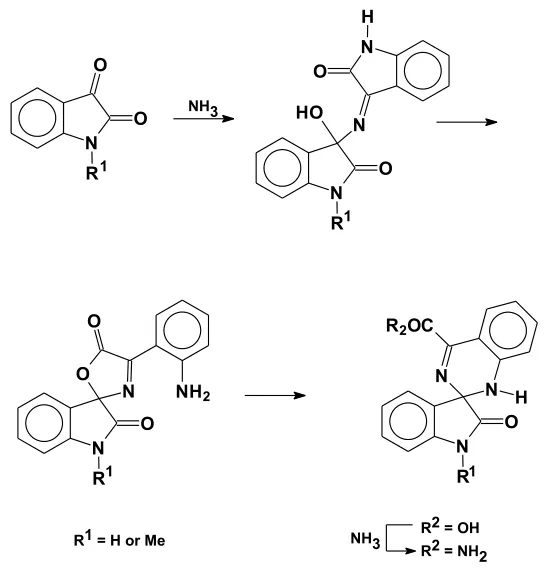
Scheme 54.
Isatin and 1-alkylisatins react with hydroxylamine or O-methyl hydroxylamine hydrochloride under aqueous alkaline conditions to furnish the corresponding 3-oximes, which have been studied as monoamine oxidase inhibitors229,230. Isatin oximes can be acylated simultaneously at the heterocyclic ring nitrogen and at the oxime oxygen by reaction with anhydrides or acid chlorides231. While these products are derived from the nucleophilic attack at the C-3 carbonyl, the reaction of N-acylisatins with the respective nucleophiles results in opening of the heterocyclic ring. The reaction of N-acetylisatin232 and N-chloroacetylisatin233 with ammonia yields products resulting from nucleophilic attack at the C-2 carbonyl that leads to heterocyclic ring cleavage. The benzoylformamides obtained in these cases further react with a second equivalent of ammonia to produce quinazoline derivatives (Scheme 55).
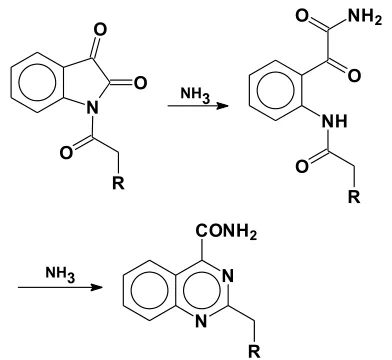
Scheme 55.
Compounds bearing the 1,4-benzodiazepine moiety have potential use as anxiolytic agents. One of the methods for the synthesis of this heterocyclic system involves the reaction of 1-α-chloroacetylisatin with hexamethylenetetramine in methanol233, thus yielding the 1,4-benzodiazepine-5-carboxylic ester via solvolysis of the N-acylisatin and the in-situ nucleophilic substitution of chloride, generating the glycine amide that subsequently undergoes cyclo-condensation (Scheme 56).
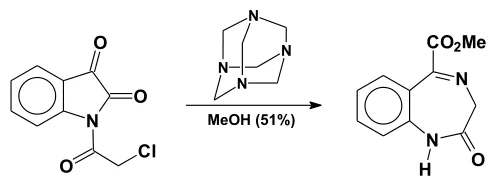
Scheme 56.
In a similar fashion, 1-acetylisatin, when reacted with hydroxylamine hydrochloride furnishes quinazoline-3-oxide through cyclization of the intermediate hydroxamic acid234. This intermediate hydroxamic acid can be isolated by treatment of the quinazoline oxide with alkali235 (Scheme 57).
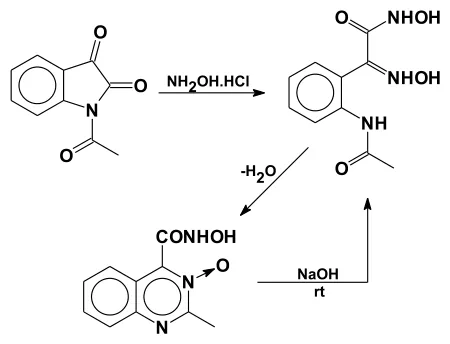
Scheme 57.
The reaction of oxalylbisisatin with O-methyl hydroxylamine hydrochloride yields the hydroxamic acid, with no further cyclization to a quinazoline occurring.
Isatin and 1-alkylisatins furnish condensation products at the C-3 position when reacted with: hydrazine236, alkyl and arylhydrazines237-239, heteroarylhydrazines derived from pyrimidine240, pyrazine241, thiazole242, 1,2,4-triazine243, quinazoline244,245, benzimidazole246,247, benzothiazole248,249, phthalazine250, triazines251,252, as well as acylhydrazides of oxalic253, benzoic254, phenoxyacetic255 and oxanilic acids256, arylsulfonylhydrazides257, guanylhydrazones258, semi-carbazines259 and thiosemicarbazides260-262.
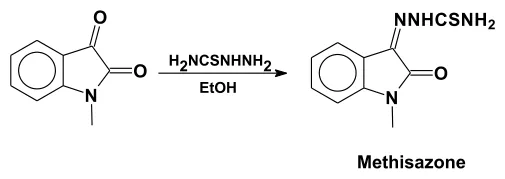
The reaction of 1-methylisatin and semicarbazone or thiosemicarbazide, as in Scheme 58 (in the editors’ view) yielded methisazone, a compound that found use in the treatment of smallpox, a viral disease that has now been eradicated263 (Scheme 58).
Scheme 58.
Isatin-3-imines also react with hydrazine derivatives such as heteroarylhydrazines264, thiosemicarbazides265 and acylhydrazides266, resulting in a substitution reaction at the C-3 position. Substitution reactions are also described to occur when O-methylisatin is treated with thiosemicarbazines, furnishing isatin-2-thiosemicarbazones91.
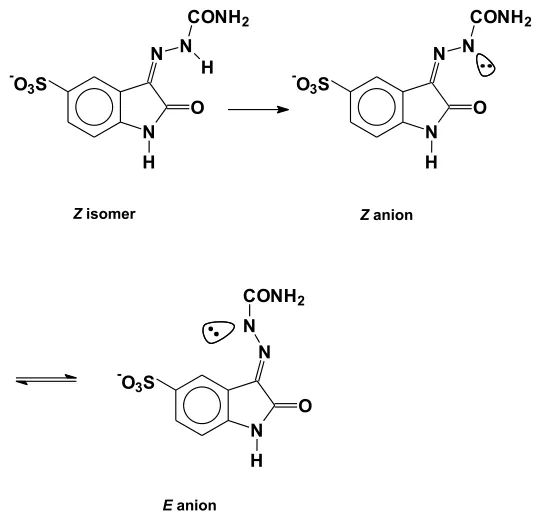
The stereochemistry of isatin-3-thiosemicarbazone-5-sulfonate was studied in aqueous solution, and in acidic pH the Z isomer was determined to be the most stable, but after deprotonation, the corresponding anion slowly converted to the E isomeric anion267 (Scheme 59).
Scheme 59.
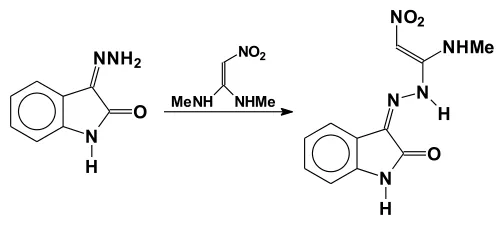
Isatin hydrazones and thiosemicarbazones can also be used as substrates for the Mannich reaction, leading to functionalization at N-1268,269. Isatin-3-hydrazone reacts with 1,1-dimethylamino-2-nitroethene to give a transamination product270 (Scheme 60).
Scheme 60.
The reactions of 1-acyl or 1-arylsulfonylisatins with hydrazines, thiohydrazides and thiosemicarbazine derivatives are dependent on the nature of the nucleophile and on the reaction conditions. These reactions can lead to products of nucleophilic attack at C-2 and/or C-3. 2-Hydrazinopyridine and quinoline in aq. PrOH/AcOH271, bis-thiazolidine hydrazones in refluxing AcOH272 and thiocarbohydrazine in aqueous EtOH273,261 react with 1-acetylisatin to furnish solely the products of attack at the C-3 ketone group. The same occurs with the use of N-acetylhydrazide hydrochloride in dioxane, while the reaction of the free base in EtOH leads to the product resulting from attack at the C-2 position, giving a ring opened derivative, together with a small quantity of 1-acetylisatin-3-acetylhydrazone274. 1-(4-Nitrobenzoyl)-isatin reacts with guanidine in the presence of sodium ethoxide to yield the ring opened product275.
The results described by Tomchin are far more complex than those described above. It has been stated that 1-acetylisatin reacts with thiosemicarbazide to furnish the corresponding isatin-3-thiosemicarbazone, together with a small portion of the ring opened product that results from attack at C-2. The yield of the latter product increases as the solvent is changed from ethanol to dimethylacetamide and to AcOH, whilst none of the ring opened product is obtained using dioxane. On the other hand, when the same solvents were used in the reaction of 1-butyrylisatin with thiosemicarbazides, the only product formed was the corresponding 3-thiosemicarbazone. A further conflicting result is that of 1-tosylisatin which behaves similarly to 1-acetylisatin in its reaction with thiosemicarbazides, but when using dioxane as the solvent the major product is that due to ring opening109. The reaction of 1-acetyl-5-bromoisatin with thiosemicarbazine in EtOH yielded only the corresponding 3-thiosemicarbazone, while in acetic acid a mixture of products resulting from attack at C-2 and C-3 was observed, the former being favored276. Both products were also formed in the reaction of 1-acetylisatin with thioacylhydrazides in AcOH277.
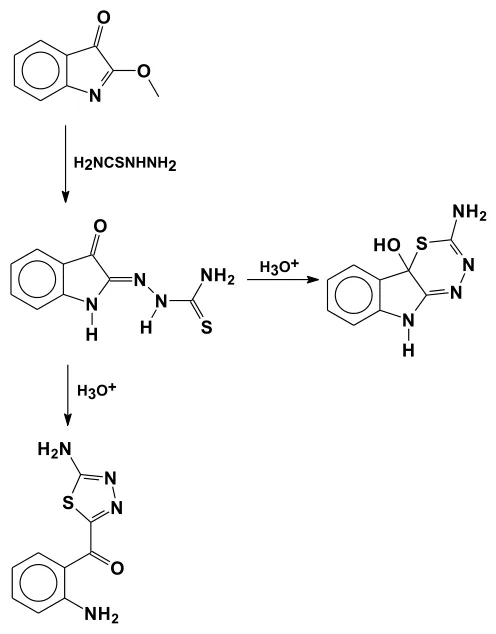
Tomchin and coworkers also described that O-methylisatin reacts with thiosemicarbazine to furnish isatin-2-thiosemicarbazone, which can undergo a cyclization reaction under acidic conditions to furnish a thiadiazanoindole derivative92; the kinetics of the reaction were subsequently determined278. Later, Tomchin also described that isatin-2-thiosemicarbazones suffer a cleavage reaction of the five member ring, and that the intermediate formed recyclizes to a thiadiazole derivative279 (Scheme 61).
Scheme 61.
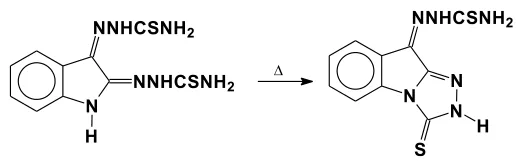
Isatin-2,3-thiosemicarbazone was reported to be produced only from isatin-2-thiosemicarbazone and thiosemicarbazine; direct reaction of isatin with an excess of thiosemicarbazine gives only the C-3 substituted oxindole. The isatin-2,3-thiosemicarbazone cyclizes to a thiotriazinoindole derivative when heated280 (Scheme 62).
Scheme 62.
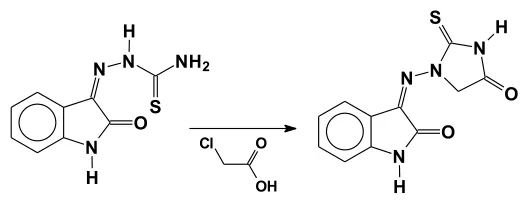
Isatin-3-thiosemicarbazones are useful substrates for the synthesis of other 3-substituted oxindoles. For example, they can be converted to thiohydantoin or thiazolidine derivatives by reaction with chloroacetic acid281 (Scheme 63).
Scheme 63.
b) Alkylamines
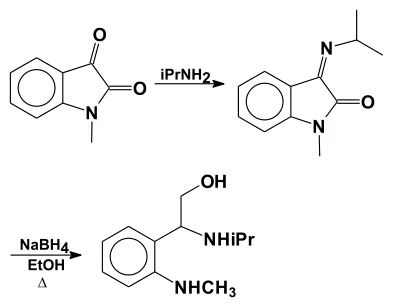
The reaction of isatin and 1-alkylisatins with primary alkylamines yields the corresponding 3-imines, which upon reduction with sodium borohydride in hot ethanol yield phenylethanolamine derivatives282 (Scheme 64).
Scheme 64.
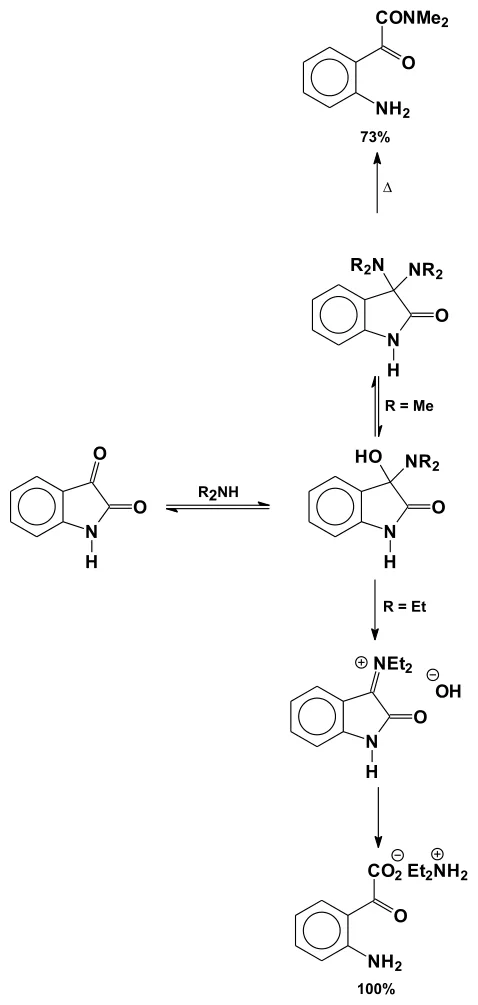
Secondary alkylamines react with isatin to give one to one adducts, as a result of the nucleophilic attack of the amine at position C-3. In the case of dimethylamine a second equivalent of amine added, leading to a 1:2 adduct as the kinetic product; upon heating the ring opened glyoxamide is formed. Diethylamine and higher non-cyclic amines only give the 1:1 adduct, probably due to steric hindrance, which decompose to dialkylammonium benzoylformates283 (Scheme 65).
Scheme 65.
On the other hand, the reaction of isatin with N,N-dimethylethylenediamine in water yields the spiro-diazolaneoxindole whereas the corresponding condensation reaction performed by azeotropic distillation in toluene yielded the unusual 2:1 adduct as the result of the addition of an unstable azomethine ylide to isatin283 (Scheme 66). The decarboxylation of α-aminoacids catalyzed by isatin in aqueous media has been studied as a model for the enzymatic decarboxylation of these compounds. As a result, phenylglycine yields benzaldehyde and benzoic acid as products, but the efficiency of isatin is far lower than that of methoxatin (PQQ), the coenzyme of several alcohol and amine dehydrogenases. The redox cycle for methoxatin is proposed to proceed as below284 (Scheme 67):
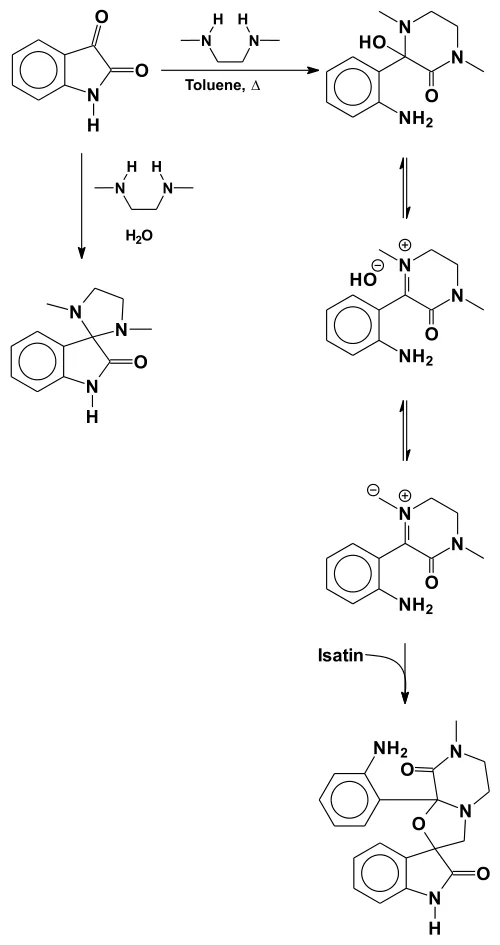
Scheme 66.
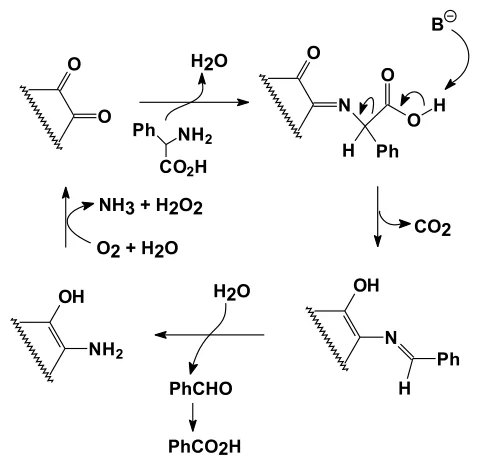
Scheme 67.
Pipecolic acid, a cyclic aminoacid, when reacted with isatin suffers decarboxylation furnishing an azomethine ylide, which reacts with dipolarophiles such as fumaronitrile to yield spiro derivatives285 (Scheme 68).
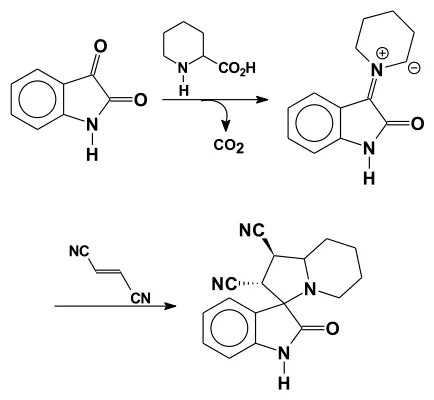
Scheme 68.
Proline and isatin also furnish an azomethine ylide. This reactive reacts regio- and stereo-selectively with acrylates, such as (1R, 2S, 5R)-menthyl acrylate, to yield a mixture of diastereoisomers. The structure of the major diastereoisomer was determined by X-ray crystallography and the following transition state was proposed for its formation286 (Scheme 69):
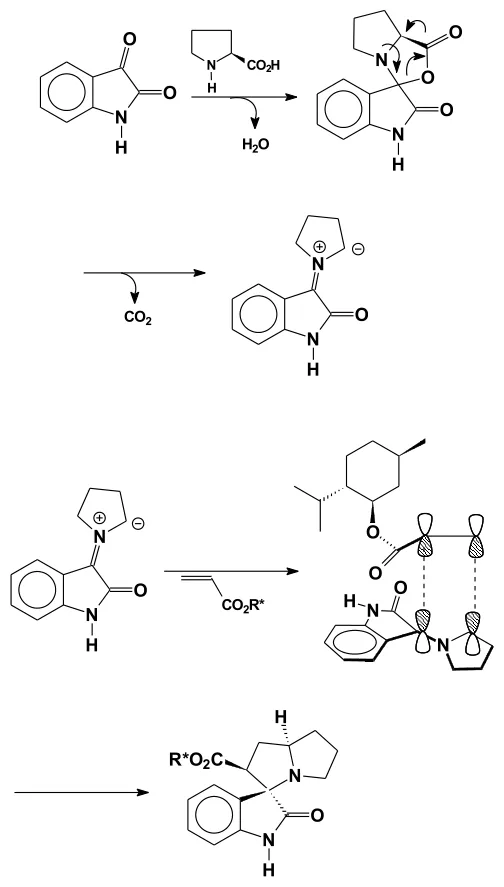
Scheme 69.
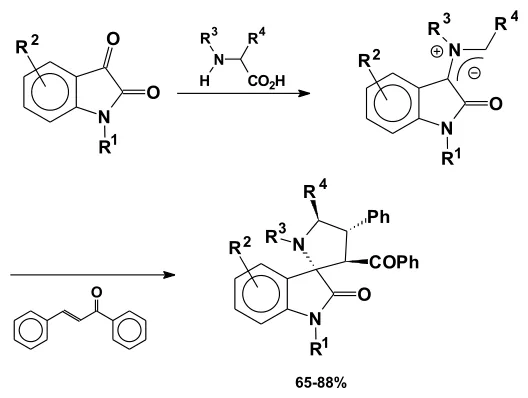
Similar processes can be found in the reactions of isatin with pyrrolidine or benzylamine and methyl acrylate287,288, with sarcosine or glycine and oxoindolin-3-ylidene acetophenones289 and with phenylglycine and acenaphthylene290. The reaction of an unstable azomethine ylide and a chiral oxoindolin-3-ylidene acetate ester resulted in an asymmetric synthesis of the oxindole alkaloid horsfiline291. This reaction has also been employed in the construction of a molecular library of spiro[pyrrolidine-2,3’-oxindoles] from isatin, aminoacids and chalcones292,293 (Scheme 70).
Scheme 70.
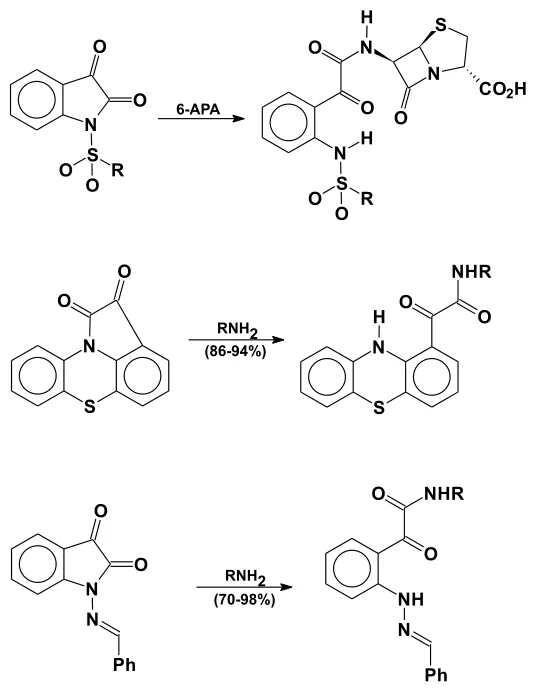
The reaction of alkylamines with 1-acylisatins results in heterocyclic ring opening to yield 2’-acylamido-benzoylformamides294,295. These can be reduced to mandelic acid derivatives with NaBH4 or LiAlH4296. Under acidic conditions, the 2’-acylamidobenzoylformamides regenerate isatin63.
Products arising from the opening of the heterocyclic ring are also obtained with 1-alkylsulfonylisatins297, 1,2-dioxo-1,2-dihydropyrrolophenothiazine298 and 1-imino-benzylideneisatin299 (Scheme 71).
Scheme 71.
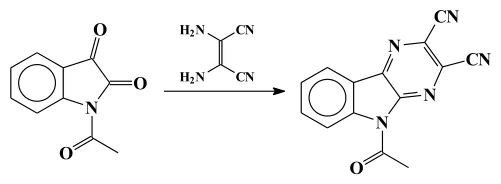
In contrast the reaction of N-acetylisatin with diaminomaleonitrile has been reported to produce a pyrazinoindole300 (Scheme 72).
Scheme 72.
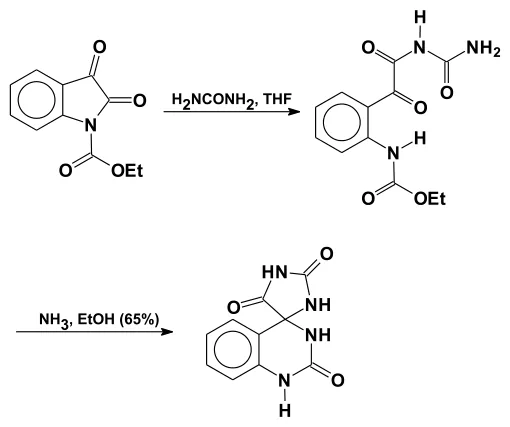
Isatin-1-ethylcarbamate and urea yield a ring-opened product, which after treatment with ammonia yields a spiro hydantoinquinazolone301 (Scheme 73). Similarly, 1-carboxamidoisatins furnish quinazolones upon treatment with thiourea derivatives302 (Scheme 74).
Scheme 73.
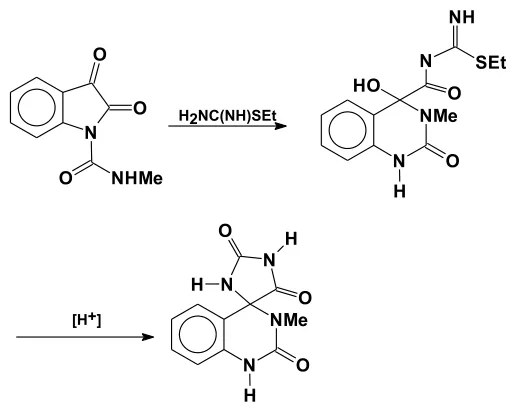
Scheme 74.
c) Anilines and heterocyclic amines
As with alkylamines, isatin303,304, 1-alkylisatins305, 1-hydroxyisatin306 and 1,2-dioxo-1,2-dihydropyrrolo-phenothiazine298 lead to the corresponding 3-imines when treated with anilines or heteroarylamines307. These imines can be acylated308 or they may participate in the Mannich reaction and thus yield N-1 substitution products309,310, although exchange of the imino group can also occur311. Upon reaction with N,N’-thionyldiimidazole, isatin and 1-methylisatin furnish the substitution product resulting from the addition of two imidazole groups at position C-3. These compounds were found to possess antimycotic activity312 (Scheme 75).
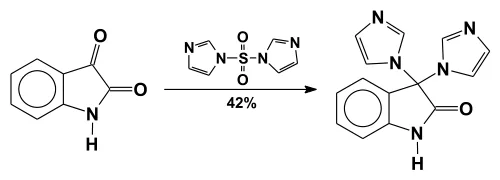
Scheme 75.
Isatinyl-N-oxide, obtained from 1-hydroxyisatin, yields the corresponding 2-imino derivative when reacted with anilines or with aliphatic amines313 (Scheme 76).
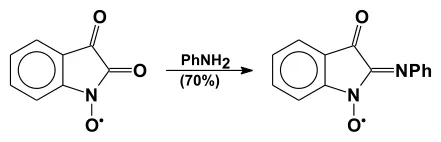
Scheme 76.
The reaction of isatins with ortho-phenylenediamines gives indophenazines, 3-iminoisatins and/or spirobenzimidazolines, the proportion between them being affected mostly by the solvent polarity. Indophenazines were obtained in yields of 89% by treating isatins and ortho-phenylenediamines in acetic acid314-317; isatin-3-imines were obtained when using THF, benzene (90% yield) or MeOH (50% yield), together with indophenazines. Isatin-3-imines are converted to the corresponding indophenazines by treatment with AcOH318. These imines have been studied as hair dyes319. The use of the polar aprotic solvent N,N-dimethylacetamide, and high temperatures yields spirobenzimidazoles in high yields320. A summary of these reactions is depicted in Scheme 77.
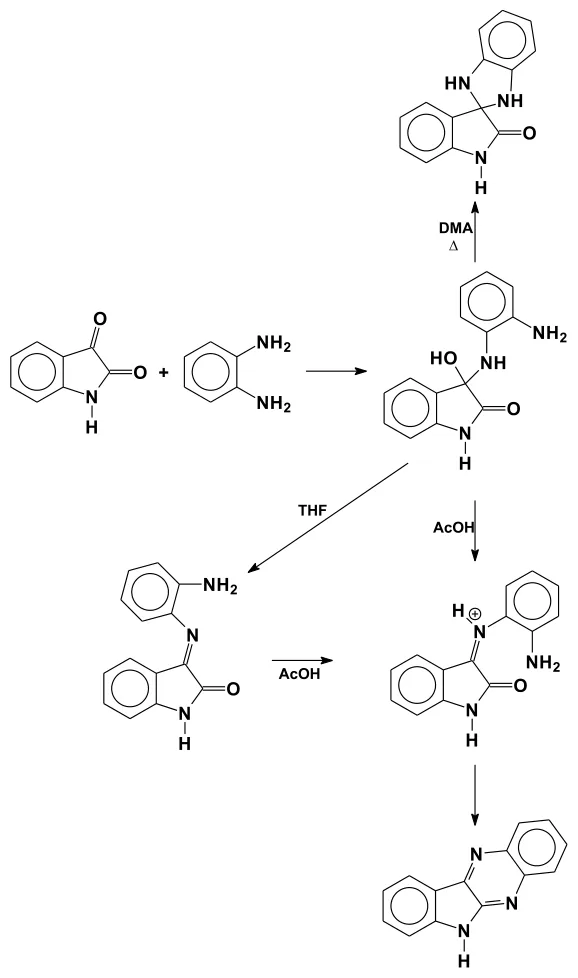
Scheme 77.
These findings can be rationalized by consideration of a common intermediate. An intermediate carbinolamine could undergo either a nucleophilic substitution reaction, probably through an ionization step facilitated by the high temperature and by assistance from the nitrogen lone pair to form the spiro compound in dimethylacetamide, or the intermediate may suffer dehydration in apolar solvents to form the corresponding isatin-3-imine. This imine can undergo facile syn-anti isomerization upon protonation in acetic acid and thus yields the indoloquinoxaline derivative321.
A number of indophenazines have been applied to the synthesis of photoconductor polymers322.
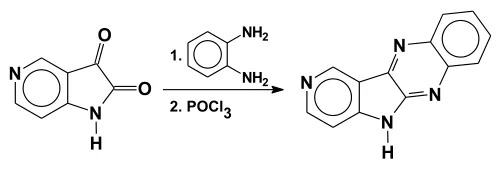
Reaction of 5-azaisatin with o-phenylenediamine yielded a pyridopyrroloquinoxaline50 (Scheme 78).
Scheme 78.
Other diamines, such as 2,3-diamino-4(3H)-quinazolone323 and 2,3-diaminobenzoic acid324, behave similarly to ortho-phenylenediamine when reacted with isatin.
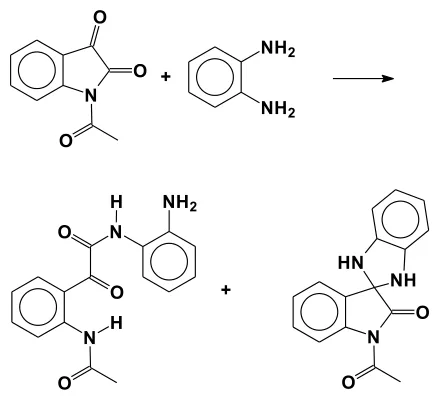
When the reaction is carried out with 1-acylisatins, ring opened products are formed using benzene, acetic acid or ethanol as the solvent325-329. However, it has been reported that with the latter two solvents a spiro benzimidazole derivative is also formed330. The formation of ring opened products has also been reported to occur when using alkyldiamines331 (Scheme 79).
Scheme 79.
Likewise, the reactions of 1-acylisatins and anilines296 or N-methylanilines332 led to ring opened products, but one report states that 4-arylthio and 4-arylsulfonylanilines react with 1-acetylisatin to furnish 3-imines333.
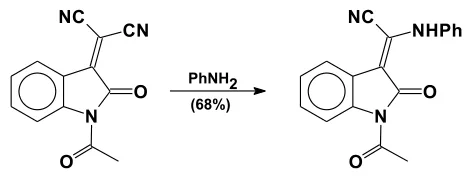
1-Acetyl-3-dicyanomethyleneisatin undergoes a substitution reaction with aniline, in nonpolar solvents, leading to a cyanoenamine334 (Scheme 80).
Scheme 80.
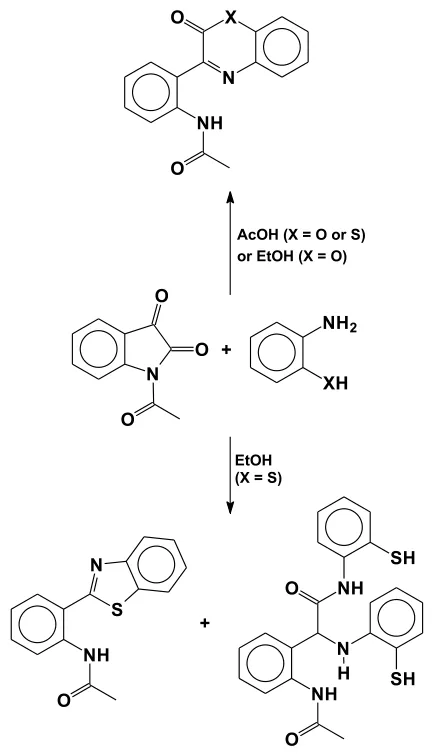
The reactivity of isatin derivatives towards ortho-aminophenol and ortho-aminothiophenol has been the subject of a number of reports and some of the products obtained are quite intriguing. The first report attests that 1-acetylisatin reacts with o-aminophenol to furnish a ring opened product in ethanol as well as in AcOH. The same result occurred with o-aminothiophenol in acetic acid, whilst in ethanol two different products were formed in a disproportionation reaction, as can be inferred from the change of the oxidation state of what was the 1-acetylisatin C-3 ketone group. The structures were assigned based upon spectroscopic data and, for the benzothiazole derivative, on comparison with a sample obtained by a different route335 (Scheme 81).
Scheme 81.
Subsequent reports336-338 on the reactivity of isatins toward o-aminothiophenol reported that isatin furnishes a benzothiazinone (18%), due to attack at the C-2 position, and a spirobenzothiazole (10%), due to attack at C-3, when the reaction is carried out in dry xylene in the presence of anhydrous ZnCl2 at room temperature. If the same reaction is carried out under reflux, the products formed are the benzothiazinone (20%), the spiro benzothiazole (40%) and an indolobenzothiazide (15%). 1-Acetylisatin, under the same reaction conditions furnishes, at room temperature, the corresponding ring opened product (20%), which can suffer deacetylation (15%), whereas under reflux these products (40 and 30%, respectively) are accompanied with the spiro compound (5%). 1-Methylisatin reacts only at reflux furnishing solely the spiro compound (42%) (Scheme 82).
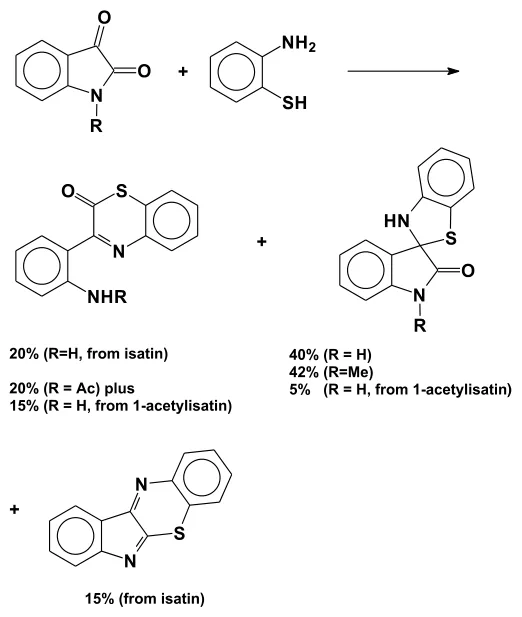
Scheme 82.
The reactions of these compounds with o-aminophenol occur only at reflux. In the case of isatin, the formation of a ring opened product (25%) occurs along with the 3-imino derivative (30%), whilst 1-acetylisatin furnishes solely a ring opened product (48%). Characterization of the products was based upon their mass, IR, 1H and 13C NMR spectra (Scheme 83).
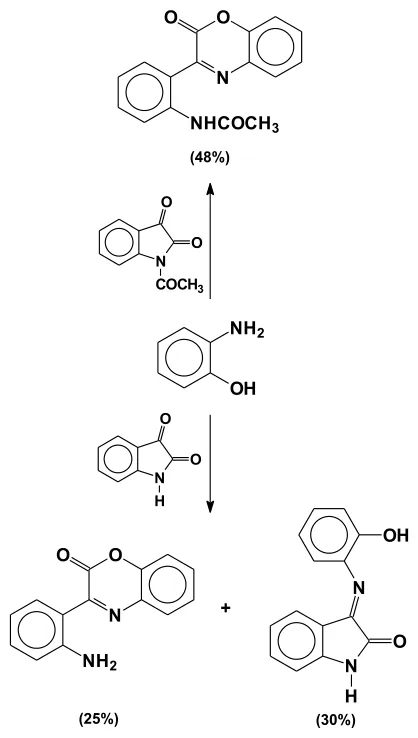
Scheme 83.
The reaction of 5-fluoroisatin with o-aminophenol under the same conditions as the previous study was reported to result in the formation of a heterocyclic ring opened product and a nine membered ring compound. The isomeric 6-fluoroisatin was reported to furnish, apart from these two products, the corresponding 3-imine. The acetylated fluoroisatins behave similarly to 1-acetylisatin, giving rise to the ring opened product339 (Scheme 84).
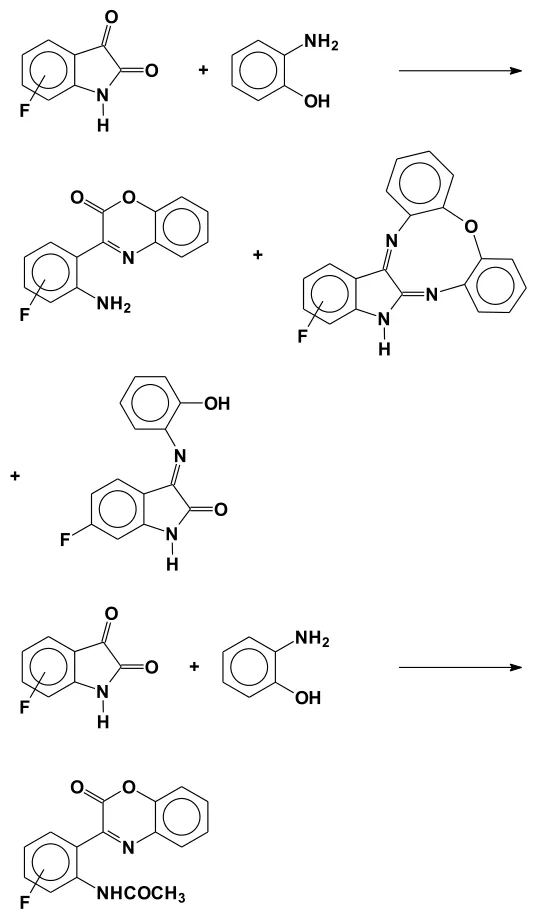
Scheme 84.