Jean-Pierre Senet - The Recent Advance in Phosgene Chemistry
L-2-Oxothiazolidine-4-carboxylate (OTC) :
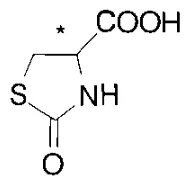
is a non-toxic precursor of cysteine proposed as a prodrug capable of penetrating into living cells. Therefore, its orally or parenterally administering to humans provides a method of restoring the glutathione level of numerous tissues where 5-oxoprolinase is present, especially in the liver (Ref. 271). In HIV-seropositive patients, it was proved to increase the levels of gluthatione, the lack of which is suspected to be a factor of their immunodeficiency (Ref. 272).
OTC is available by several methods, among them the reactions of phosgene (Ref. 273) or more recently triphosgene (Ref. 274), with L-Cysteine or L-Cysteine methyl ester appear the more convenient.
We developed at a laboratory scale a biphasic phosgenation process from L-Cysteine hydrochloride at controlled pH as depicted in scheme 222 (Ref. 275).
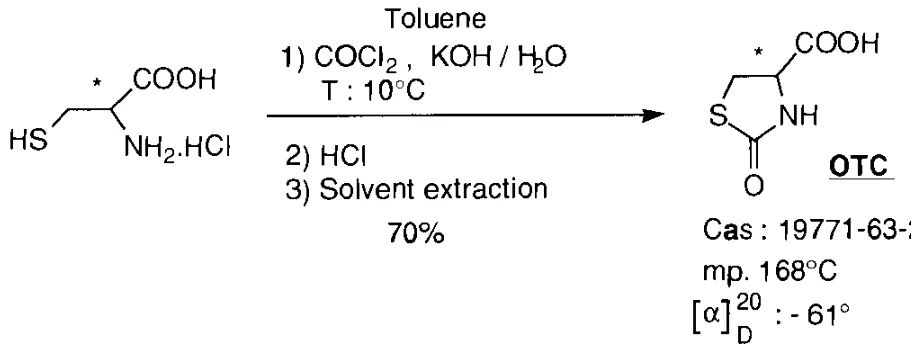
Scheme 222. Preparation of OTC by phosgenation.
It is noteworthy that OTC can have other types of pharmaceutical applications than the delivery of cystein into the human body. For example, nitrated derivatives of OTC were recently patented as valuable coronary vasodilators which replace nitroglycerin without having its disadvantages (Ref. 276). An example of synthesis of these new interesting pharmaceuticals is given in scheme 223.
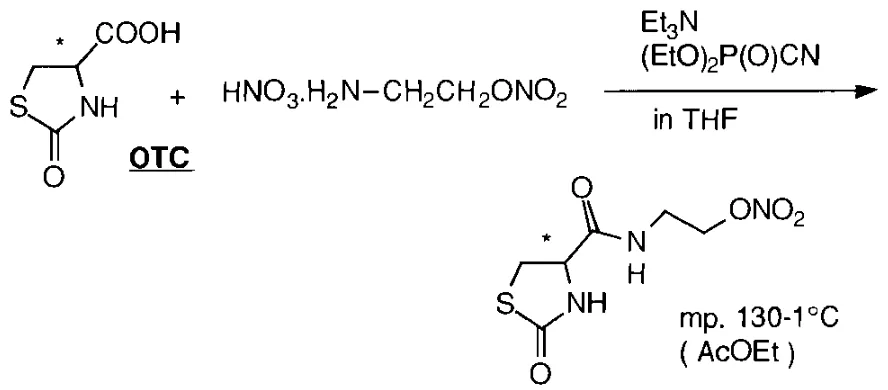
Scheme 223. Preparation of a nitrated derivative of OTC as a vasodilator.
This is the end of volume 1 mainly dedicated to the use of phosgene and its direct derivatives as building blocks providing the carbonyl group in organic molecules.
Obviously, several major topics related to this type of applications are inadequately discussed or even purely and simply forgotten. Please forgive me for these inadequacies which are not at all intentional.
Also, the reader wiil or will (in the editors’ view) understand that some sensitive subjects have been deliberately omitted for confidentiality reasons.
It is obvious that substantial work remains to be done and it is the author's secret hope that this first volume will serve as a catalyst to open the way to new research on the chemistry of phosgene.