Jean-Pierre Senet - The Recent Advance in Phosgene Chemistry
As part of our program concerning the study of safe alternatives to the handle of the extremely hazardous methyl isocyanate (MIC), we were interested in the development of new routes to 3,5-dioxo-1,2,3-oxadiazolidine derivatives which are valuable as pharmaceuticals and agrochemicals.
In a typical example, we developed a new synthetic strategy that does not use MIC for the preparation of the herbicide Methazole. Methazole was classically made through the reaction of MIC with 3,4-dichlorophenyl hydroxylamine followed by treatment with methyl chloroformate and cyclisation as shown in scheme 150.
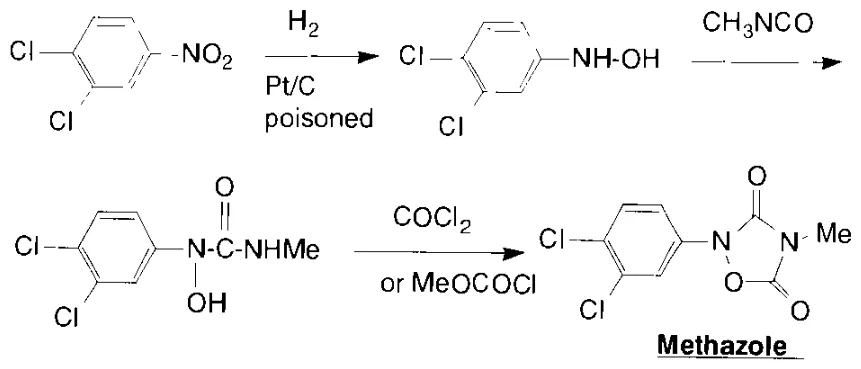
Scheme 150. Classical synthesis of the herbicide Methazole.
In our laboratories, the reaction of phosgene with methyl N-methyl carbamate by an improvement of the procedure described in the literature (Ref. 208) afforded methyl N-chlorocarbonyl-N-methyl carbamate (I) in high yield. The one-pot condensation of the intermediate (I) led to Methazole in excellent yield as depicted in scheme 151.
For safety reasons, we thoroughly studied the thermal stability of the intermediate (I). We found that it decomposes to methyl isocyanate on heating, very slowly when pure, more rapidly and quantitatively in presence of a nucleophile, according to the mechanism depicted in scheme 152.
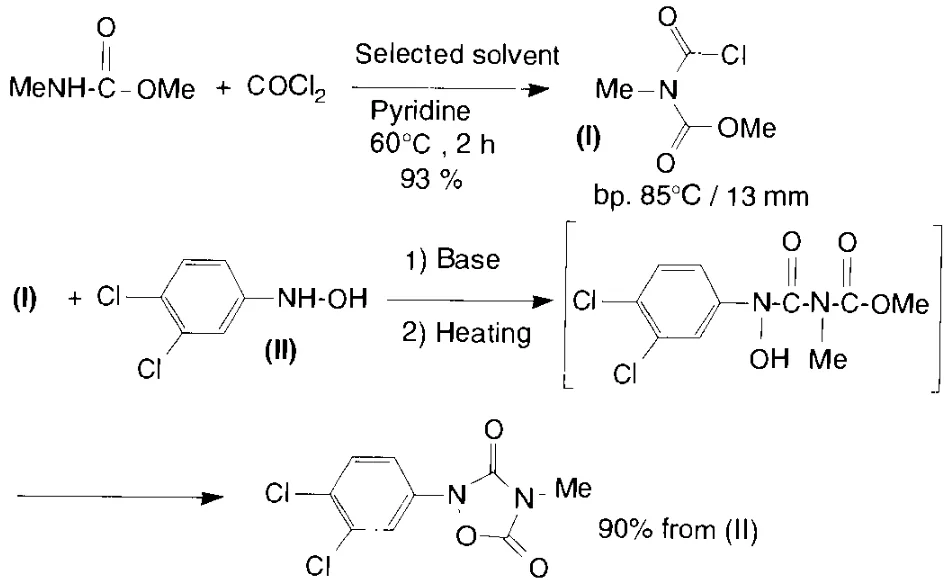
Scheme 151. Preparation of Methazole without methyl isocyanate.
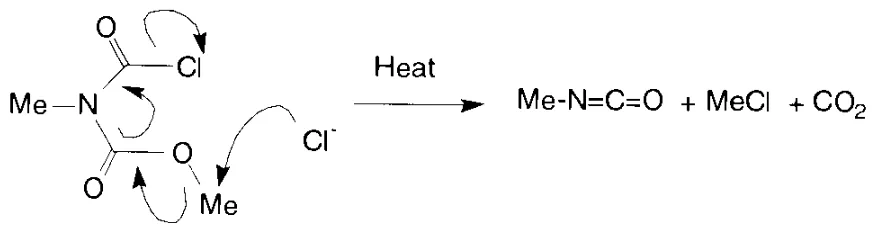
Scheme 152. Thermal instability of methyl-N-chlorocarbonyl-N-methyl carbamate (I).
Moreover, (I) exhibits a high level of toxicity. In order to overcome these problems, we investigated other routes and discovered a novel and safer route to Methazole, starting from the interesting intermediate (III) as shown in scheme 153.
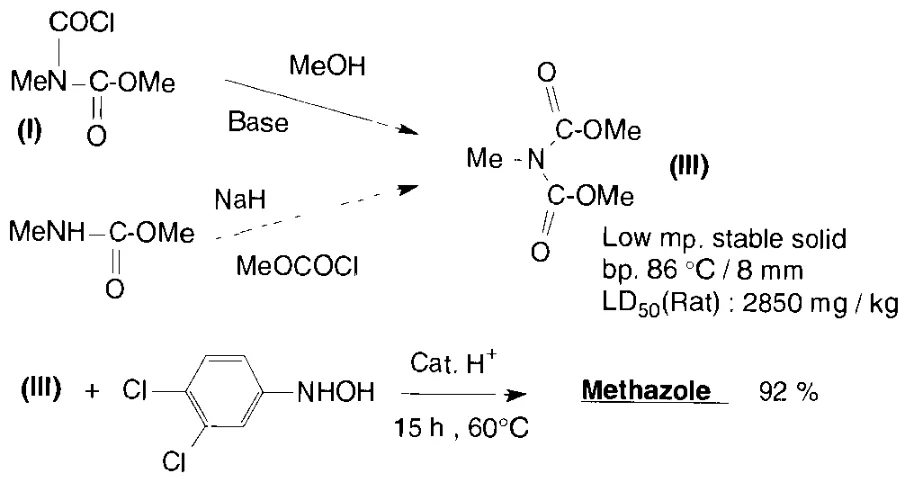
Scheme 153. Novel and safe preparation of Methazole.
Also, carbamates can be modified by other acylating agents than phosgene and chloroformates.
In the course of our attempts dedicated to the search of new pesticides, we were interested in the design of proinsecticides, especially procarbamates which are less toxic to mammalians than the parent carbamates. N-Acyl-N-methyl or N-sulfenyl-N-methyl carbamates derived from Carbofuran or Aldicarbe are quite effective insecticides and are often equal to superior to their parent compound against insects.
In collaboration with SIPCAM (Italia) we studied the synthesis and activity as insecticides of two new types of Carbofuran derivatives (V) et or and (in the editors’ view) (VI) depicted in scheme 154 (Ref. 209, 210).
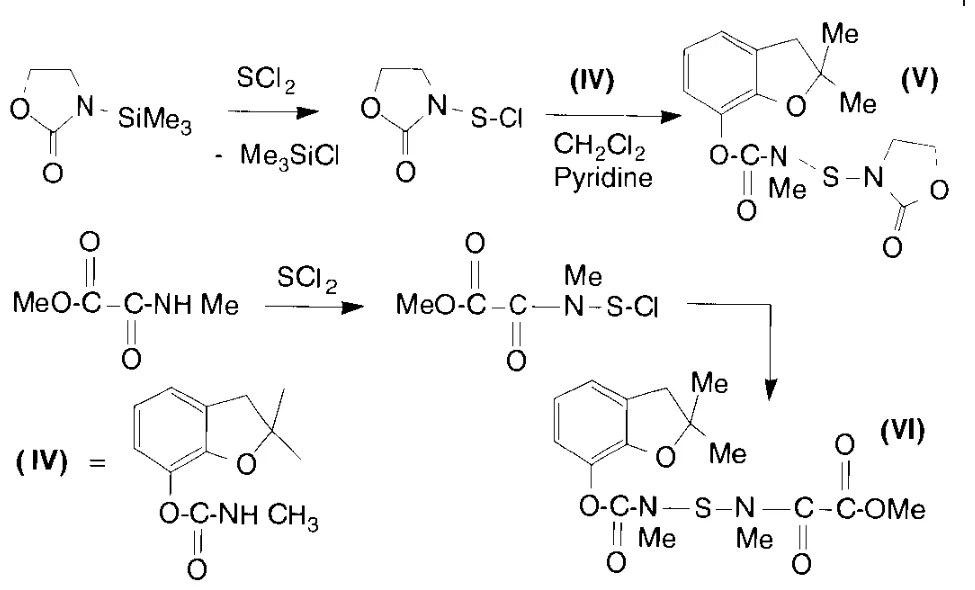
Scheme 154. Syntheses of new sulfenyl Carbofurans.
The reaction of phosgene with substituted ureas is well known. Phosgene reacts with tetrasubstituted ureas as a chlorinating agent to afford chloroformamidinium chlorides in high yields. This topic will be discussed in volume 2.
In the case of N,N'-dialkyl ureas, phosgene is attacked by both oxygen and nitrogen atoms to give a mixture of chloroformamidinium chlorides (A) (O-acylation of the ureas) and allophanoyl chlorides (B) (N-acylation) as shown in scheme 155 (Ref. 211).
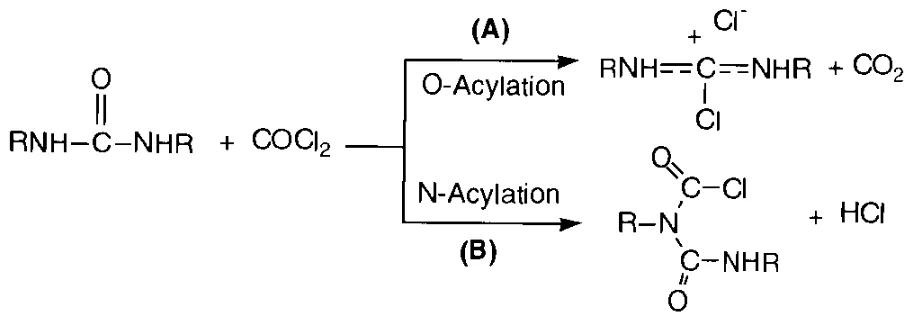
Scheme 155. Phosgenation pathways of N,N'-dialkyl ureas.
The distribution of O-acylation and N-acylation can be slightly controlled by the reaction conditions, but structural features of the N,N'-dialkyl ureas seem to be the dominant factors.
Acylation reaction which affords chloroformamidinium chloride is of great interest for the commercial synthesis of carbodiimides, especially dicyclohexylcarbodiimide (see volume 2).
In the case of low molecular weight subtituents or substituents (in the editors’ view), the separation of products (A) and (B) is very easy because of the insolubility of the salt (A) in organic solvents. Scheme 156 presents two examples of phosgenation of N,N'-disubstituted ureas.
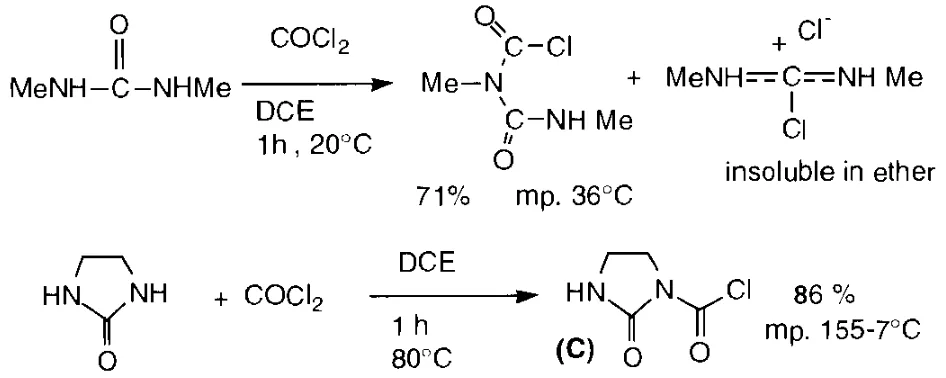
Scheme 156. Examples of phosgenation of N,N'-disubstituted ureas.
N-Chlorocarbonyl-2-imidazolidone (C) is for instance used in the preparation of pharmaceuticals such as the antibiotic Azlocillin [Scheme 157].
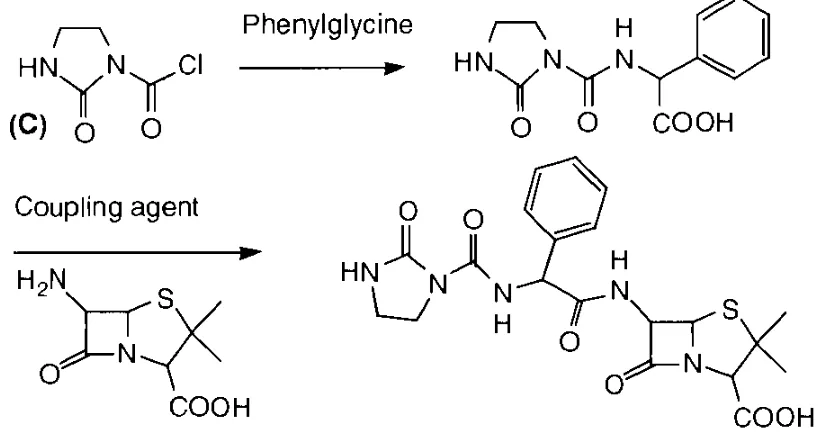
Scheme 157. Preparation of the antibiotic Azlocillin.
In order to produce methyl isocyanate in good safety's conditions, Bayer A.-G. has developed an industrial process based on the reaction of diphenyl carbonate with N,N'-dimethyl urea at high temperature according to scheme 158 (Ref. 212).

Scheme 158. Preparation of MIC through reaction of diphenyl carbonate with dimethyl urea.
It is noteworthy that in this process, one mole of phenol is released for one mole of MIC produced.
We studied at a laboratory scale a similar route of synthesis starting from phenyl chloroformate instead of diphenyl carbonate (Ref. 213). The new process presents the advantage that only half a mole of phenol is formed per mole of MIC.
Thus, phenyl chloroformate was reacted with dimethyl urea in toluene at reflux to give methyl N-phenoxycarbonyl-N-methyl urea (D) in 95 % yield. No added base was required. The intermediate (D) decomposed on heating at 180°C in presence of a selected basic catalyst to afford MIC in quantitative yield [Scheme 159].
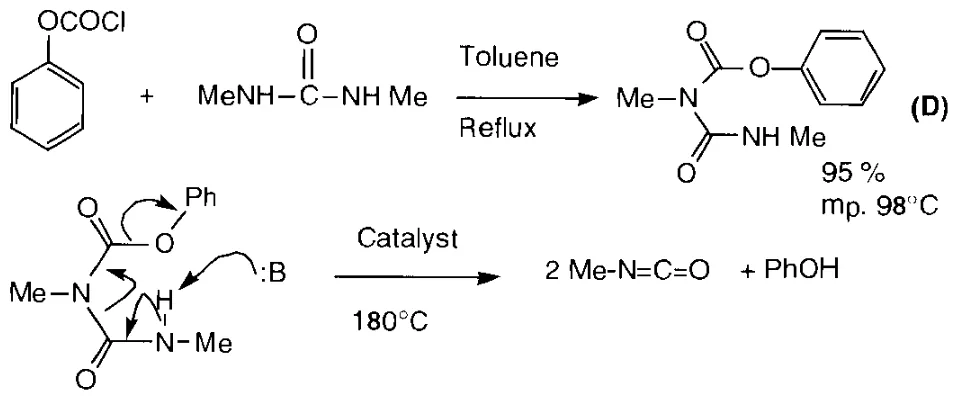
Scheme 159. Novel preparation of MIC from phenyl chloroformate.
It is well known that oxalyl chloride reacts with non-substituted amides to afford acyl isocyanates in high yields (Ref. 214). In contrast, phosgene acts as a dehydrating agent to give nitriles as shown in scheme 160. This interesting reaction, its mechanism and applications will be discussed in volume 2.
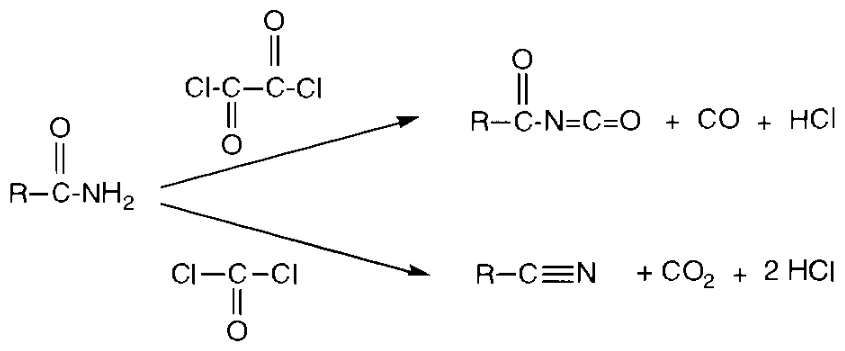
Scheme 160. Reactions of oxalyl chloride and phosgene with primary amides.
Acyl isocyanates, especially trichloro acetyl isocyanate (TAI), 2,6-difluoro benzoyl isocyanate (DFBI) and methacryloyl isocyanate (MAI) are very valuable intermediates for pharmaceuticals, agrochemicals, plastics, adhesives and coatings. The structures, physical data and types of applications of these three major acyl isocyanates are given in table 3-28.
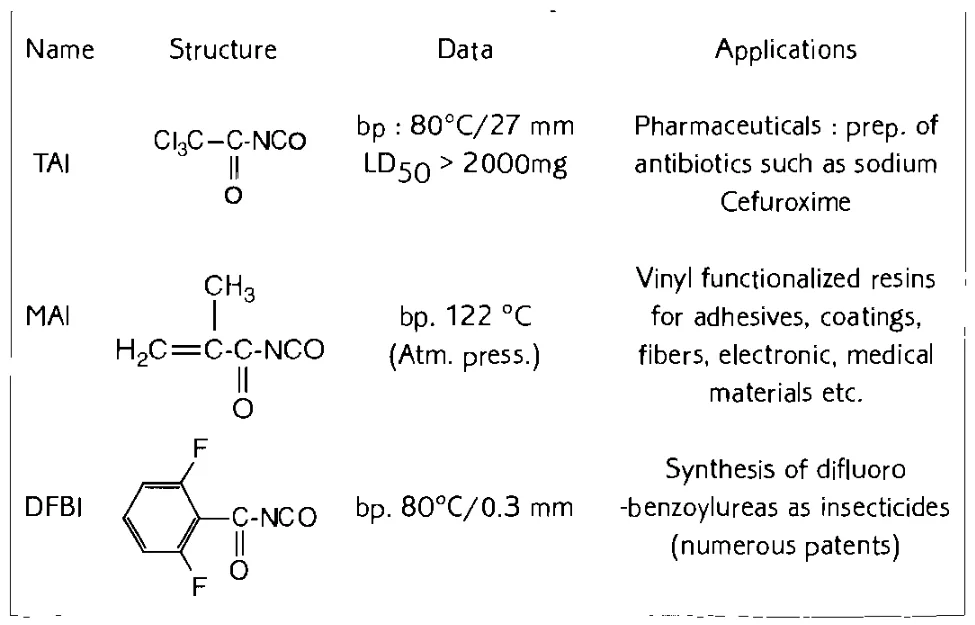
Table 3-28. Valuable industrial acyl isocyanates.
The demonstrated utility of these high-reactive isocyanates prompted us to search for a phosgenation process more economical than the oxalyl chloride route. Our attempts succeeded in the development at a laboratory scale of a method based on the reaction of phosgene with N,N-disilyl amides as depicted in scheme 161 (Ref. 215).
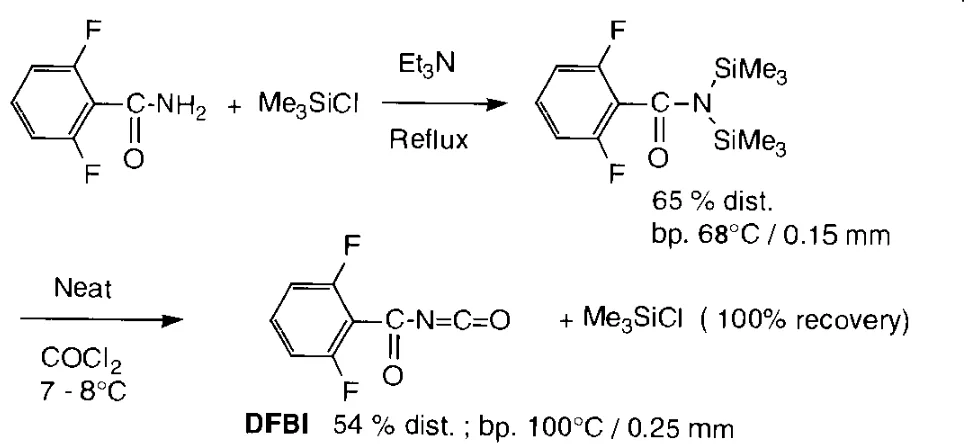
Scheme 161. Novel preparation of DFBI by phosgenation of N,N-bis(trimethylsilyl)-2,6-difluoro benzamide.
It is noteworthy that, in the course of our studies on the preparation of acylisocyanates, we put some improvements to the known procedure by condensation of aroyl chlorides with sodium cyanates. We found that special catalysts and solvants must be used for receiving satisfactory yields as depicted in scheme 162 (Ref. 216, 217).
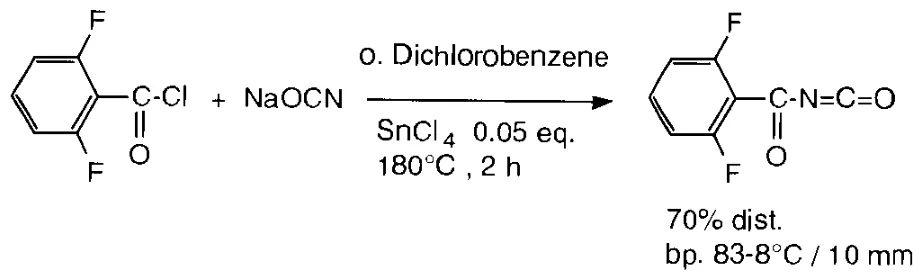
Scheme 162. Preparation of DFBI from 2,6-difluoro benzoyl chloride.
The scope and limitations of this process will be presented in volume 2 in the chapter dedicated to the chemistry of acid chlorides.
During our continuous collaboration with Ishihara Sangyo Kaisha Ltd, we prepared 2-chloro nicotinoyl isocyanate and patented the synthesis of interesting new insecticides effective against larvae, especially from lepidoptera (Ref. 218). The synthesis is depicted in scheme 163.
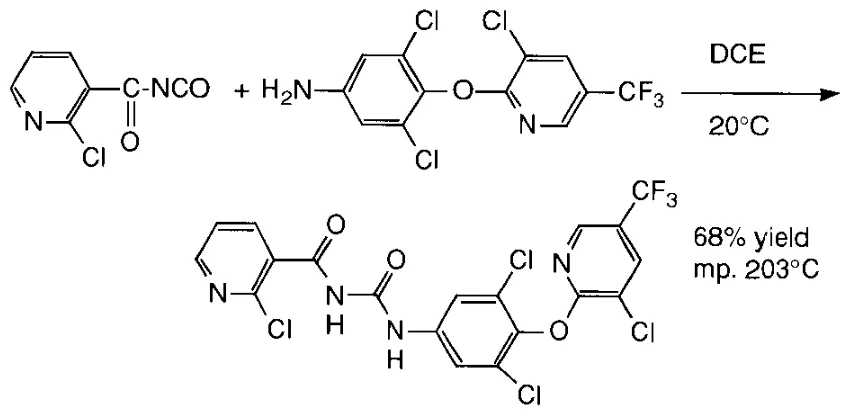
Scheme 163. Preparation of a new N-pyridylcarbonyl-N'-phenyl urea as insecticide.
In the reactions with N-substituded or N-substituted (in the editors’ view) amides, phosgene generally acts as a chlorinating agent yo or to (in the editors’ view) give Vilsmeier salts (see volume 2). As in the case of primary amides, the use of N-silyl amides is often required to observe N-acylation in reasonable yields.
The preparation of 4-ethyl-2,3-dioxo-1-piperazinecarbonyl chloride provides with a good illustration of a commercial process through a silylation (Ref. 219). We studied thoroughly the process depicted in scheme 164, and brought some improvements. This carbamoyl chloride is used for the preparation of antibiotics such as Piperacillin or Cefoperazone.
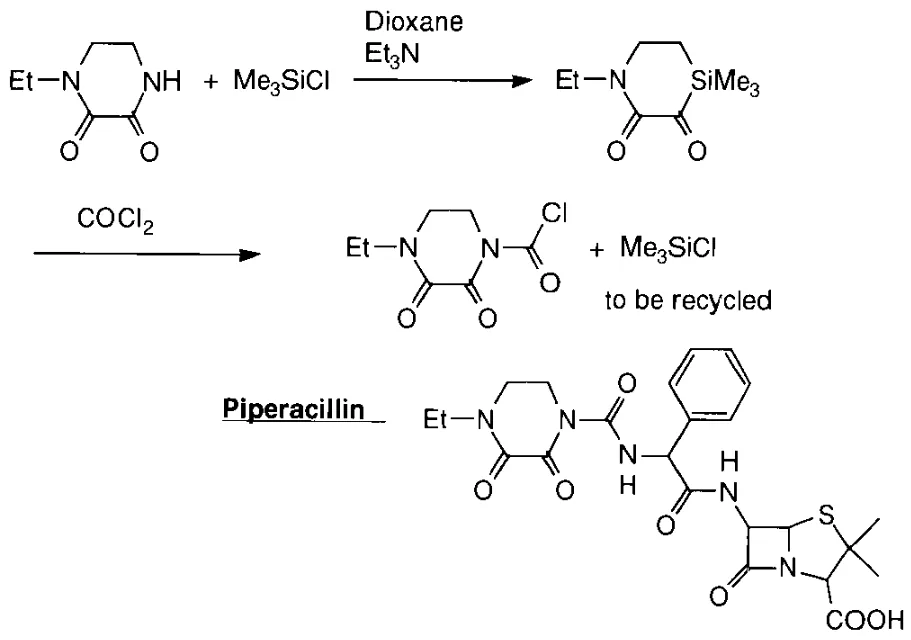
Scheme 164. Phosgenation of dioxo piperazine and structure of the derived antibiotic Piperacillin.