Jean-Pierre Senet - The Recent Advance in Phosgene Chemistry
1-Chloroalkyl chloroformates react easily with primary and secondary amines under the same standard conditions used with classical chloroformates (Ref. 21).
The process is illustrated in the conversion of piperidine to N(1-chloroethyloxycarbonyl) piperidine. Piperidine (2.3 eq.) in ether was added to a cooled solution of 1-chloroethyl chloroformate in ether. The piperidine hydrochloride was filtered off and the expected carbamate was isolated from the filtrate in 77% yield (Ref. 127).
Some examples of representative carbamates obtained by this method are gathered in table 3-20.
Table 3-20. Preparation of 1-chloroalkyl carbamates by reaction of 1-chloroalkyl chloroformates with primary and secondary amines.
| R | R1 | R2 | Yield (%) | bp. (°C/mm) | Ref. |
|---|---|---|---|---|---|
| H | H | Me | 68 | 83/3 | 186 |
| H | OH | 3-ClC6H4 | 76 | mp. 55-7 | 187 |
| Me | (CH2)5 | 77 | 70-2/0.4 | 127 | |
| Et | CH2CH2-O-CH2CH2 | 84 | 95-7/0.9 | 127 | |
| i-Pr | Me | Cyclohexyl | 92 | 111-13/0.6 | 127 |
| Me | imidazol-1-yl (-NR1R2) | 73 | 80/0.5 | 188 | |

We discovered that 1-chloroethyl chloroformate is undoubtedly the best reagent for the selective N-dealkylation of tertiary amines (Ref. 189).
Thus, in the initial test system (N-deethylation of N-ethylpiperidine), the use of α-chloroethyl chloroformate (acronym : ACE-Cl) surpassed the yield obtained with vinyl chloroformate : (I) -> (IV), 99% vs 90% as shown in scheme 132 (Ref. 189).
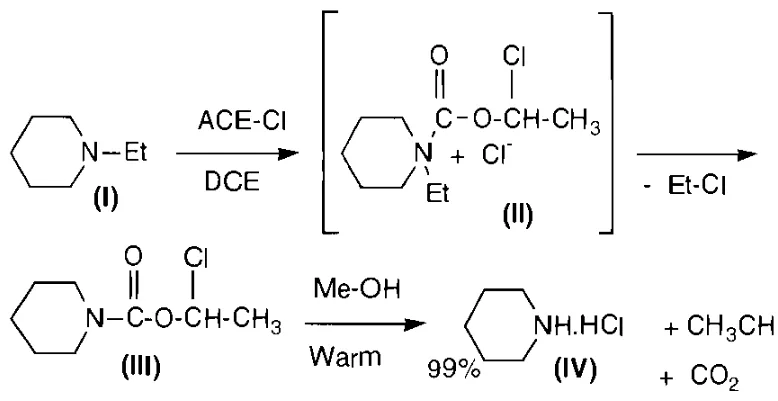
Scheme 132. N-Deethylation of N-ethyl piperidine via N-(1-chloroethyl-car or N-(1-chloroethyloxycarbonyl) piperidine; the caption breaks off in the print (in the editors’ view)
Besides its interest for the synthesis of 1-chloroethyl carbamates from tertiary amines and the N-dealkylation of tertiary amines, this result is also quite unexpected. With most chloroformates other than vinyl chloroformate (VOC-Cl), for example : EtOCOCl, Cl3CH2OCOCl, PhCH2OCOCl, the cationic intermediate analogous to (II) fragments to alkyl chloride, carbon dioxide and (I).
Thus, only trace yields of alkylcarbamates are obtained and the tertiary amine primarily catalyzes the decarboxylation of the chloroformate. Phenyl chloroformate itself previously recommended for N-dealkylation (Ref. 190) afforded PhOC(=O)-piperidine in only 34% yield.
The high-yield dealkylation with ACE-Cl is therefore very surprising. Presumably, the -CHCl-CH3 unit is too hindered to undergo competitive SN2 attack by Cl− and the 1-chloroethyl cation generated by an alternative SN1 (E1) cleavage must be too unstable. Because the substituent is electron withdrawing, ACE-Cl is more reactive toward tertiary amines than simple alkyl chloroformates.
Olofson and Martz have thoroughly studied the scope of the new N-dealkylation process with ACE-Cl (Ref. 68-191) and shown that the selectivities follow the same order as those of VOC-Cl : benzyl; allyl; t.butyl >> s.alkyl ≥ n. alkyl >> piperidine ring scission. In its reactivity, ACE-Cl parallels VOC-Cl with the advantage that the conditions required for ACE removal are much milder thus expanding the functionalities allowed in the amine to be dealkylated.
Even N-dealkylation of aromatic amines occurs cleanly with ACE-Cl as it is illustrated in a strigent or stringent (in the editors’ view) test by the conversion of N,N-diethyl aniline to 1-chloroethyl N-methyl-N-phenyl carbamate in 87 % yield (Ref. 68). Caubère and Bachelet used this methodology while operating without a solvent for the demethylations as well as for the deethylations of dialkylamino benzofurans in good yields (Ref. 192).
Olofson and Martz have developed numerous applications of ACE-Cl to the N-dealkylation of significant tertiary amines, especially in the field of analgesics and narcotic antagonists alkaloids, for example in a brilliant synthesis of Nalbuphine from Oxycodone in 69 % overall yield (Ref. 191). The scope and limitations of ACE-Cl as a new reagent for the selective, high-yield N-dealkylation of tertiary amines will be examined in section 4-5 of vol. 2.
Chloromethyl chloroformate reacts also selectively with tertiary alkyl amines to afford O-chloromethyl N,N-dialkyl carbamates in yields ranging from 83 to 99 % (Ref. 193).
For example, N-methylpiperidine was refluxed with 1.5 eq. of chloromethyl chloroformate in 1,2-dichloromethane or dichloroethane (in the editors’ view) (DCE) for 30 min.. After vacuum evaporation of the volatiles, the distilled O-chloromethyl carbamate was isolated in 97 % yield.
To test the scope of the reaction, the over-the-counter antitussive Dextromethorphan was N-demethylated to the morphinan in 87 % yield as depicted in scheme 133.
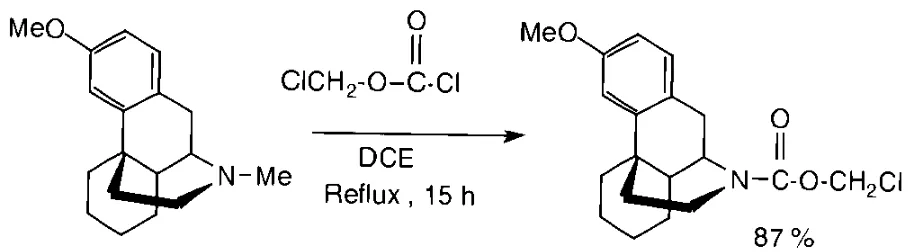
Scheme 133. N-Demethylation of Dextromethorphan by chloromethyl chloroformate.
Some examples of 1-chloroalkyl carbamates obtained through N-dealkylation of tertiary amines are gathered in table 3-21 (Ref. 127, 193).
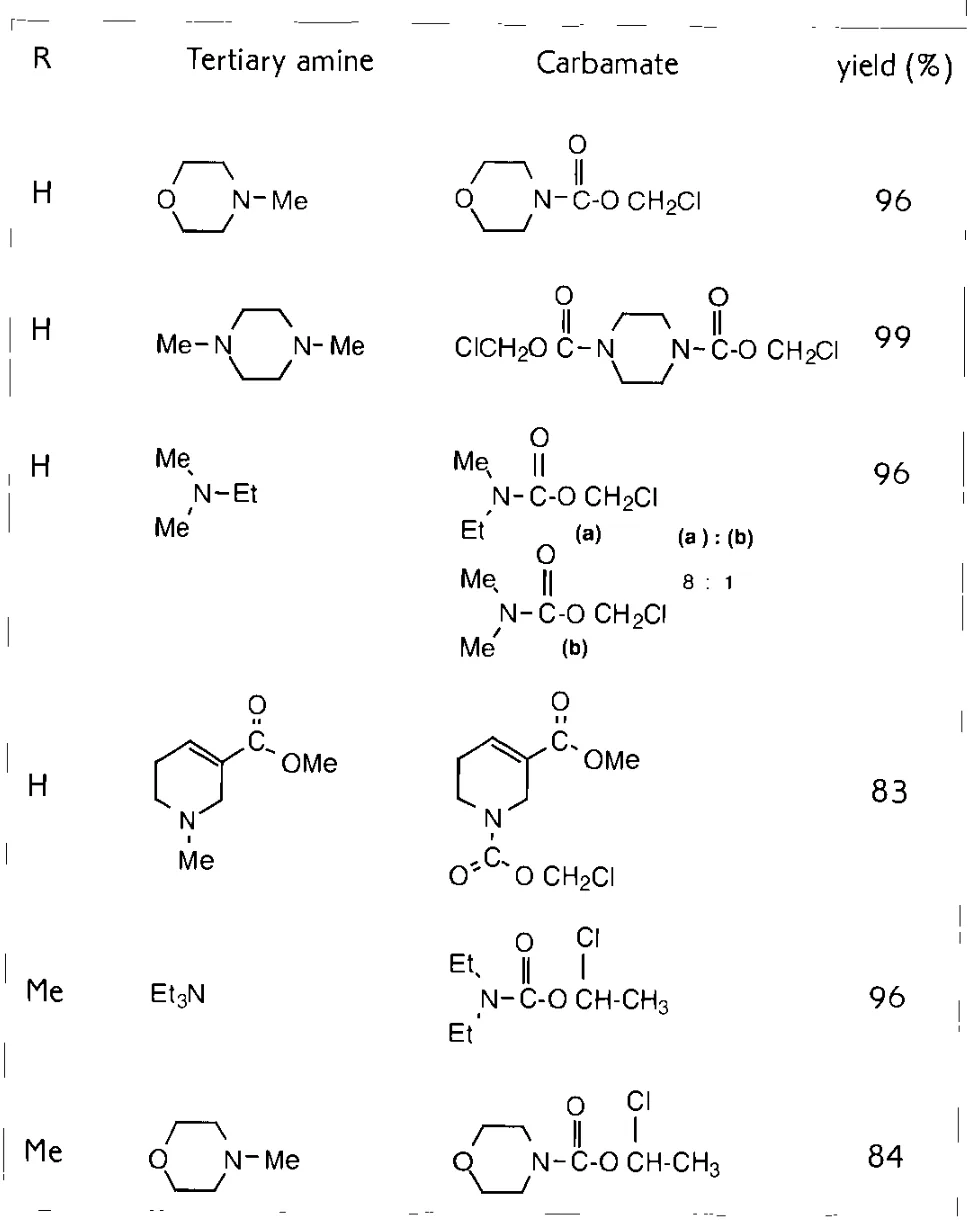
Table 3-21. Preparation of 1-chloroalkyl carbamates by reaction of R-CHCl-OC(=O)Cl with tertiary amines.
The value of 1-chloroethylcarbamates as starting materials for the synthesis of vinyl carbamates has been already pointed out in section 3-2-2-4 of this volume.
As already discussed in section 3-2-2-3, 1-chloroalkyl carbamates present two electrophilic centers which may be attacked by nucleophiles following differents or different (in the editors’ view) pathways as shown in scheme 134.
Similar to he or the (in the editors’ view) case of reaction with 1-chloroalkyl carbonates studied in section 3-2-2-3, carboxylates anions react with 1-chloroalkyl carbamates to give alkylation derivatives through a B attack mechanism. This reaction was widely used in numerous patents on prodrugs.
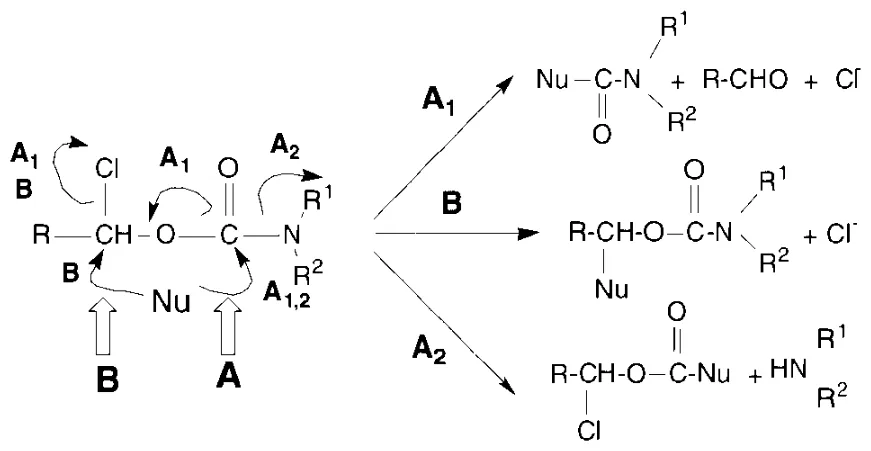
Scheme 134. Possible types of nucleophilic attacks to 1-chloroalkyl carbamates.
For example this concept was applied to the synthesis of novel (acyloxyalkoxy) carbonyl bioreversible moieties for primary as well as secondary amines functions in drugs as illustrated with the case of a prodrug from the antibacterial Norfloxacin in scheme 135 (Ref. 194).
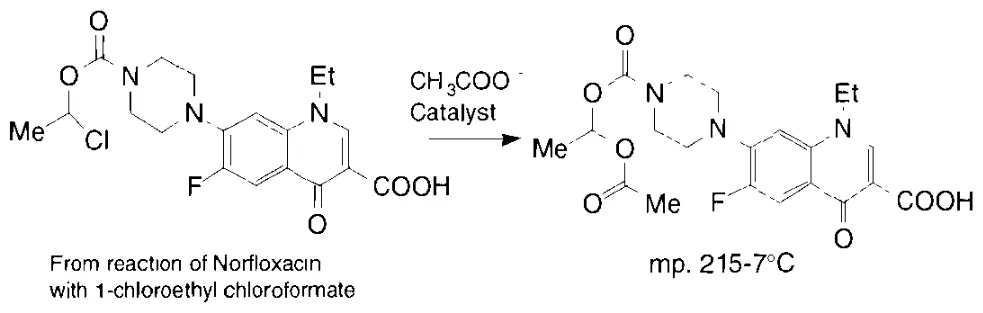
Scheme 135. Preparation of a prodrug derived from Norfloxacin.
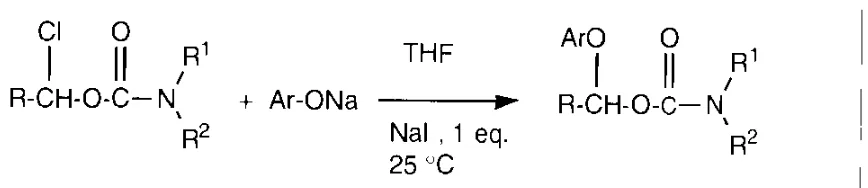
Since the -NR1R2 group makes center A and B both much less harder than does the OR group, we expect some differences between the reactivities of 1-chloroalkyl carbamates and 1-chloroalkyl carbonates. For example the reaction of the hard-soft borderline nucleophiles phenoxide type anions with 1-chloroalkyl-N,N-dilakyl or dialkyl (in the editors’ view) carbamates proceeds selectively through B mechanism to give exclusively alkylation instead of acylation as shown in scheme 136.
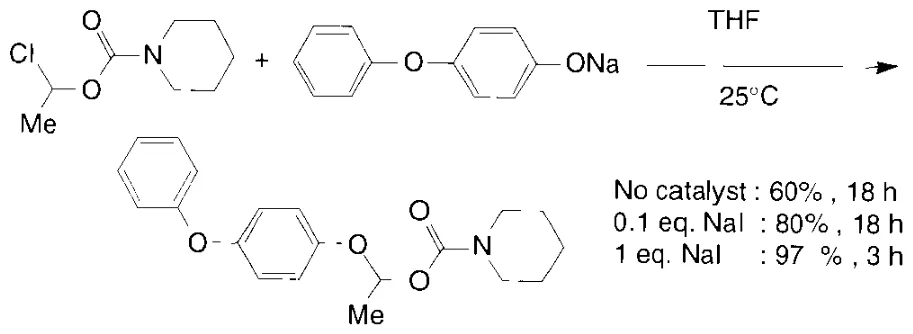
Scheme 136. Reaction of N (1-chloroethyloxycarbonyl) piperidine with sodium 4-phenoxyphenoxide.
Some results obtained in our laboratories for pesticides screening purposes are gathered in table 3-22.
Table 3-22. Reaction of 1-chloroalkyl carbamates with sodium phenoxides.
| R | -NR1R2 | Ar-O | Time (h) | Yield (%) |
|---|---|---|---|---|
| Me | -NMe2 | Ph-O-Ph-O | 4 | 90 |
| Me | -NMe2 | p.CF3-Ph-O-Ph-O | 4 | 76 |
| Me | Morpholino | Ph-O-Ph-O | 4 | 90 |
| Me | Morpholino | p.CF3-Ph-O-Ph-O | 3 | 83 |
| CH2=CH- | -NEt2 | Ph-OPh-O | 1 | 82 |
In opposition to the preceding case, the reaction of phenoxides anions with 1-chloroalkyl-N-monoalkyl carbamates leads to acylation instead of alkylation as shown in scheme 137.

Scheme 137. Reaction of sodium phenoxy phenoxide with 1-chloroethyl-N-methyl carbamate.
However, it is not certain whether the isocyanate or the carbamate is the acylating agent in such reaction. In fact, as depicted in scheme 138, it is possible that this reaction could proceed through a mechanism involving the transient formation of methyl isocyanate rather than through the normal addition (A1) directly to the carbonyl group followed by loss of acetaldehyde.
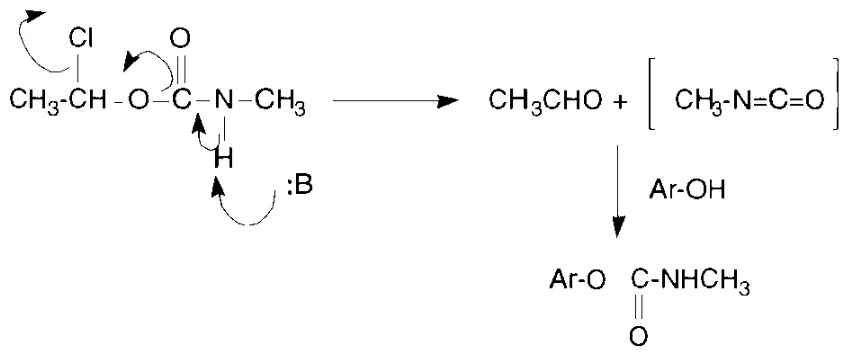
Scheme 138. Possible mechanism of the reaction of 1-chloroethyl-N-methyl carbamate with phenols.
The study of the reaction of 1-chloroethyl-N-methyl carbamate with phenols was undertaken in the hope that it might replace the noxious methyl isocyanate (M.I.C) in the preparation of insecticidal N-methyl carbamates.
Surprisingly, we found that the reaction of an alcohol with 1-chloroethyl-N,N-dialkylcarbamates can proceed through B mechanism to give alkylation rather than acylation (Ref. 195). This result appears to be a violation of the HSAB theory. In a typical example, N-(1-chloroethyloxycarbonyl) piperidine was added to a stirred mixture of sodium hydrocarbonate and methanol at 25°C. The reaction was instantaneous. Solids were removed by filtration, excess alcohol was then distilled off and the resulting product was isolated by flash chromatography in 96% yield [Scheme 139].
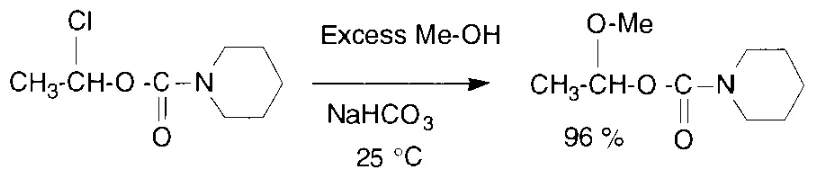
Scheme 139. Synthesis of N-(1-methoxyethyloxycarbonyl) piperidine.
More than twenty 1-alkoxyethyl-N,N-dialkyl carbamates has been prepared by this methodology which should have some interest in the design of new prodrugs.
The same kind of reactions occurs with thiols and thiophenols as shown in scheme 140.
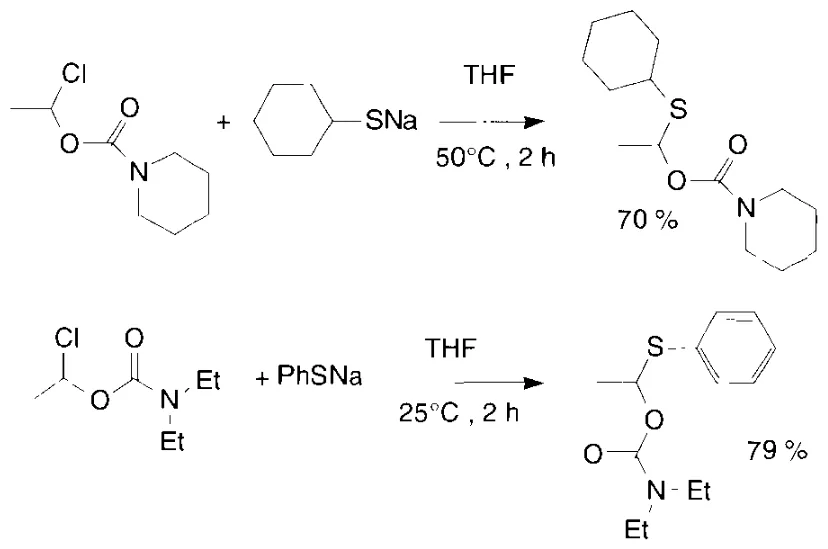
Scheme 140. Reaction of thiols with 1-chloroethyl-N,N-dialkyl carbamates.
According to the HSAB theory, secondary and primary amines react as hard nucleophiles through A1 attack mechanism with 1-chloroalkyl carbamates to affords or afford (in the editors’ view) ureas. However, the reaction is slower and less easy than the reaction of amines with 1-chloroalkyl carbonates and strong nucleophilic amines are generally required to reach good yields.
Thus, the reaction has some value for the synthesis of known ureas derived from methoxymethyl amine such as the herbicide Linuron [see scheme 141] (Ref. 196).
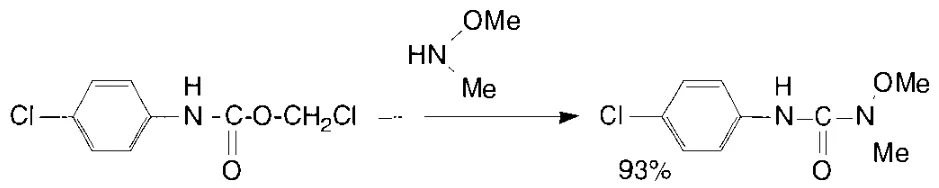
Scheme 141. Preparation of the herbicide Linuron from chloromethyl-N(4-chlorophenyl) carbamate.
The reaction of secondary amines with 1-(1-chloroethyloxycarbonyl) imidazole demonstrates the powerful nucleofugacity (leaving group efficiency) of the chloroethoxide anion as shown in scheme 142 (Ref. 197).
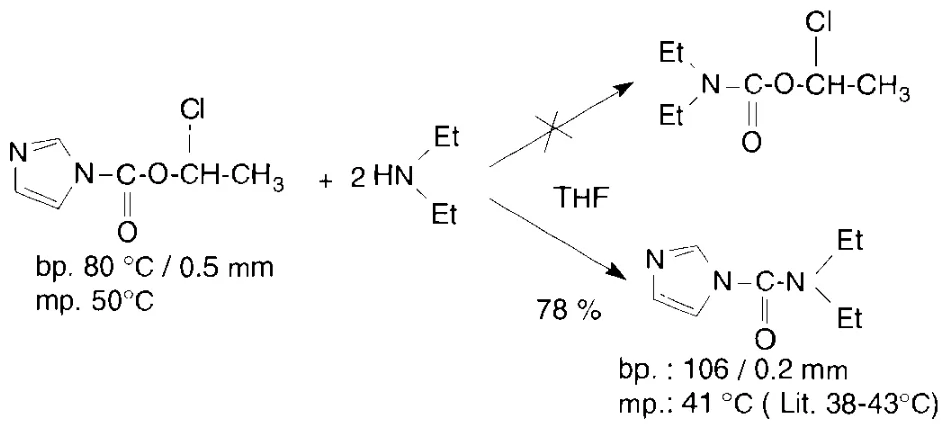
Scheme 142. Reaction of 1 (1-chloroethyloxycarbonyl) imidazole with diethylamine.
In the course of our studies dedicated to the reactivity of 1-chloroalkyl carbamates toward primary and secondary amines, we discovered that the easy to prepare 1,2,2,2-tetrachloroethyl carbamates are valuable versatile intermediates for the synthesis of N-nitrosoureas (Ref. 198).
N-(2-Chloroethyl)-N-nitroso ureas are an active class of antitumor agents, which are usually obtained by nitrosation of the previously prepared urea. Because of difficulties in achieving regioselective nitrosation, several authors have suggested alternatives processes. Unfortunately, the starting materials proposed are either unstable such as carbamoyl azides (Ref. 199) or extremely toxic such as the 2-chloroethyl isocyanate (Ref. 200).
Although we have noticed that 1,2,2,2-tetrachloroethyl carbamates (I) do react with amines to give ureas in modest yield, we thought that when the carbamates (I) are nitrosated to (II), the reactivity of the carbonyl should be greatly enhanced and good yiels or yields (in the editors’ view) of N-nitrosoureas (III) would be obtained. As depicted in scheme 143, the results are quite good, the only drawback being that some minor impurities may arise from the reaction of the amino compounds with the release chloral (Ref. 201).
The carbamates (I) are easily prepared from the required amine and 1,2,2,2-tetrachloroethyl chloroformate just by refluxing in THF or dioxane without any acid scavenger. The reaction mixture is easily freed from hydrochloric acid by heating and evaporation of the solvent generally gives (I) as pure crystals. Table 3-23 gives some examples of carbamates obtained by this method.
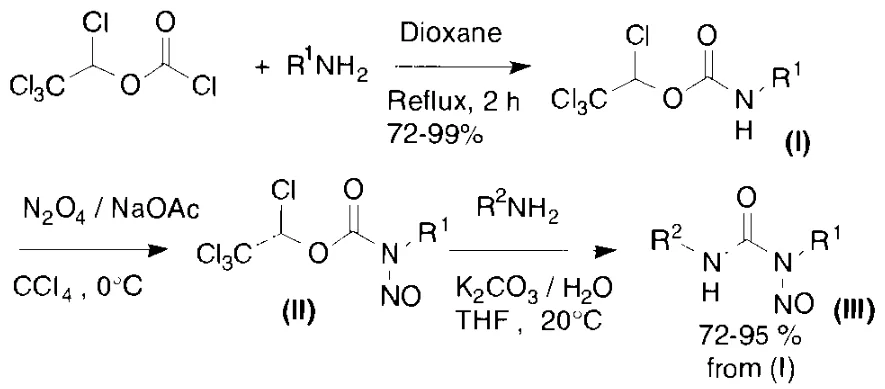
Scheme 143. Novel preparation of N-nitrosoureas.
Table 3-23. 1,2,2,2-tetrachloroethyl carbamates (I) prepared.
| Entry | R1 | Yield (%) | mp. (°C) or bp (°C/mbar) |
|---|---|---|---|
| 1 | Cl-CH2CH2- | 96 | 81-2 |
| 2 | F-CH2CH2- | 72 | 115-20/7 |
| 3 | (L)-HO2C-CH2CH(COOH)- | 99 | 131-3 |
The 1,2,2,2-tetrachloroethyl carbamates (I) are then nitrosated with nitrogen tetroxide by a known procedure. The intermediates nitrosocarbamates (II) are obtained as oils and used as are in the next step to afford the expected N-nitrosoureas (III). For example, the antitumor drug Lomustine was prepared in 87 % yield from the carbamate [(I), entry 1 of table 3-23]. Some results obtained by this method are gathered in table 3-24.
Table 3-24. N-Nitrosoureas (III) prepared (see scheme 143).
| Entry | R1 | R2 | Yield from (I) (%) | mp. (°C) |
|---|---|---|---|---|
| 1 | Cl-CH2CH2- | c-C6H11- | 87 | 87-8 |
| 2 | F-CH2CH2- | c-C6H11- | 72 | 44-5 |
| 3 | Cl-CH2CH2- | C6H5- | 75 | 78-80 |
| 4 | Cl-CH2CH2- | HOCH2CH2- | 95 | oil |
| 5 | ClCH2CH2- | Et-OOC-CH2- | 88 | oil |
Some other interesting miscellaneous chemistry of chloroalkyl carbamates has been also explored. Thus, as already mentioned, acrolein and its congeners H2C=CR-CHO are easily converted to the chloroformates H2C=CRCH(Cl)OC(=O)Cl which rearrange in the presence of ZnCl2 to the allylic isomer ClCH2-CR=CHOC(=O)Cl. We prepared some carbamates derived from these chloroformates for testing as agrochemicals.
One example using 2-chloroacrolein as starting material is given in scheme 144 (Ref. 202). Industrially, 2-chloroacrolein is easily made in up to 97% yield by adding chlorine to aqueous acrolein followed by steam distillation of the resulting mixture.
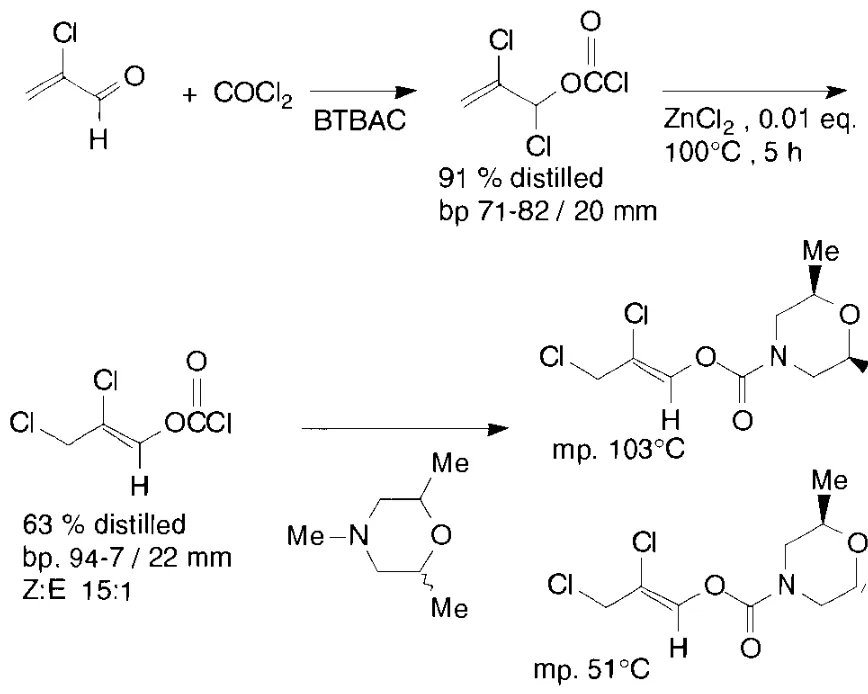
Scheme 144. Example of 3-chloroalkenyl carbamate synthesis for testing.
In continuation of our studies on the synthesis and reactivity of 1-chloroalkyl carbamates, and because our group was involved in the chemistry of 1,1-dimethyl hydrazine (UDMH), we have examined the reactions of 1-chloroalkyl chloroformates with unsymmetrical dialkyl hydrazines. During this work, we discovered unexpectedly a new efficient generator of the heretofore difficult to prepare N,N-dimethylamino isocyanate (Ref. 203). Thus, five membered ring carbalkoxy aminimides were prepared from UDMH and 1-chloroalkyl chloroformates in three steps [Scheme 145]. Upon heating, these aminimides give high yields of Me2N-N=C=O. This unusual isocyanate dimerizes or can be trapped in the presence of a nucleophile.
In a preferred example, when UDMH in anhydrous THF was added to a solution of 1-chloroethyl chloroformate in THF at 10-20°C, the intermediate carbazate (a) was formed. After filtration to remove the UDMH hydrochloride, we accomplished a cyclisation to (b) just by refluxing the THF solution for 1 h. The resulting hygroscopic salt (b) precipited immediately in 71 % overall yield. In solid form, (b) is stable undefinitely at room temperature. The cyclic aminimide (c) was then easily prepared from (b) by treatment with a resin supported base in high yield. The three steps of the synthesis are depicted in scheme 145.
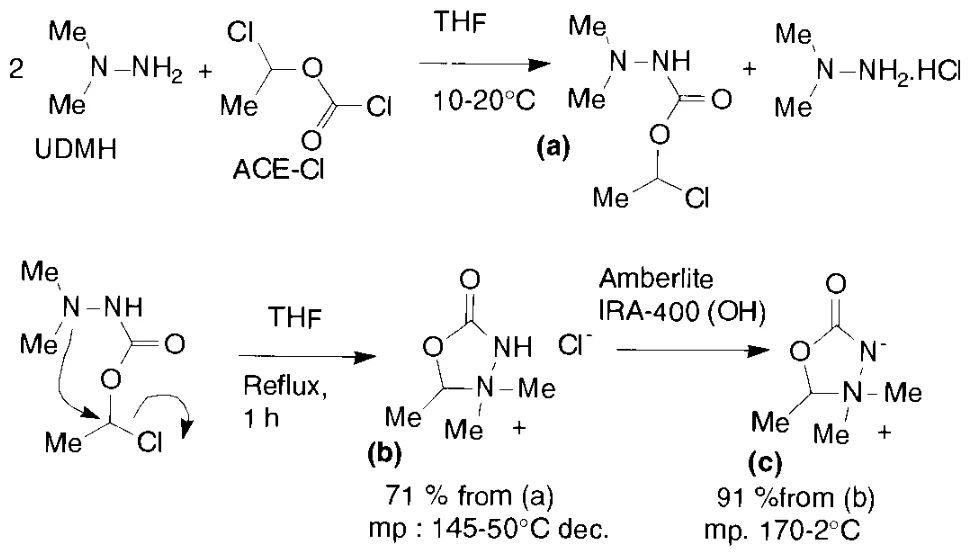
Scheme 145. New cyclic aminimide from UDMH and ACE-Cl.
Carbalkoxy aminimides have received little attention in the literature and to our knowledge, cyclic carbalkoxy aminimides have never before been synthesized.
Dialkylamino isocyanates are known transient intermediates and, in the absence of other reagents, have been shown to dimerize. When the cyclic aminimide (c) was heated at 130°C under vacuum (0.3 mm) for 3 h, (d) was obtained in 89% yield. At higher temperature (d) was formed but rearranged to (e) as depicted in scheme 146.
The chemistry of aminimides has been reviewed elsewhere (Ref. 204, 205) and the chemistry of dimethyl amino isocyanate, prepared in the form of dimer (d) through a phosphoramide synthesis, studied (206).
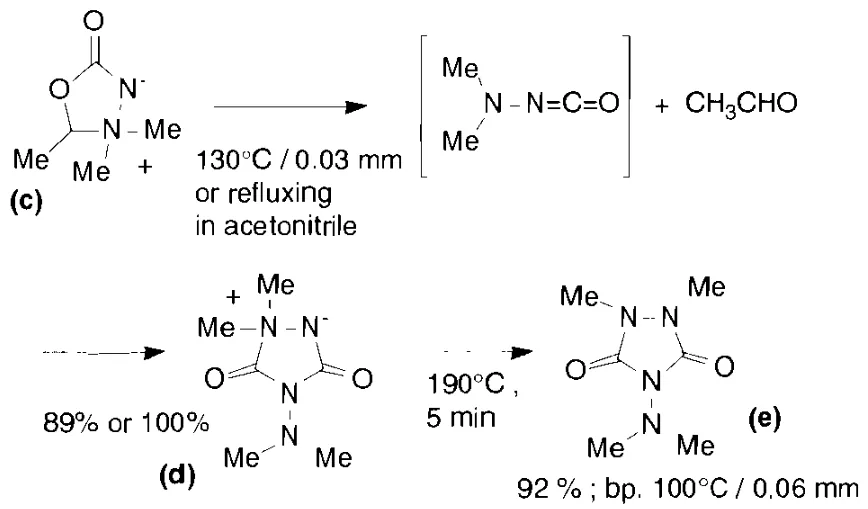
Scheme 146. Thermal decomposition of the cyclic carbalkoxy aminide or aminimide (in the editors’ view) (c) to give N,N-dimethyl amino isocyanate.
Our method represents a simple, rapid and high yield preparation of N,N-dimethylamino isocyanate. This interesting intermediate has been the subject of several publications and is useful for the synthesis of a wide variety of heterocycles, carbazates, and other molecules containing a hydrazine group.
We have prepared several carbazates and semicarbazides just by heating the cyclic carbalkoxyaminimide (c) and the nucleophile (:NuH) for 1 h in refluxing 1,2-dichloroethane. Some examples are given in table 3-25.
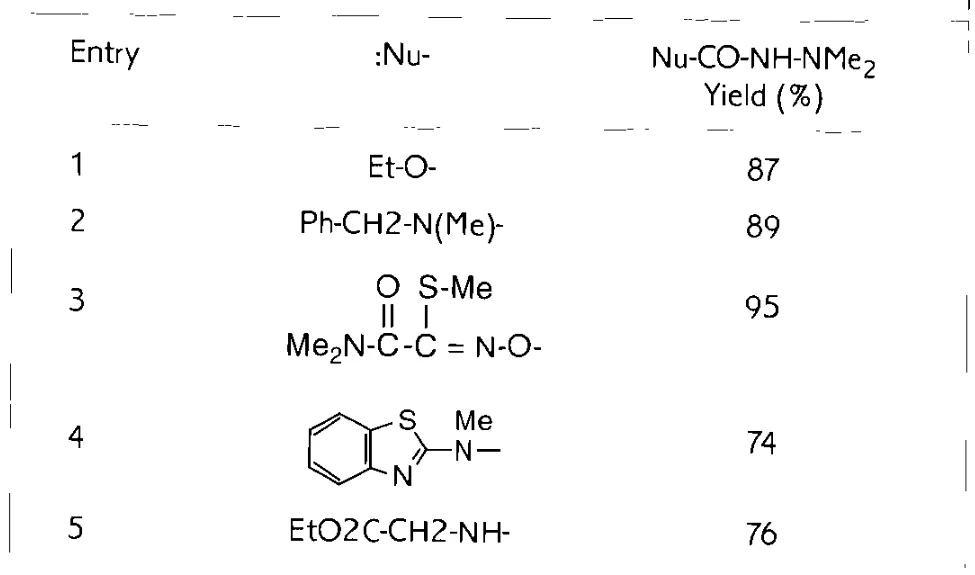
Table 3-25. Preparation of UDMH derivatives through reaction of cyclic carbalkoxy aminimide (c) with a nucleophile :Nu-H.