Sijbren Otto - Catalysis of Diels-Alder Reactions in Water
This chapter describes the effects of micelles on the Diels-Alder reaction that was introduced in Chapter 2. In the absence of Lewis-acid catalysts micelles induce modest retardations of this reaction, which is rather surprising in view of the usually high affinity of the Diels-Alder reactants for micellar aggregates. This intriguing lack of reactivity most likely is a result of different average binding locations of diene and dienophile. Evidence from 1H-NMR shift measurements and paramagnetic-ion induced relaxation rate enhancements is presented. Significantly, in the presence of Lewis-acid catalysts, micelles can induce dramatic rate enhancements, approaching enzyme-like magnitudes. The high rates of the reaction in these media is attributed primarily to an extremely efficient interaction between the dienophile and the Lewis-acid catalyst in the Stern region of the micelle1.
5.1 Introduction
“Nonsense McBain !” Those words were the first reaction of the chairman of a meeting of the Royal Society of London on the lecture of McBain, wherein he suggested the existence of assemblies of surfactant molecules in aqueous solution2. However, as soon became apparent, McBain was right when he postulated the spontaneous formation of dynamic aggregates by fatty acid salts3, although the bilayer structure he suggested was later corrected by Hartley, who introduced the spherical structures we now know as micelles4. In the years that have passed, micellar solutions have proven to be an extremely versatile topic of research. The catalytic potential of micellar aggregates has received special attention. This chapter will focus on micellar catalysis of a Diels-Alder reaction and will provide, for the first time, a link between micellar catalysis and Lewis-acid catalysis. Before elaborating on this, the physical properties and catalytic potential of micellar solutions will be briefly reviewed.
5.1.1 Micellar aggregates: structure and dynamics
Surfactant molecules (also called amphiphiles or detergents) unite a polar or ionic head and a nonpolar tail within the same molecule. The nonpolar part, which is typically made up of one or more alkyl chains, causes these compounds to be sparingly soluble in water, whereas the polar or ionic part interacts strongly with water. Upon increasing the concentration of the amphiphilic compound in water, at a certain point the solubility limit will be reached and phase separation will set in. Due to the efficient interactions between the polar headgroups and the surrounding water molecules, a complete phase separation is usually unfavourable. Instead, the process will be arrested in an intermediate stage with concomitant formation of aggregates of amphiphilic material, wherein the nonpolar parts stick together and are shielded from water, whereas the headgroups are located in the outer regions of the aggregate. A multitude of different aggregates can be formed in this way5.
The morphology of these assemblies is mainly determined by the shape of the individual surfactant molecules. Ninham and Israelachvilli or Israelachvili (in the editors’ view) have introduced the concept of the packing parameter, allowing prediction of the type of aggregate formed by considering the cross-sectional headgroup area and the length and volume of the nonpolar part of the amphiphile molecules6. Surfactants containing a single alkyl chain usually form micelles when dissolved in water. A schematic representation of a spherical micelle is given in Figure 5.1. The formation of micelles sets in after a certain critical concentration of surfactant (the critical micelle concentration, cmc) has been reached. Beyond this concentration the addition of more surfactant molecules will result in an increase in the number of micelles, while the concentration of monomeric surfactant remains almost constant. Micellisation is usually driven by an increase in entropy, resulting from the liberation of the water molecules from the hydrophobic hydration shells of the monomeric amphiphile molecules, whereas the enthalpy change is generally close to zero7.
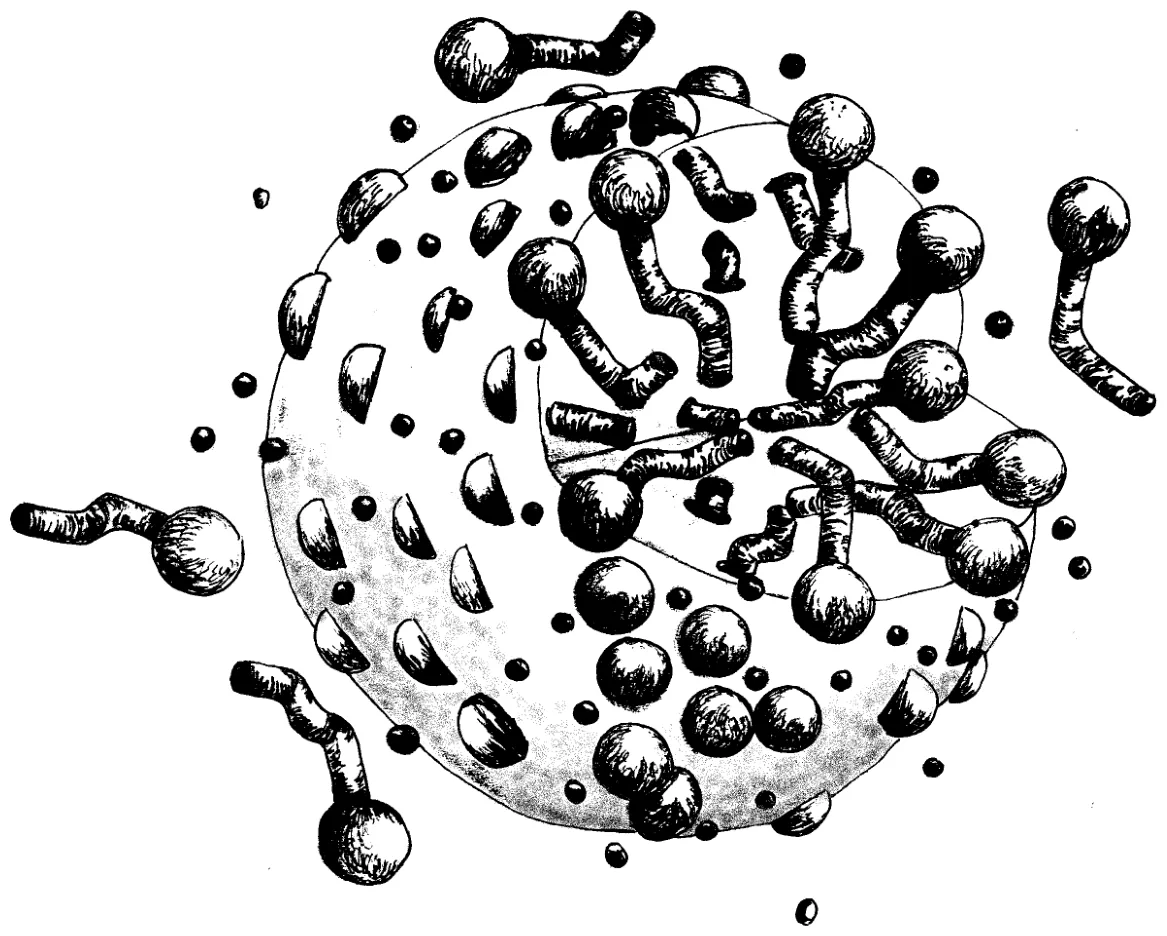
Figure 5.1. Schematic representation of a spherical micelle.
Micelles are extremely dynamic aggregates. Ultrasonic, temperature and pressure jump techniques have been employed to study the rate constants associated with the different equilibria involved. Rates of uptake of monomers into micellar aggregates are close to diffusion controlled8. The residence times of the individual surfactant molecules in the aggregate are typically in the order of 10− 5 - 10−6 seconds8,9, whereas the lifetime of the micellar entity is about 10−3 - 10−1 seconds8b,9b. Factors that lower the cmc usually increase the lifetimes of the micelles as well as the residence times of the surfactant molecules in the micelle10. Due to this dynamic character, the size and shape of micelles are subject to appreciable structural fluctuations. Hence, micellar aggregates are polydisperse, as is demonstrated by small-angle neutron scattering data11. Average aggregation numbers are typically in the range of 40 - 10012. The highly dynamic character has for a long time successfully misled chemists in their conception of the structure of a micelle.
Extensive discussions have focused on the conformation of the alkyl chains in the interior13. It has been has demonstrated or has been demonstrated (in the editors’ view) that the alkyl chains of micellised surfactant are not fully extended. Starting from the headgroup, the first two or three carbon-carbon bonds are usually trans, whereas gauche conformations are likely to be encountered near the centre of the chain14. As a result, the methyl termini of the surfactant molecules can be located near the surface of the micelle, and have even been suggested to be able to protrude into the aqueous phase15. They are definitely not all gathered in the centre of the micelle as is often suggested in pictorial representations. NMR studies have indicated that the hydrocarbon chains in a micelle are highly mobile, comparable to the mobility of a liquid alkane16.
Another topic of heated debate comprised the extent of water penetration into the hydrocarbon interior13. Small-angle neutron scattering studies have resolved this matter by indicating that significant water penetration into the micellar core is unlikely11a,17. However, at the interface, extensive contact between water and the hydrocarbon chain segments definitely occurs. The headgroups of the micelle are extensively hydrated. For ionic micelles, a large fraction of the counterions are located in the vicinity of the headgroups. These counterions normally retain their first hydration shell18. The part of the surfactant that contains the headgroups and a variable fraction of the counterions is called the Stern region. This region comprises an appreciable electric field and a high concentration of ions (several molar) at the interface between the nonpolar interior and the aqueous exterior of the micelle and can be expected to exhibit unique properties. For pyridinium iodides the polarity of this region has been probed with the aid of the interionic charge transfer band characteristic for these species. The results indicate a somewhat reduced polarity of the Stern region compared to bulk water19. The important role of this region in solubilisation and micellar catalysis is reviewed in the next sections.
5.1.2 Solubilisation
One of the most important characteristics of micelles is their ability to take up all kinds of substances. Binding of these compounds to micelles is generally driven by hydrophobic and electrostatic interactions. The dynamics of solubilisation into micelles are similar to those observed for entrance and exit of individual surfactant molecules. Their uptake into micelles is close to diffusion controlled, whereas the residence time depends on the structure of the molecule and the solubilisate, and is usually in the order of 10−4 to 10−6 seconds9b,20. Hence, these processes are fast on the NMR time scale.
Solubilisation is usually treated in terms of the pseudophase model, in which the bulk aqueous phase is regarded as one phase and the micellar pseudophase as another. This allows the affinity of the solubilisate for the micelle to be quantified by a partition coefficient P. Different definitions of P can be found in the literature, differing in their description of the micellar phase. Frequently P is expressed as a ratio of the mole fractions of solubilisate in the micellar pseudophase and the aqueous phase. However, when dealing with catalysis by micellar aggregates it is more convenient to express P as a ratio of concentrations.
The incorporation of nonionic solutes into micelles has recently been subject to multi-parameter analysis21. These studies attribute a dominant role to the volume of the solubilisate in determining the partition coefficient. This suggestion was rationalised on the basis of hydrophobic interactions being more efficient for larger molecules. The hydrogen-bond acceptor capacity of the solubilisate on the other hand counteracted the uptake by the micelles, suggesting that the micellar microenvironment is a less efficient hydrogen-bond donor than bulk water. Still, quantitative understanding of solubilisation is far from complete. For instance, Hirose and Sepulveda have demonstrated that replacement of a proton in the benzene molecule with a hydrophilic group enhances its interaction with the micelle22. The authors attribute this to a shift in the average binding location more towards the surface of the micelle where dipole-dipole interactions are more favourable.
The time-averaged location of different solubilisates in or at the micelle has been a topic of contention23. The nature of the solubilisate largely determines its position in the aggregate. Saturated hydrocarbons show a preference for the interior of the micelle24. In contrast, solubilisates that contain hydrophilic substituents, such as alcohols or amines, prefer to stay at the surface, where the hydrophilic groups can remain largely hydrated25. In the case that the solubilisate has an amphiphilic character itself, the apolar parts generally are directed towards the centre of the micelle and its orientation in the aggregate resembles that of the surfactant molecules. The position of aromatic hydrocarbons has been intensively debated. Investigations have focused on the distribution of benzene in aqueous solutions of cetyltrimethylammonium bromide (CTAB) and sodium dodecylsulfate (SDS). Some authors have claimed that this solubilisate resides mainly in the interior of these micelles22,26, whereas others have reported data that indicated binding at the interface27 or in both regions simultaneously28. These seemingly contradictory data can be understood in terms of differences in the concentrations of solubilized benzene. At low concentrations these compounds prefer the outer regions of the micelle, whereas at higher concentrations, when the interfacial region is saturated, they penetrate deeper into the micelle with concomitant swelling of the aggregate24,29.
The unexpected preference for the interfacial region at lower concentrations of benzene has prompted speculation. It has been demonstrated that aromatic compounds are capable of forming weak hydrogen bonds with water30. This ability favours uptake in the aqueous interface over solubilisation in the interior. Alternatively, some authors have attributed the binding behaviour of benzene to its weak surface activity that is amplified by the extremely high surface to volume ratio characteristic of micellar solutions31. Likewise the high Laplace pressure of small aggregates has been frequently cited as cause23,32. The high pressure in the interior of the small aggregates squeezes out the solubilisate, which then can but bind to the interface. However, as has been pointed out by Marqusee and Dill, the Laplace pressure cannot be the dominant factor, since worm-like and spherical micelles show comparable solubilisation behaviour, whereas the Laplace pressure of the former is half that of the latter33. Also the large volume of the interfacial region as compared to the core of the micelle needs to be considered, favouring binding to the interfacial region on purely statistical grounds.
The binding behaviour of benzene can be extrapolated to many other aromatic compounds such as naphthalene and benzene derivatives32,34. Interestingly, a large number of probe molecules contain aromatic rings and many of them will prefer the outer regions of micelles, whereas in bilayer systems, the same molecules prefer the interior of the aggregate35. Clearly these probes cannot be used to determine polarity of the micellar interior or the extent of water penetration therein35a.
For ammonium surfactants there is evidence for the existence of an additional specific interaction between the headgroups of the surfactant and the aromatic solubilisate22,36. This is in line with the observation that partition coefficients for benzene in CTAB solutions are much higher than those for SDS solutions21a. These cation-pi interactions have been observed in many different fields in chemistry37. The importance of these specific interactions for micellar systems has been questioned by de Schryver et al.38.
5.1.3 Micellar catalysis - kinetic models
A micelle-bound substrate will experience a reaction environment different from bulk water, leading to a kinetic medium effect. Hence, micelles are able to catalyse or inhibit organic reactions. Research on micellar catalysis has focused on the kinetics of the organic reactions involved. An overview of the multitude of transformations that have been studied in micellar media is beyond the scope of this chapter. Instead, the reader is referred to an extensive set of review articles and monographs4,6,12,39.
The kinetic data are essentially always treated using the pseudophase model, regarding the micellar solution as consisting of two separate phases. The simplest case of micellar catalysis applies to unimolecular reactions where the catalytic effect depends on the efficiency of binding of the reactant to the micelle (quantified by the partition coefficient, P) and the rate constant of the reaction in the micellar pseudophase (km) and in the aqueous phase (kw). Menger and Portnoy have developed a model, treating micelles as enzyme-like particles, that allows the evaluation of all three parameters from the dependence of the observed rate constant on the concentration of surfactant40.
The catalytic effect on unimolecular reactions can be attributed exclusively to the local medium effect. For more complicated bimolecular or higher-order reactions, the rate of the reaction is affected by an additional parameter: the local concentration of the reacting species in or at the micelle. Also for higher-order reactions the pseudophase model is usually adopted (Figure 5.2). However, in these systems the dependence of the rate on the concentration of surfactant does not allow direct estimation of all of the rate constants and partition coefficients involved. Generally independent assessment of at least one of the partition coefficients is required before the other relevant parameters can be accessed. Partition coefficients are usually determined using ultrafiltration41 or NMR42 or UV-vis26a spectroscopy. Kinetics of micelle-catalysed bimolecular reactions are generally monitored spectrophotometrically under pseudo-first-order conditions. The decrease of the absorption of one of the reactants (A) is followed in time in the presence of a more than 20-fold excess of the other reactant (B)43. In the absence of surfactant, the second-order rate constant (k2) follows from Equation 5.1:
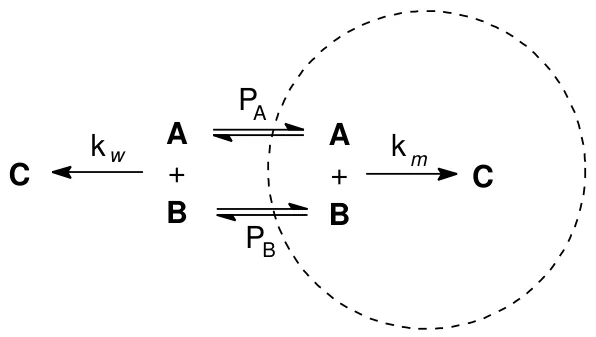
Figure 5.2. Kinetic analysis of a bimolecular reaction A + B → C according to the pseudophase model.
$$k_2 = k_{obs} / [\mathrm{B}] \qquad (5.1)$$
Herein kobs is the observed pseudo-first-order rate constant. In the presence of micelles, analogous treatment of the experimental data will only provide an apparent second-order rate constant, which is a weighed or weighted (in the editors’ view) average of the second-order rate constants in the micellar pseudophase and in the aqueous phase (Equation 5.2).
$$k_{app} = k_{obs} / [\mathrm{B}] \qquad (5.2)$$
Berezin and co-workers have analysed in detail the kinetics of bimolecular micelle-catalysed reactions39c,44. They have derived the following equation, relating the apparent rate constant for the reaction of A with B to the concentration of surfactant:
$$k_{app} = \frac{k_m P_A P_B [\mathrm{S}] V_{mol,S} + k_w (1 - [\mathrm{S}] V_{mol,S})}{(1 + (P_A - 1)[\mathrm{S}] V_{mol,S})(1 + (P_B - 1)[\mathrm{S}] V_{mol,S})} \qquad (5.3)$$
Herein PA and PB are the micelle - water partition coefficients of A and B, respectively, defined as ratios of the concentrations in the micellar and aqueous phase; [S] is the concentration of surfactant; Vmol,S is the molar volume of the micellised surfactant and km and kw are the second-order rate constants for the reaction in the micellar pseudophase and in the aqueous phase, respectively. The appearance of the molar volume of the surfactant in this equation is somewhat alarming. It is difficult to identify the volume of the micellar pseudophase that can be regarded as the potential reaction volume. Moreover, the reactants are often not homogeneously distributed throughout the micelle and the average location of one reaction partner may differ from that of the other. Despite these serious complications, data analysis using Equation 5.3 almost always produces reasonable results.
Studies of micellar catalysis of bimolecular reactions of uncharged substrates have not been frequent41,44,45. Dougherty and Berg performed a detailed analysis of the kinetics of the reaction of 1-fluoro-2,4-dinitrobenzene with aniline in the presence of anionic and nonionic surfactants41. Micelles induce increases in the apparent rate constant of this reaction. In contrast, the second-order rate constant for reaction in the micellar pseudophase was observed to be roughly equal to, or even lower than the rate constant in water.
When one or more of the reaction partners of a bimolecular reaction are ionic, the kinetic analysis is further complicated. Particularly in the case when the ionic reactants are not identical to the counterions of the surfactant, estimation of the concentrations of reactive ions in the interfacial region requires a refinement of the model. There is now competition between the reactive counterions and the inert counterions with respect to binding to the micellar surface. Romsted et al. developed the pseudophase ion-exchange (PPIE) model and applied it successfully to the description of the kinetics of micellar catalysis of ionic bimolecular reactions39i. This model treats the micellar surface as a selective ion exchanger and assumes that the total fractional occupation of the surface by the counterions is constant, irrespective of the nature of these ions. For ionic bimolecular reactions, the second-order rate constant for reaction in the micellar phase is nearly always remarkably similar to the second-order rate constant in the aqueous phase, suggesting a water-like medium for the majority of micelle-catalysed bimolecular reactions12,46. Hence, the frequently encountered increase in the apparent rate constant by several orders of magnitude results largely from the increase in the local concentrations of the reactants in the micellar pseudophase.
5.1.4 The influence of micelles on Diels-Alder reactions
On the basis of the pronounced nonpolar character of the majority of Diels-Alder reactants efficient micellar catalysis of this reaction might be anticipated. Surprisingly, accounts on this topic are scarce. The first report of the influence of surfactants on Diels-Alder reactions stems from 1939, when the BASF company patented the use of detergents for promoting the yields of Diels-Alder reactions in aqueous dispersions47. In 1983 Grieco suggested that the high efficiency of the reaction of a surfactant-like diene in aqueous solutions resulted from the formation of micellar aggregates. In the same year Breslow et al. observed a minor retardation of the reaction of cyclopentadiene with a number of dienophiles in solutions of SDS and CTAB as compared to water48. Later, other authors obtained similar results for a number of different Diels-Alder reactions49. The apparent rate constants of the micelle-catalysed reactions usually significantly exceed those in organic solvents50. Interestingly, also modest accelerations in the presence of micellar aggregates compared to the reaction in water have been reported51.
In summary, all studies on the influence of micelles on bimolecular Diels-Alder reactions indicate that the apparent rate constants in these media are strikingly similar to the rate constants in water. Unfortunately, more detailed kinetic studies aimed at the determination of the second-order rate constants in the micellar pseudophase have not been published.
Analogously, the effect of micelles on the rate of the unimolecular retro Diels-Alder reaction has been studied. Also here only a modest retardation51b or acceleration51cis observed. Likewise, the presence of micelles has been reported to have a modest influence on an intramolecular Diels-Alder reaction52. Studies on the endo-exo selectivity of a number of different Diels-Alder reactions in micellar media lead to comparable conclusions. Endo-exo selectivities tend to be somewhat smaller in micellar solutions than in pure water, but still are appreciably larger than those in organic media48,50a,53. In contrast, in microemulsions the endo-exo selectivity is reduced significantly48,54.
Jaeger and co-workers studied the regioselectivity of the reaction of a surfactant diene with a surfactant dienophile in micellar media55. The orientational effects in the aggregates could result in an increase in the regioselectivity in aqueous solutions of these compounds as compared to the reaction in organic media.
It is difficult to extract a consistent molecular picture of the influence of micelles on the Diels-Alder reaction from these rate and selectivity data. On the basis of the pronounced nonpolar character of many of the reactants, one may assume efficient binding of these compounds to micellar aggregates. However, it has been clearly demonstrated that this finding does not give rise to a significant increase in the rate of the reaction. One might argue whether or not this pattern is simply a result of the decreased efficiency of hydrogen bonding interactions and enforced hydrophobic interactions in the micellar aggregates that is compensated by an increased reactant concentration. Following this line of argument, a marked decrease of the rate of the intramolecular and retro Diels-Alder reactions is expected. However, also these processes are barely sensitive to the presence of micellar aggregates. This puzzling situation urged us to undertake a detailed investigation of the effect of micelles on a bimolecular Diels-Alder reaction.