Sijbren Otto - Catalysis of Diels-Alder Reactions in Water
Many Diels-Alder reactions can be catalysed efficiently by Lewis acids in organic solvents. It is also known that the use of water as a solvent has a favourable effect on rate and selectivity of these reactions. A detailed investigation of the possibilities of combining both effects has hitherto not been reported and forms the goal of this chapter. It will be demonstrated that Lewis-acid catalysis of a Diels-Alder reaction in aqueous media is feasible and can actually lead to astonishing increases in the rate of the reaction. A detailed study of the kinetics of this process will be presented, alongside with results of investigations of the complexation behaviour of the Diels-Alder reagents to a number of different Lewis acids in aqueous solution. Also the effects of Lewis acids on the endo-exo selectivity in water will be described and compared to the corresponding effects in organic solvents1.
2.1 Introduction
The Diels-Alder reaction is often quoted as an example of a reaction that is little influenced by the solvent. However, this is not fully justified, since particularly water can have a pronounced effect on the rate of this reaction. This was first noticed by Eggelte et al.2 in 1973 and rediscovered in 1980 by Breslow3. In the years that followed this intriguing discovery, it turned out that acceleration of Diels-Alder reactions by water is a general phenomenon that can ultimately result in up to 12,800 fold accelerations4. Synthetic applications followed rapidly5.
Mechanistic studies have tried to unravel the origin of the special effect of water. Some authors erroneously have held aggregation phenomena responsible for the observed acceleration6, whereas others have hinted at effects due to the internal pressure7. However, detailed studies have identified two other effects that govern the rate of Diels-Alder reactions in water.
In the first place enforced hydrophobic interactions are important8. The initial state of the Diels-Alder reaction is significantly destabilised in water relative to organic solvents, due to the relatively unfavourable solvation of the apolar moieties in aqueous solution. During the activation process the apolar character of the groups near the reaction centre is largely lost9. Consequently, the transition state is hardly destabilised by water and, hence, the reaction is accelerated. The term “enforced” has been introduced to stress the fact that it is the occurrence of the organic reaction that gives rise to the hydrophobic interaction, whereas the hydrophobic interaction is, in itself, not strong enough to bring the reactants together.
Hydrogen bonding of water to the activating group of (for normal-electron demand Diels-Alder reactions) the dienophile constitutes the second important effect4,10. Hydrogen bonds strengthen the electron-withdrawing capacity of this functionality and thereby decrease the HOMO-LUMO gap between diene and dienophile.
The relative extents to which enforced hydrophobic interactions and hydrogen bonding influence the rate of the Diels-Alder reaction depends on the particular reaction under study11.
The appreciable rate effects in water are generally overshadowed by the large accelerations that can be induced in organic solvents by coordinating a Lewis-acid catalyst to the activating group of (for normal electron demand Diels-Alder reactions) the dienophile12. Analogous to the hydrogen bonding effect, Lewis acids can decrease the HOMO-LUMO gap between diene and dienophile and thereby induce an increase of the rate of the reaction.
Appreciating the beneficial influences of water and Lewis acids on the Diels-Alder reaction and understanding their origin, one may ask what would be the result of a combination of these two effects. If they would be additive, huge accelerations can be envisaged. But may one really expect this? How does water influence the Lewis-acid catalysed reaction, and what is the influence of the Lewis acid on the enforced hydrophobic interaction and the hydrogen bonding effect? These are the questions that are addressed in this chapter.
In order to be able to provide answers to these questions, a Diels-Alder reaction is required that is subject to Lewis-acid catalysis in aqueous media. Finding such a reaction was not an easy task. Fortunately the literature on other Lewis-acid catalysed organic reactions in water was helpful to some extent.
2.1.1 Lewis-acid catalysis of organic reactions in aqueous solutions
The demand for environmentally friendly chemistry has made the use of water as a solvent for organic transformations increasingly popular5,14. However, this trend does not seem to extend to Lewis-acid catalysis, at least not when pure water is considered13. Mixtures of organic solvents and water (typically 9:1 mixtures of THF and water), on the other hand, are now commonly employed media for a number of organic transformations15. One example is the Lewis-acid catalysed aldol reaction, commonly known as the Mukaiyama aldol reaction, of silyl enol ethers, which was first reported in the early seventies16. With titanium tetrachloride as catalyst this reaction proceeds in a regioselective manner, giving high yields. These transformations were traditionally carried out under strictly non-aqueous conditions to prevent decomposition of the catalyst and hydrolysis of the silyl enol ethers used in the reaction. The same reaction in the absence of catalyst was previously studied by Lubineau, who observed that water had a beneficial influence on this process17. However, the scope and yields were not satisfactory.
In 1991, Kobayashi reported the first Lewis-acid catalysed cross aldol reaction in an aqueous mixture18. He examined the effects of lanthanide triflates on the reaction of several silyl enol ethers with a commercial formaldehyde solution (entry 1 in Scheme 2.1). The reactions were most effectively carried out in a 1:9 commercial aqueous formaldehyde-THF mixture under the influence of 5-10 mole percent of Yb(OTf)3, which can be reused after completion of the reaction19. Various aldehydes could be used20. The amount of water in the reaction mixture is crucial. The best results were obtained when the organic solvent contained 10-20% (v/v) of water. When the amount of water was increased, the yield of aldol product decreased. This fall in yield was attributed to the competitive hydrolysis of the silyl enol ether.
The use of indium in aqueous solution has been reported by Li and co-workers as a new tool in organometallic chemistry21. Recently Loh reported catalysis of the Mukaiyama-aldol reaction by indium trichloride in aqueous solution22. He attributed the beneficial effect of water to aggregation phenomena in connection with the high internal pressure of this solvent23. This work has been severely criticised by Kobayashi24.
Lewis-acid catalysed allylation reactions also benefit from the presence of water as a cosolvent. The synthesis of homoallylic alcohols via a Lewis-acid catalysed reaction of organometallic reagents with a carbonyl compound in organic media has been frequently reported25. The first example of such a Lewis-acid catalysed allylation reaction in aqueous medium was again reported by Kobayashi26. In a smooth reaction under the influence of 5 mole percent of Sc(OTf)3, tetraallyltin was allowed to react with several ketones and aldehydes (an example is given in entry 2 in Scheme 2.1). The reactions were carried out in water-THF, water-ethanol or water-acetonitrile mixtures (1:9) providing high yields of the corresponding homoallylic alcohol. The much cheaper Yb(OTf)3 is also effective in this reaction and the Lewis acid can be reused without loss of activity19. Loh has demonstrated that indium can be used to promote the allylation of aldehydes and ketones in water at room temperature without the need of an inert atmosphere27. The use of a Lewis-acid promotor in this reaction can have a large effect on the stereoselectivity28. Furthermore the reaction time was significantly reduced. Compared to the reaction under aprotic conditions, in which case allylsilane was used instead of allylbromide/indium, almost complete reversal of diastereoselectivity was found (entry 3 in Scheme 2.1). Recently it has been demonstrated that pure water and particularly saturated ammonium chloride solutions promote the Lewis-acid catalysed allylation efficiently29.
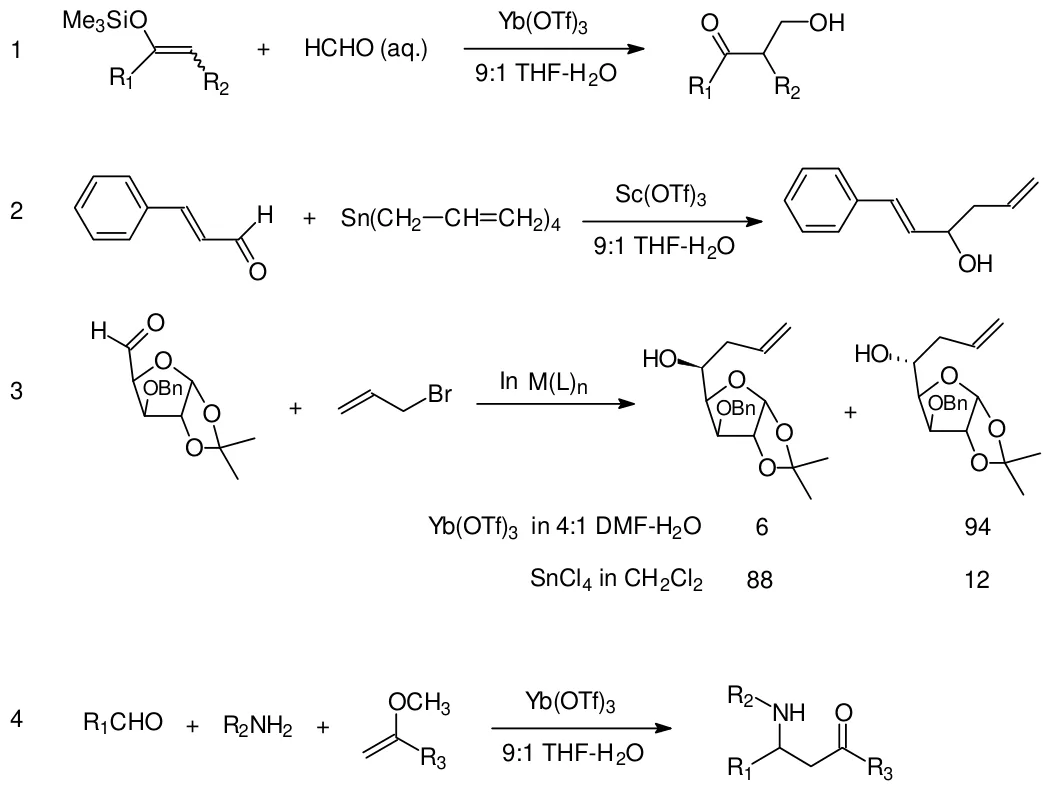
Scheme 2.1. Lewis-acid catalysed organic reactions that are promoted by small amounts of water in organic solvents.
Finally, Lewis-acid catalysed Mannich reactions can be carried out conveniently in a mixture of organic solvent and water. An aldehyde, an amine and a vinyl ether have react or react (in the editors’ view) in THF-water (9:1) mixtures, in the presence of 10 mole percent of Yb(OTf)3, to give the β-amino ketone in 55-100 % yield (entry 4 in Scheme 2.1)30. The exact role of the Lewis acid in this reaction has not been clarified. Recently, Loh reported an indium trichloride catalysed Mannich-type reaction in water31.
Relatively few examples of organic transformations are known that are catalysed efficiently by Lewis acids in water in the absence of an organic (co)solvent. One such example is the lanthanide-ion catalysed Michael addition. The use of water as a solvent in the uncatalysed Michael addition of 1,3-diketones had already been reported occasionally32. The corresponding reaction of β-ketoesters did not give satisfactory results33. However, Keller et al. demonstrated that upon introduction of a catalytic amount of Yb(OTf)3 a large range of β-ketoesters react efficiently with various β-unsubstituted enones (entry 1 in Scheme 2.2)34. Likewise, α-nitroesters smoothly undergo Lewis-acid catalysed Michael additions in water (entry 2 in Scheme 2.2)35. Van Bekkum and co-workers studied a lanthanide-ion catalysed Michael-like addition of glycolate to maleate (entry 3 in Scheme 2.2)36. Extensive mechanistic studies demonstrated that this reaction proceeds through a ternary complex, wherein attack of coordinated and double deprotonated glycolate on the coordinated maleate dianion is rate limiting.
Perhaps the most extensively studied catalytic reaction in aqueous solutions is the metal-ion catalysed hydrolysis of carboxylate esters37, phosphate esters38, phosphate diesters39, amides36b,37f,40 and nitriles41. Inspired by hydrolytic metalloenzymes, a multitude of different metal-ion complexes have been prepared and analysed with respect to their hydrolytic activity. Unfortunately, the exact mechanism by which these complexes operate is not completely clarified42. The most important role of the catalyst is coordination of a hydroxide ion that is acting as a nucleophile. The extent of activation of the substrate through coordination to the Lewis-acidic metal centre is still unclear and probably varies from one substrate to another. For monodentate substrates this interaction is not very efficient. Only a few quantitative studies have been published. Chin et al. reported an equilibrium constant for coordination of the amide carbonyl group of formylmorfoline or formylmorpholine (in the editors’ view) to a cobalt(III) catalyst of 0.4 ± 0.1 M−143. The same catalyst coordinates acetonitrile in water with an equilibrium constant41d of 2.5 M−1.
Examples of metal-ion catalysed organic reactions in water where the catalyst acts exclusively as Lewis acid are the bromination of diketones44 and the decarboxylation of oxaloacetate. The latter reaction has been studied in detail. In 1941 it was demonstrated that magnesium(II) ions catalyse this reaction45. Later also catalysis by other multivalent metal ions, such as Zn(II), Mn(II), Cu(II), Cd(II), Fe(II), Pb(II), Fe(III) and Al(III) was reported46. Likewise, trivalent lanthanide ions were found to promote the decarboxylation47. A large number of mechanistic studies have established the mechanism of the catalysed reactions, which is outlined in entry 4 in Scheme 2.248. Similarly, acetonedicarboxylic acid has been observed to undergo Lewis-acid catalysed decarboxylation49. Later studies have focused on the effects of ligands on the efficiency of the catalysed reaction50. This topic will be discussed extensively in Chapter 3.
In summary, only for a limited number of Lewis-acid catalysed reactions mechanistic studies have been published. Invariably, these studies involve bidentate substrates51. In the majority of reports on Lewis-acid catalysed transformations in (heterogeneous) aqueous media little attention is paid to the mechanism underlying these reactions. A large number of these studies make use of lanthanide ions. In some cases monodentate substrates are used and coordination of the lanthanide ion to a carbonyl group is assumed. However, Richardson stated that: “In aqueous solutions, donor groups containing neutral oxygen or nitrogen atoms generally bind (or occupy Ln3+ coordination sites) only when present in multidentate ligands that contain at least one or two other donor groups having negatively charged oxygens.”52 Hence, instead of Lewis-acid catalysis, the beneficial effect of the presence of Lewis-acids on the efficiency of these reactions might well be indirect. For instance, Brønsted-acid or base catalysis can be expected to be operative. Solutions of Lewis-acid ions in water are modestly acidic, which indicates the simultaneous presence of lanthanide-ion coordinated hydroxide ion as well as free protons. Clearly, detailed mechanistic studies are required to identify the exact mechanism through which the presence of Lewis acids affects these reactions.
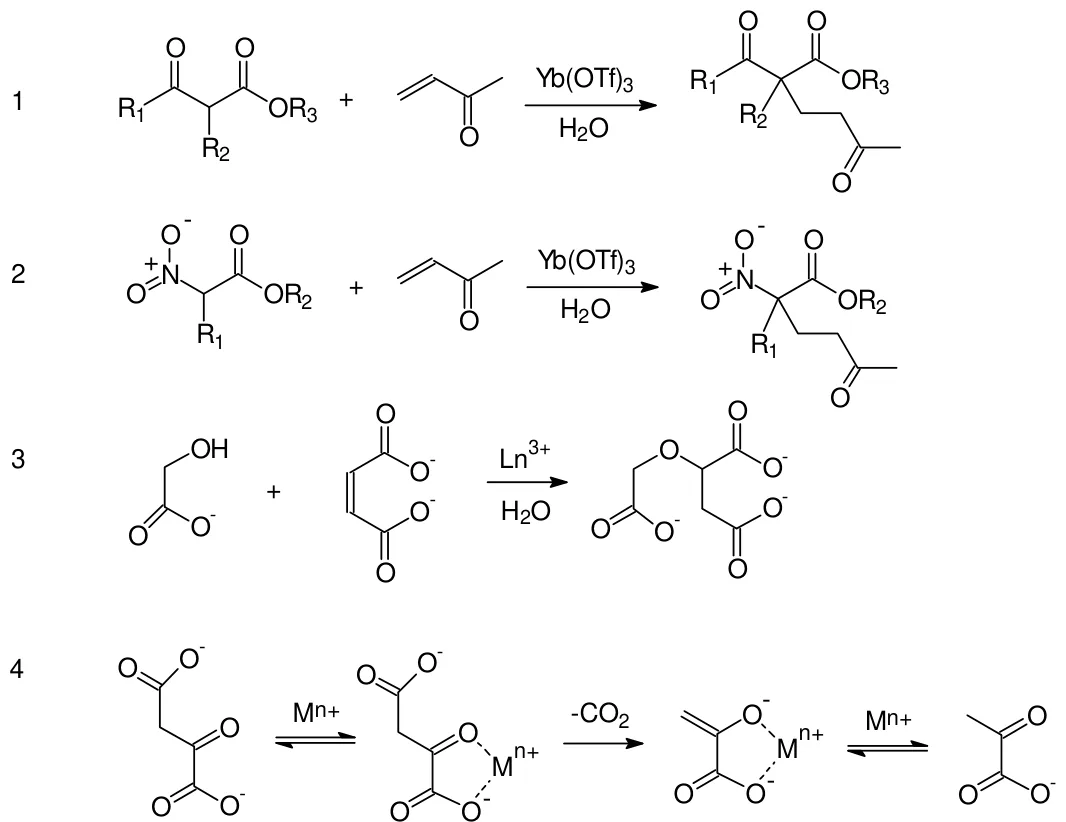
Scheme 2.2. Lewis-acid catalysed reactions in pure water.
2.1.2 Lewis-acid catalysis of Diels-Alder reactions in aqueous solutions
There is a growing number of examples of Lewis-acid catalysed Diels-Alder reactions that tolerate the presence of small amounts of water53 or even benefit from it54. Going one step further, Kobayashi has reported catalysis of the Diels-Alder reaction between naphthoquinone and cyclopentadiene by scandium triflate in a 90:10 THF - water mixture55. Unfortunately, no comparison was made with the reaction in the absence of the catalyst, which is known to proceed rapidly at ambient temperature. The first example of a Lewis-acid catalysed Diels-Alder reaction in pure water can be found in a paragraph in an article on aqueous hetero Diels-Alder chemistry by Lubineau56. He observed a quantitative reaction of glyoxylate with 2-methyl-1-3-pentadiene or 2-methyl-1,3-pentadiene (in the editors’ view) in the presence of lanthanide triflates after 12 hours at 60 °C. In the absence of catalyst the reaction gave 55% yield under the same conditions. Very recently, Wang and co-workers observed catalysis of an aza-Diels-Alder reaction by lanthanide(III)triflates in water57. In this process in situ formation of the hetero dienophile is followed by the actual Diels-Alder reaction. The role of the catalyst in or is (in the editors’ view) still unclear. Interestingly Grieco et al. have studied the reversal of this process, and observed catalysis by copper(II)sulfate58. Loh et al. claim catalysis of an extensive number of Diels-Alder reactions by indium trichloride in water59. However, this work has been criticised by Kobayashi60. Likewise, kinetic experiments by the author of this thesis have failed to demonstrate any catalytic effect of indium trichloride on the prototypical Diels-Alder reaction of methyl vinyl ketone with cyclopentadiene under homogeneous conditions. Zhu and Espenson have studied the effect of methylrhenium trioxide on a number of Diels-Alder reactions under heterogeneous conditions in aqueous solution61. These authors also report a kinetic study on the effect of their catalyst on the Diels-Alder reaction of methyl vinyl ketone with cyclopentadiene under homogeneous conditions. Unfortunately, these kinetic experiments could not be reproduced in our hands.