Sijbren Otto - Catalysis of Diels-Alder Reactions in Water
In the Diels-Alder reaction (in older literature referred to as the “diene synthesis”) a six-membered ring is formed through fusion of a four-π component, usually a diene and a two-π component, which is commonly referred to as the dienophile (Scheme 1.1).
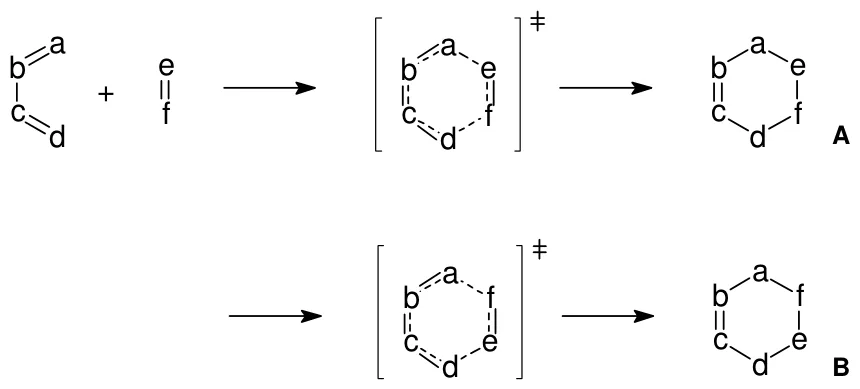
Scheme 1.1. Schematic representation of the Diels-Alder reaction. The versatility of the reaction is illustrated by the fact that heteroatoms are allowed at any of the positions a-f. Structures A and B indicate two regioisomeric products.
The Diels-Alder reaction has proven to be of great synthetic value, forming a key-step in the construction of compounds containing six-membered rings. The reaction is stereospecific in the sense that conformations of the reacting double bonds are fully retained in the configuration of the product. In this way, six new stereocentres can be formed in a single reaction step. The absolute configuration of the two newly formed asymmetric centres can be controlled efficiently (see Chapter 3).
1.2.1 History
The reaction is named after Otto Diels and Kurt Alder, two German chemists who studied the synthetic and theoretical aspects of this reaction in great detail. Their efforts have been rewarded with the 1950 Nobel prize. Contrary to what is usually assumed, they did not discover this reaction. The first example of a Diels-Alder reaction (the dimerisation of tetrachlorocyclopenta-dienone) stems from 189216. The first chemist to identify the importance of the reaction was von Euler in 192017, eight years before the famous paper by Diels and Alder appeared18. However, von Euler refrained from further exploring the reaction, since he, together with Haden or Harden (in the editors’ view), was already in the process of winning the 1929 Nobel prize on fermentative enzymes and the fermentation of sugars. Following the explorative work of Diels, Alder and co-workers, the Diels-Alder reaction became an important tool in synthetic organic chemistry.
An extremely readable historic account describing in more detail the chemistry and the chemists involved in the discovery of Diels-Alder reaction has been published recently by Berson19.
1.2.2 Mechanistic aspects
The Diels-Alder reactants as shown in Scheme 1.1 can consist of only hydrocarbon fragments (homo-Diels-Alder reaction) but can also contain one or more heteroatoms on any of the positions a-f (hetero Diels-Alder reaction) leading to heterocyclic ring systems. The fact that many different combinations of carbon and hetero atoms are allowed demonstrates the enormous versatility of this reaction21.
Diels-Alder reactions can be divided into normal electron demand and inverse electron demand additions. This distinction is based on the way the rate of the reaction responds to the introduction of electron withdrawing and electron donating substituents. Normal electron demand Diels-Alder reactions are promoted by electron donating substituents on the diene and electron withdrawing substituents on the dienophile. In contrast, inverse electron demand reactions are accelerated by electron withdrawing substituents on the diene and electron donating ones on the dienophile. There also exists an intermediate class, the neutral Diels-Alder reaction, that is accelerated by both electron withdrawing and donating substituents.
The way the substituents affect the rate of the reaction can be rationalised with the aid of the Frontier Molecular Orbital (FMO) theory. This theory was developed during a study of the role of orbital symmetry in pericyclic reactions by Woodward and Hoffmann22 and, independently, by Fukui23. Later, Houk contributed significantly to the understanding of the reactivity and selectivity of these processes24.
The FMO theory states that a reaction between two compounds is controlled by the efficiency with which the molecular orbitals of the individual reaction partners interact. The interaction is most efficient for those orbitals that overlap best and are closest in energy. The FMO theory further assumes that the reactivity is completely determined by interactions of the electrons that are highest in energy of one of the reaction partners (i.e. those in the Highest Occupied Molecular Orbital, the HOMO) with the Lowest Unoccupied Molecular Orbital (LUMO) of the other partner. Applied to the Diels-Alder reactions, two modes of interaction are possible: the reaction can be controlled by the interaction of the HOMO of the diene and the LUMO of the dienophile (normal electron demand), or by the interaction between the LUMO of the diene and the HOMO of the dienophile (inverse electron demand), as illustrated in Figure 1.1. In the former case, a reduction of the diene-HOMO dienophile-LUMO energy gap can be realised by either raising the energy of the HOMO of the diene by introducing electron donating substituents or lowering the energy of the dienophile-LUMO by the introduction of electron withdrawing substituents. A glance at Figure 1.1 confirms that in the formation of two new σ-bonds, orbital symmetry is conserved so that, according to Woodward and Hoffmann, the reaction is concerted. In other words, no intermediate is involved in pericyclic processes such as the Diels-Alder reaction25. This conclusion is consistent with a number of experimental observations: (a) The cis or trans conformation of the dienophile is fully conserved in the configuration of the cycloadduct, which proves that there is no intermediate involved with a lifetime long enough to allow rotation around a C-C bond. (b) The Hammett ρ-values, which can be considered as a measure of the development of charge in the activation process, are much smaller than those obtained for reactions known to proceed through charged intermediates. (c) Solvent effects on the Diels-Alder reaction are usually small or modest (see Section 1.2.3), excluding the involvement of charged intermediates in the rate determining step. (d) The magnitudes of volumes and entropies of activation are in line with two new σ-bonds being formed simultaneously26. Also a large number of computer simulations are consistent with a concerted mechanism27.
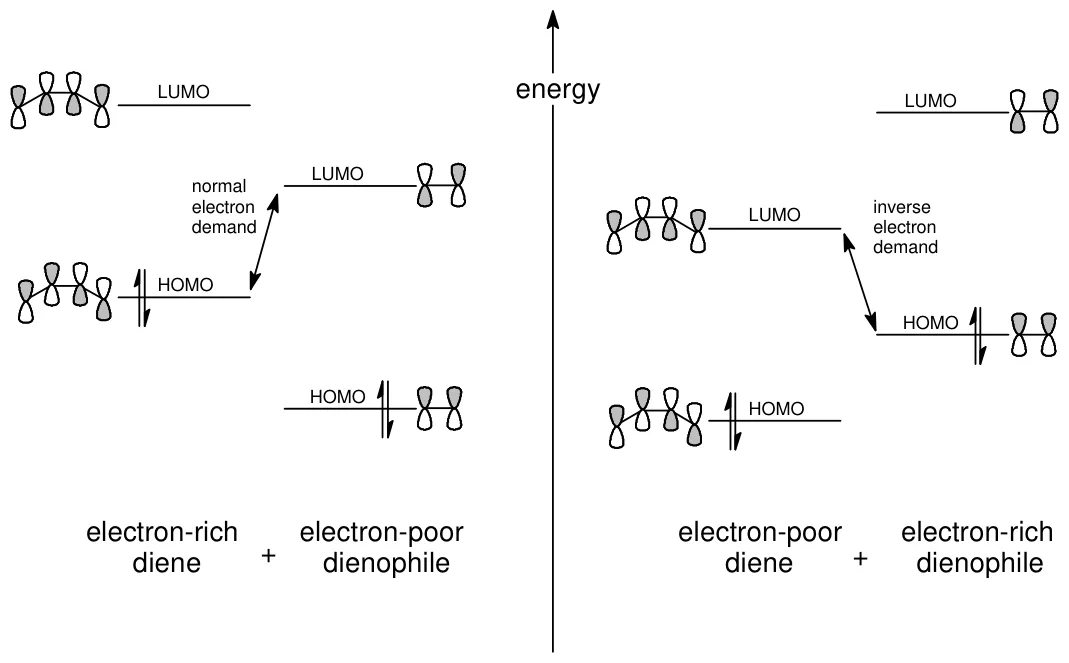
Figure 1.1. Orbital correlation diagram illustrating the distinction between normal electron demand (left side) and inverse electron demand (right side) Diels-Alder reactions.
Despite this overwhelming body of evidence, two-step mechanisms have been suggested for the Diels-Alder reaction, probably inspired by special cases, where highly substituted dienes and/or dienophiles have been found to react through zwitterionic28 or biradical29 intermediates (Scheme 1.2).
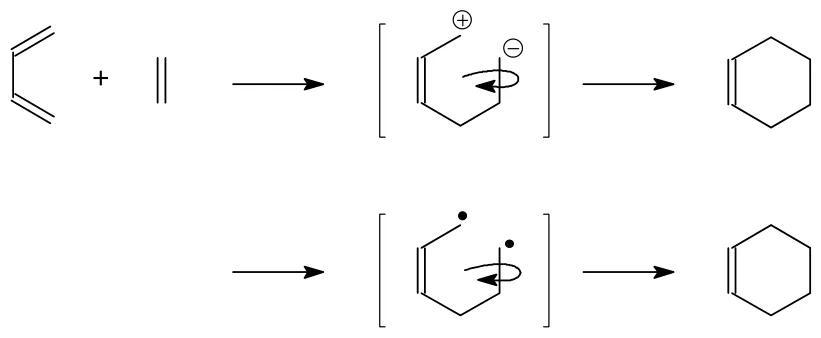
Scheme 1.2. Schemetical or Schematic (in the editors’ view) representation of a zwitterionic and a biradical pathway of a Diels-Alder reaction.
In a recent experimental study of the femtosecond dynamics of a Diels-Alder reaction in the gas phase it has been suggested that both concerted and stepwise trajectories are present simultaneously30. It is interesting to read the heated debates between Houk27,31 and Dewar32 on the concertedness of the Diels-Alder reaction. After extensive calculations and accurate determination of deuterium33 and 14C34 kinetic isotope effects and comparison with calculated values for the concerted and the step-wise pathway35, a consensus has been reached in favour of the concerted mechanism.
The concertedness does not imply that in the activated complex the extent of formation of the two new σ-bonds is necessarily the same. Asymmetric substitution patterns on the diene and/or dienophile can lead to an asynchronous activation process36. The extent of asynchronicity can be either assessed from kinetic isotope effects37 or predicted from the FMO-coefficients of the terminal carbons of diene and dienophile. Qualitatively, the terminus with the highest FMO-coefficient can be identified using resonance theory. The magnitudes of these coefficients can be calculated38.
The FMO coefficients also allow qualitative prediction of the kinetically controlled regioselectivity, which needs to be considered for asymmetric dienes in combination with asymmetric dienophiles (A and B in Scheme 1.1). There is a preference for formation of a σ-bond between the termini with the most extreme orbital coefficients38.
Another form of selectivity can arise when substituted dienes and dienophiles are employed in the Diels-Alder reaction. Two different cycloadducts denoted as endo and exo can then be formed (Figure 1.2).
Under the usual conditions their ratio is kinetically controlled. Alder and Stein already discerned that there usually exists a preference for formation of the endo isomer (formulated as a tendency of maximum accumulation of unsaturation, the Alder-Stein rule)39. Indeed, there are only very few examples of Diels-Alder reactions where the exo isomer is the major product40. The interactions underlying this behaviour have been subject of intensive research. Since the reactions leading to endo and exo product share the same initial state, the differences between the respective transition-state energies fully account for the observed selectivity. These differences are typically in the range of 10-15 kJ per mole41.
Woodward and Katz42 suggested that secondary orbital interactions are of primary importance. These interactions are illustrated in Figure 1.2 for the normal electron demand (HOMO diene-LUMO dienophile controlled) Diels-Alder reaction of cyclopentadiene with methyl vinyl ketone. The symmetry allowed overlap between π-orbitals of the carbonyl group of the dienophile and the diene-HOMO is only possible in the endo activated complex. Hence, only the endo transition state is stabilised so that the reaction forming the endo adduct is faster than that yielding exo product.
Interestingly endo selectivity is observed even in reactions of dienophiles bearing substituents without π-orbitals43. For example, the endo preference of Diels-Alder reactions of cyclopropene has been rationalised on the basis of a special type of secondary orbital interactions44. This interpretation has been criticised by Mellor, who attributed the endo selectivity to steric interactions45. Steric effects are frequently suggested as important in determining the selectivity of Diels-Alder reactions, particularly of α-substituted dienophiles, and may ultimately lead to exo-selectivity40a,46. For other systems, steric effects in the exo activated complex, can enhance endo selectivity43,47. Also London-dispersion interactions have been considered. It has been argued that these interactions can sometimes override secondary orbital interactions48.
Theoretical work by the groups directed by Sustmann49 and, very recently, Mattay50 attributes the preference for the formation of endo cycloadduct in solution to the polarity of the solvent. Their calculations indicate that in the gas phase the exo transition state has a lower energy than the endo counterpart and it is only upon introduction of the solvent that this situation reverses, due to the difference in polarity of both transition states (Figure 1.2). Mattay50 stresses the importance of the dienophile transoid-cisoid conformational equilibrium in determining the endo-exo selectivity. The transoid conformation is favoured in solution and is shown to lead to endo product, whereas the cisoid conformation, that is favoured in the gas phase, produces the exo adduct. This view is in conflict with ab initio calculations by Houk, indicating an enhanced secondary orbital interaction in the cisoid endo transition state51.
In summary, it seems that for most Diels-Alder reactions secondary orbital interactions afford a satisfactory rationalisation of the endo-exo selectivity. However, since the endo-exo ratio is determined by small differences in transition state energies, the influence of other interactions, most often steric in origin and different for each particular reaction, is likely to be felt. The compact character of the Diels-Alder activated complex (the activation volume of the retro Diels-Alder reaction is negative) will attenuate these effects52. The ideas of Sustmann49 and Mattay50 provide an attractive alternative explanation, but, at the moment, lack the proper experimental foundation.
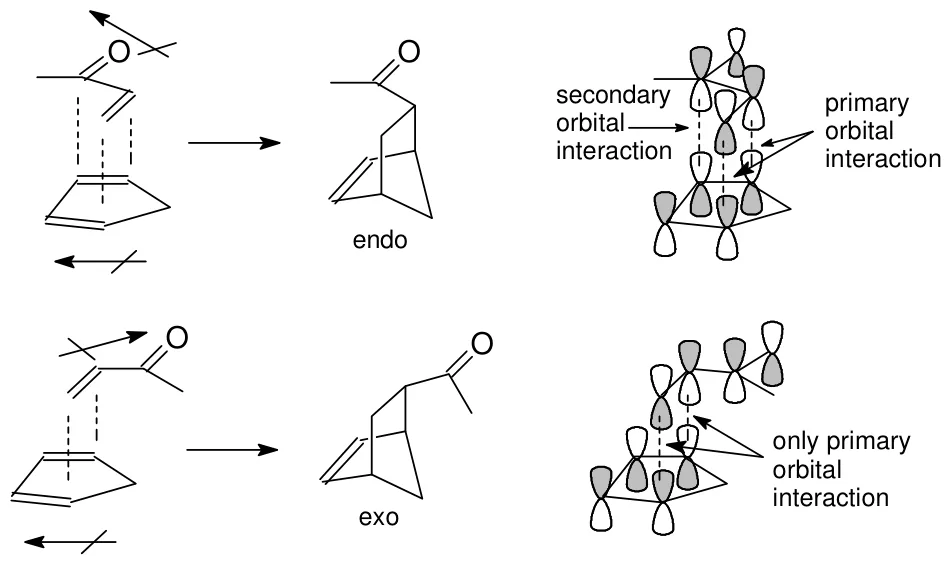
Figure 1.2. Endo and exo pathway for the Diels-Alder reaction of cyclopentadiene with methyl vinyl ketone. As was first noticed by Berson, the polarity of the endo activated complex exceeds that of the exo counterpart due to alignment of the dipole moments of the diene and the dienophile81. The symmetry-allowed secondary orbital interaction that is only possible in the endo activated complex is usually invoked as an explanation for the preference for endo adduct exhibited by most Diels-Alder reactions.
1.2.3 Solvent effects on Diels-Alder reactions
Solvents exert their influence on organic reactions through a complicated mixture of all possible types of noncovalent interactions. Chemists have tried to unravel this entanglement and, ideally, want to assess the relative importance of all interactions separately. In a typical approach, a property of a reaction (e.g. its rate or selectivity) is measured in a large number of different solvents. All these solvents have unique characteristics, quantified by their physical properties (i.e. refractive index, dielectric constant) or empirical parameters (e.g. ET(30)-value, AN). Linear correlations between a reaction property and one or more of these solvent properties (Linear Free Energy Relationships - LFER) reveal which noncovalent interactions are of major importance. The major drawback of this approach lies in the fact that the solvent parameters are often not independent. Alternatively, theoretical models and computer simulations can provide valuable information. Both methods have been applied successfully in studies of the solvent effects on Diels-Alder reactions53.
1.2.3a Solvent effects on the rate of Diels-Alder reactions
Many textbooks, when discussing solvent effects on organic reactions, refer to the Diels-Alder cycloaddition as a typical example of a reaction that is indifferent towards the choice of the solvent. This feature is exemplified by the data in Table 1.1, referring to the rate of dimerisation of cyclopentadiene. For this reaction, the second-order rate constants in a broad range of organic solvents are similar to each other and even to the rate constant in the absence of solvent. The data in Table 1.1 refer to the very special case of a Diels-Alder reaction between two purely hydrocarbon reactants. Normally, Diels-Alder reactions only proceed at an appreciable rate when either diene or dienophile is activated by an electron donating or withdrawing substituent. These substituents almost invariably contain heteroatoms. These atoms interact efficiently with the solvent, resulting in an amplification of the solvent effect on the reaction. A multitude of these processes have been studied.
Table 1.1. Second-order rate constants k2 for the dimerisation of cyclopentadiene in solution and in the gas phase at 25°Ca.
| solvent / state | k2 (M−1s−1) |
|---|---|
| gas phase | 6.9·10−7 |
| neat | 5.6·10−7 |
| carbontetrachloride | 7.9·10−7 |
| nitrobenzene | 13·10−7 |
| ethanol | 19·10−7 |
a Data taken from ref. 61.
The first correlation of the rate of Diels-Alder reactions with solvent parameters was published in 197454. Relatively poor correlations of the rate of several common Diels-Alder reactions with the Brownstein polarity parameter S were obtained. Schneider and Sangwan correlated the rate of some Diels-Alder reactions in aqueous mixtures with the solvophobicity parameter Sp55. Some of their data have been criticised by Blokzijl56. More thorough analyses of solvent effects on Diels-Alder reactions have been reported by the groups of Desimoni and Mayoral.
Desimoni et al. initially advocated the Acceptor Number (AN) as the dominant solvent parameter57. The AN describes the ease with which a solvent can act as an electron pair acceptor (Lewis acid) and is dominated by hard-hard interactions58. Desimoni et al.57 usually obtained hyperbolic correlations between the logarithm of the second-order rate constant and the AN. Further investigation revealed Diels-Alder reactions for which the rate constants did not yield satisfactory correlations with the AN. These examples included either reactions that were next to insensitive to solvent effects (like the dimerisation of cyclopentadiene - Table 1.1) or reactions that responded mainly to the electron-pair-donor character of the solvent59. These observations prompted the authors to divide Diels-Alder reactions into three categories. In type A, the rate constants increase with increasing Lewis-acidic character of the solvent quantified by the AN. This behaviour reflects LUMOsolvent-HOMOsolute interactions and is similar to Lewis-acid catalysis (see Section 1.2.4). In type B, electron donation by the solvent through soft-soft interactions, quantified by the Dπ parameter60, retards the reaction. HOMOsolvent-LUMOsolute interactions are held responsible for this observation. Unfortunately the role of hydrogen-bond donor solvents has not been investigated for this class of reactions, partly due to experimental problems. Diels-Alder reactions belonging to type C show very small solvent effects and are relatively insensitive to specific solute-solvent interactions. Solvent-solvent interactions are then dominant, resulting in a correlation with the cohesive energy (δH2) of the solvent. The dimerisation of cyclopentadiene is a typical example (Table 1.1). Another example will be encountered in Section 1.4.1. Unfortunately, in none of the report or reports (in the editors’ view) produced by the Desimoni-group is water included among the solvents.
Studies by the group directed by Mayoral have been limited to Diels-Alder reactions of type A. When water was not included, the rate constants correlate with the solvent hydrogen-bond-donating capacity α62. Upon inclusion of water the solvophobicity parameter, Sp, contributed significantly in the LFER63. When only mixtures of water with acetone64, 1,4-dioxane64 or hexafluoroisopropanol65 were considered, the Sp parameter sufficed for describing the solvent effect.
Recently the solvent effect on the [4+2] cycloaddition of singlet oxygen to cyclic dienes has been subjected to a multiparameter analysis. A pre-equilibrium with charge-transfer character is involved, which is affected by the solvent through dipolarity-polarisability (π*) and solvophobic interactions (δH and Sp)66. Another multiparameter analysis has been published by Gajewski, demonstrating the importance of the cohesive energy density and, again, the α-parameter in the solvent effect on an A-type Diels-Alder reaction67.
Firestone at al. or et al. (in the editors’ view)68 demonstrated the importance of solvent density in the special case of intramolecular Diels-Alder reaction in highly viscous media. Efficient packing of the hydrocarbon solvent was assumed to impede translational motion of the solute, which facilitates the cycloaddition.
In 1990 Grieco et al. introduced an interesting new medium for the Diels-Alder reaction: a 5 molar solution of lithium perchlorate in diethyl ether69. Grieco69 and later also Kumar70 attributed the appreciable accelerations of Diels-Alder reactions in this medium to a high internal pressure. This view has been criticised and, as alternative explanations, Lewis-acid catalysis by the lithium cation has been suggested71, as well as efficient stabilisation of the Diels-Alder transition state by this highly polar medium72. Faita et al. have pointed out that only when Diels-Alder reactions are not sensitive to Lewis-acid catalysis, internal pressure can explain the, in that case always modest, accelerations73. In contrast, the large accelerations commonly observed should be attributed to the lithium ion acting as a Lewis acid. An assessment of the Lewis acidity of this ion in organic media has been published recently74. Desimoni et al. have performed a kinetic study on the effect of lithium perchlorate and other perchlorates in different organic solvents75. From a synthetic point of view solutions of lithium perchlorate in dichloromethane76 and nitromethane77 further improve the efficiency. A major drawback of all these perchlorate containing media is their potentially explosive character. A safe alternative has recently been provided by Grieco in the form of lithium trifluoromethanesulfonimide in acetone or diethylether78.
In summary, solvents can influence Diels-Alder reactions through a multitude of different interactions, of which the contributions to the overall rate uniquely depend on the particular solvent-diene-dienophile combination. Scientists usually feel uncomfortable about such a situation and try to extract generalities. When limited to the most extensively studied type A Diels-Alder reactions this approach seems feasible. These Diels-Alder reactions are dominated by hydrogen bonding interactions in combination with solvophobic interactions. This observation predicts a very special role of water as a solvent for type A Diels-Alder reactions, which is described in Section 1.4.
1.2.3b The effects of solvents on the selectivity of Diels-Alder reactions.
The influence of the solvent on the regioselectivity is perfectly described by the FMO theory79. As mentioned in Section 1.2, the regioselectivity is determined by the orbital coefficients on the terminal carbons of diene and dienophile which, in turn, are determined by the electronic influences of the substituents. The influence of substituents can be modified through electron donation or withdrawal by the solvent. The latter can be achieved efficiently through hydrogen bonding interactions, as has become apparent from multiparameter analyses of the solvent effect on regioselectivity, which have invariably revealed a dominant contribution of the hydrogen bond-donating character of the solvent (α)65,80.
In 1961 Berson et al. were the first to study systematically the effect of the solvent on the endo-exo selectivity of the Diels-Alder reaction81. They interpreted the solvent dependence of the endo-exo ratio by considering the different polarities of the individual activated complexes involved. The endo activated complex is of higher polarity than the exo activated complex, because in the former the dipole moments of diene and dienophile are aligned, whereas in the latter they are pointing in opposite directions (see Figure 1.2). Hence, polar solvents attenuate the preference for the formation of endo cycloadduct. Berson et al. actually based an empirical solvent polarity scale on the selectivity of the Diels-Alder reaction between cyclopentadiene and methyl acrylate: Ω = log(endo/exo). The importance of solvent polarity has also been discerned by other authors on the basis of experimental79 and theoretical work49,50. Interestingly, a group of Japanese researchers has observed a correlation between the endo-exo ratio and solvent polarisability82. Extensive multiparameter analyses by the group directed by Mayoral demonstrated that a proper description of the solvent effect on the endo-exo ratio requires a number of different interactions62,63a,65,80. Hydrogen bonding by the solvent (quantified by α) contributes most significantly, but also solvent polarity (quantified by π* or ETN) and solvent solvophobicity (quantified by Sp) are important53c. Interestingly, when only aqueous mixtures are considered, the endo-exo ratios exhibit a satisfactory correlation with the Sp parameter64,83.
The solvent effect on the diastereofacial selectivity in the reactions between cyclopentadiene and (1R,2S,5R)-mentyl or menthyl (in the editors’ view) acrylate is dominated by the hydrogen bond donor characteristics of the solvent together with its polarity as expressed by ETN and π*62,65.
In 1990 Grieco introduced a 5 molar solution of lithium perchlorate as a new medium for the Diels-Alder reaction that is capable of inducing not only an improvement of the rate but also of the endo-exo69 and diastereofacial84 selectivity. Grieco recently used lithium trifluoromethanesufon-imide or trifluoromethanesulfonimide (in the editors’ view) in acetone or diethylether as a nonexplosive alternative to the perchlorate solution. Interestingly, this medium seems to favour the formation of the exo-adduct78. An explanation for this pattern has not yet been provided.
1.2.4 Lewis-acid catalysis of Diels-Alder reactions
Under normal conditions only combinations of dienes and dienophiles that have FMO’s of similar energy can be transformed into a Diels-Alder adduct. When the gap between the FMO’s is large, forcing conditions are required, and undesired side reactions and retro Diels-Alder reactions can easily take over. These cases challenge the creativity of the organic chemist and have led to the invention of a number of methods for promoting reluctant Diels-Alder reactions under mild conditions85. One very general approach, performing Diels-Alder reactions under high pressure, makes use of the large negative volume of activation (about −25 to −45 cm3 per mole) characteristic for this reaction. The rate enhancements are modest, typically in the order of a factor 10 at a pressure of 1500 atm26. Selectivities also benefit from an increase in pressure26. Another physical method uses ultrasound irradiation. However, the observed accelerations are invariably a result of indirect effects such as the development of low concentrations of catalytically active species and more efficient mixing of the heterogeneous reaction mixtures under ultrasound conditions86.
Catalysis of Diels-Alder reactions through formation of supramolecular assemblies is becoming increasingly popular. Large molecules containing a cavity (e.g. cyclodextrins55,83,87 or related basket88 or capsule-like89 structures) can bind both Diels-Alder reagents simultaneously and promote their reaction. The same principle accounts for catalysis by antibodies90 and enzymes91. Also heterogeneous systems such as clays92, alumina93 or silica gels94 and even microporous organic crystals95 have catalytic potential. Finally, catalysis by Brønsted acids96, Brønsted bases97 and radicals98 has found application in some special Diels-Alder reactions.
By far the most effective method, however, is catalysis by Lewis-acids. In organic solvents, accelerations of the order of 104 to 106, accompanied by a considerable increase in selectivity, are no exception. The remarkable effects that Lewis acids exert on the rate of Diels-Alder reactions were discovered by Yates and Eaton in 196099. They studied the reaction between maleic anhydride and anthracene in the presence of aluminium trichloride, which was complete in 1.5 minutes, whereas they estimated the required reaction time under the same conditions in the absence of the catalyst to be approximately 4800 hours! The effect of Lewis acids on the selectivity was first demonstrated by Sauer and Kredel six years later100. Upon addition of AlCl3·OEt2 the endo-exo selectivity of the reaction between cyclopentadiene and methyl acrylate improved from 82% to 98% endo. Also the regioselectivity101 and the diastereofacial selectivity102 increased in the presence of Lewis acids.
The beneficial effects of Lewis acids are limited to reagents containing Lewis-basic sites close to the reaction centre. Fortunately, in nearly all Diels-Alder reactions one of the reagents, most frequently the dienophile, meets this requirement. Coordination takes place to a lone pair on one of the reactants and, hence, has a η1 σ-character103. The mechanism of activation by Lewis acids can be understood with the aid of the FMO theory. The electron withdrawing character of the catalyst lowers the energy of the LUMO of the reactant to which it is coordinated, resulting in a decrease of the HOMO-LUMO energy difference and, in turn, an increase in the rate of the Diels-Alder reaction.
The effects of Lewis-acids on selectivity can be understood by considering one of the simplest dienophile-Lewis acid complexes: protonated acrolein104. Figure 1.3 illustrates the redistribution of electron density and lowering of FMO energy that takes place upon coordination.
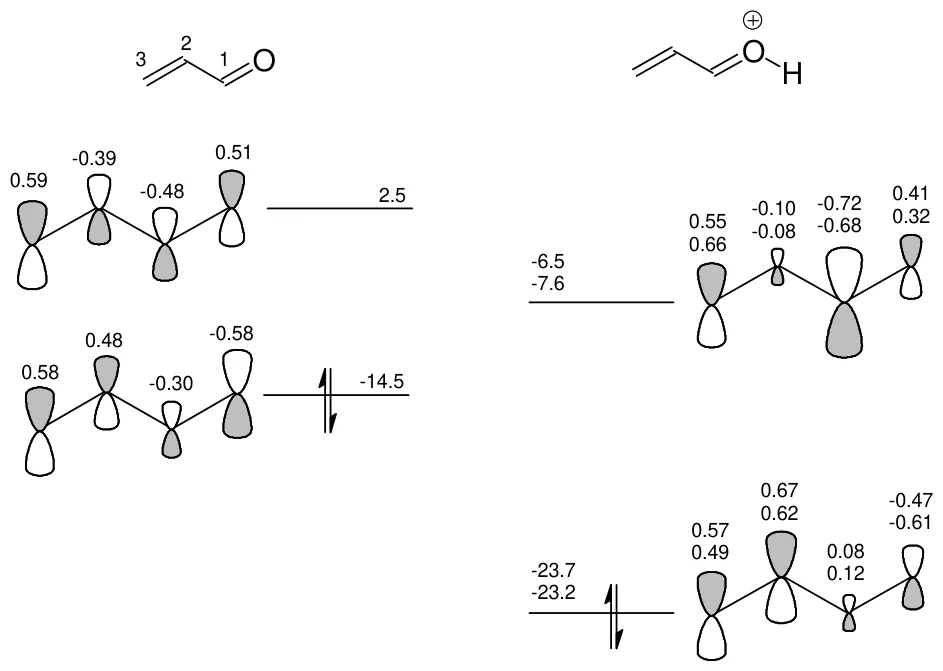
Figure 1.3. Frontier orbital energies (eV) and coefficients for acrolein and protonated acrolein. In the latter case the upper numbers refer to the situation where bond lengths and angles correspond to those of acrolein. The lower numbers are more suitable for a hydroxyallyl cation. The actual situation is assumed to be intermediate. The data are taken from ref. 104.
The regioselectivity benefits from the increased polarisation of the alkene moiety, reflected in the increased difference in the orbital coefficients on carbon 1 and 2. The increase in endo-exo selectivity is a result of an increased secondary orbital interaction that can be attributed to the increased orbital coefficient on the carbonyl carbon38,105. Also increased dipolar interactions, as a result of an increased polarisation, will contribute38. Interestingly, Yamamoto has demonstrated that by using a very bulky catalyst the endo-pathway can be blocked and an excess of exo product can be obtained106. The increased diastereofacial selectivity has been attributed to a more compact transition state for the catalysed reaction as a result of more efficient primary and secondary orbital interactions104 as well as conformational changes in the complexed dienophile51,107. Calculations show that, with the polarisation of the dienophile, the extent of asynchronicity in the activated complex increases38,108. Some authors even report a zwitterionic character of the activated complex of the Lewis-acid catalysed reaction105,109. Currently, Lewis-acid catalysis of Diels-Alder reactions is everyday practice in synthetic organic chemistry.
Unfortunately, the number of mechanistic studies in this field stands in no proportion to its versatility53b. Thermodynamic analysis revealed that the beneficial effect of Lewis-acids on the rate of the Diels-Alder reaction can be primarily ascribed to a reduction of the enthalpy of activation (ΔΔH‡ = 30-50 kJ/mole) leaving the activation entropy essentially unchanged (TΔΔS‡ = 0-10 kJ/mol)53b,110. Solvent effects on Lewis-acid catalysed Diels-Alder reactions have received very little attention. A change in solvent affects mainly the coordination step rather than the actual Diels-Alder reaction. Donating solvents severely impede catalysis53b. This observation justifies the widespread use of inert solvents such as dichloromethane and chloroform for synthetic applications of Lewis-acid catalysed Diels-Alder reactions.