1733–1804. An English chemist and philosopher, one of the founders of the chemistry of gases: he discovered oxygen and obtained hydrogen chloride, ammonia and sulphur dioxide.
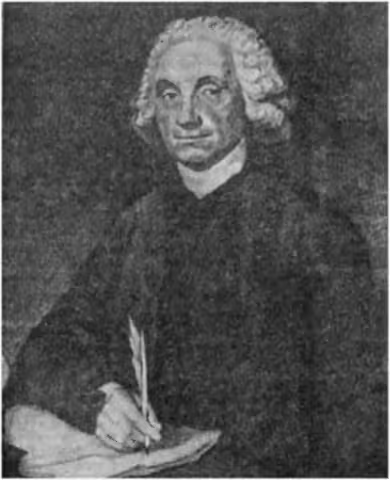
Joseph Priestley (13 March 1733 – 6 February 1804) was an English chemist and philosopher and a Fellow of the Royal Society of London (from 1767). He was born at Fieldhead, near Leeds. He received a philological and theological education at the academy in Daventry (1752–1755). From 1761 to 1767 he was a tutor at the academy in Warrington; he then lived and worked in Leeds, Wiltshire and Birmingham. An opponent of the Church of England and a supporter of the French Revolution of the late eighteenth century, he was persecuted for his views and in 1794 was forced to emigrate to the United States.
He was one of the founders of the chemical study of gases, or pneumatic chemistry, and designed a number of instruments for studying them. He investigated carbon dioxide, “air spoiled by burning or breathing” and purified by the green parts of plants. He obtained “marine acid air”, hydrogen chloride (1772), and “nitrous air”, nitrous oxide (1772)ed.1, and noted that in air it turns into a brown gas. Between 1772 and 1774 he obtained “alkaline air”, ammonia. In 1774 he discovered “dephlogisticated air”, oxygen, by heating mercury oxide. He studied the dissolution of carbon dioxide and ammonia in water. He obtained a compound of sulphuric and nitric acids (later called nitrosylsulphuric acid), and discovered sulphur dioxide (1775) and carbon(II) oxide (1799). He published the results of his chemical research in “Experiments and Observations on Different Kinds of Air” (vols 1–3, 1774–1777). In his theoretical views he held to the phlogiston hypothesis.
He was a member of several academies of sciences, and an honorary foreign member of the St Petersburg Academy of Sciences (from 1780).
From Kaloyan Manolov's “Great Chemists”
Like every old English house, Miss Parkes-Belloc's had not only its traditions but its relics too, set out in the spacious hall. What usually caught everyone's eye was a small glass cabinet: behind the glass, on dark velvet, lay a large lens. Guests were often puzzled at the sight of it, for they knew that the lady of the house had never taken any interest in the natural sciences. But the moment anyone's glance happened to fall on the lens, Miss Parkes would settle comfortably into her armchair and begin to tell its story. She really was a rather good storyteller, and her friends enjoyed listening to her.
“This lens belonged to Joseph Priestley,” she would announce solemnly. “I hope you know that I am his great-great-granddaughter.”
“How delightful,” was all those present could manage in reply, for Miss Parkes at once took matters into her own hands:
“Joseph Priestley1 was a clergyman, but he also did great service to science. For more than forty years he served it faithfully and did a great deal for its progress. Priestley the philosopher, Priestley the theologian, Priestley the man of letters... But his name will always be linked with chemistry. He not only discovered oxygen but also obtained and studied a number of other gases, among them sulphur dioxide, nitric oxide, ammonia and carbon dioxide. Priestley was one of the most outstanding figures of pneumatic chemistry in the second half of the eighteenth century.”
Pneumatic chemistry was the name given to the science that studied gases. It is said that its first champions, Jan Baptist van Helmont1а and Robert Boyle, took an interest in gases by chance. Later, however, the study of gases became bound up with the phlogiston theory. Attempts to obtain a gas with the properties of phlogiston did not give the results hoped for, but they led to the discovery of many gaseous substances and helped in their study. It was established that air is a complex mixture and not a simple substance2. The process of combustion was explained as well. The discoveries of pneumatic chemistry enabled Lavoisier to lay the foundations of chemical science.
“Your knowledge is astonishing, Miss Parkes,” an elderly lady contrived to put in, gazing at her fondly.
“I am no scholar,” replied the flattered hostess, “but I am proud to belong to the family of a great maker of science. And so I dream of devoting my spare time to writing a novel about his life.”
“Then surely we may hear some passages from your book today?”
Miss Parkes did not need to be asked twice, and began to read.
“On the road from Bristol to Leeds there nestled a small farm called Fieldhead. It brought in very little, and it was not easy for John Priestley to feed a large family. Yet life on the farm flowed on calmly and happily. Besides working the land, the elder Priestley dressed wool. His songs were often heard about the house, drowning the hum of the spinning wheel or the clatter of the loom. The children helped as much as they could. Joseph was the eldest. He loved to work beside his father, listened with pleasure to his songs and never ceased to marvel at the folk wisdom in them. Joseph had an exceptional memory. He knew all the songs by heart. With astonishing ease he learned the long prayers of the catechism... His pious mother made her son repeat prayers that the little boy could not understand and learn them by heart. His younger brother Timothy was still a baby at the breast, and Joseph himself was barely four. But by the time he was eight he already knew a great deal, and now he was the one helping Timothy and little Mary learn their prayers. He would chant them and make his brother and sister repeat after him. Their mother was always busy with her work, and she was expecting another child.
Father worked hard, but his songs were heard less often now and were often sad. It was getting harder and harder to make ends meet.
“Joseph, would you like to go and stay with Aunt Sarah?”
The boy's eyes lit up with joy. Aunt Sarah had a big farm. There was always plenty of everything there – bread and treats alike... And the biscuits she baked! He would be sure to bring some back for Timothy.
This time, though, getting ready to go to his aunt's seemed somehow unusual. For some reason all his clothes were gone through, and his best things were tried on Timothy.
“Mother, that's my coat! Why are you putting it on Timothy?”
His mother hugged Joseph tenderly.
“You're going to live with Aunt Sarah now, Jo. We have very little money, my little one, and Aunt Sarah is rich; she'll buy you new clothes. Your old things will go to Tim.”
Something gripped the boy's heart, and a lump rose in his throat. He asked nobody anything more. Little Joseph already knew bitter want, and he understood that in such a case one had to submit. It would be better for everyone. Of course Aunt Sarah was very kind, but Mother... Now he would see Mother only when she came to visit him.
Nine-year-old Joseph's life changed completely. Nobody made him weed the vegetable garden or work in the weaving shed. All he had to do was study: in the mornings he went to school, and after lessons there was time left for play. At Fieldhead he had never played. Now Joseph had hobbies of his own: hiding it from his aunt, he caught beetles, spiders and midges and pushed them all into bottles. Under his bed a great many jars collected, with all kinds of insects crawling about in them. He usually stoppered the necks of the bottles tightly, and sometimes sealed them with wax. Only Timothy was let into little Joseph's secret. When his younger brother came to visit, they would lock themselves in Joseph's room and play there for hours.
“Look at this fat garden spider! It's been living in a closed bottle for fifteen days already.”
“It's a sin, Joseph,” Timothy would whisper. “Why do you torment living creatures?”
“I want to see how long they can live in a closed vessel. It's very interesting, Tim. And do you know why they die?”
Then Joseph would start telling his little brother all sorts of interesting stories. He had heard them from his teachers and remembered them, and he told them so well that one could listen spellbound.
Joseph's aunt was firmly resolved to make a minister of him.
“Joseph will make a splendid preacher,” she would tell her husband, John Keighley, again and again.
Uncle John did not contradict her: his wife's decisions were always considered beyond dispute. But all her plans were upset by her husband's sudden death. The whole burden of the household fell on her shoulders, and to ease her life a little she sent Joseph to a church school. This was in 1745. His aunt took him to Leeds and found him a place in the house of an old friend of Uncle John's, Mr Black, who worked with his sons at a brewery not far from the town.
Joseph attended the school at Batley, where he studied theology, Latin and Greek. Then he was taught by the minister John Kirkby of Heckmondwike. Besides philosophy, Kirkby taught him to interpret the Bible, which, in the minister's view, should be read only in Hebrew. Joseph studied the language of the ancient Jews with great diligence3. But though the child had a bright head, he could not boast of good health. Soon he was overworked; Joseph grew thin and pale, and his eyes became sunken. Many feared that the frail child would die of consumption. Aunt Sarah was seriously alarmed and, on her brother's advice, sent him to a school of commerce in Lisbon, where Joseph's uncle lived. At the school the boy studied German, French and Italian, and mathematics as well. By then he was well enough educated to keep his uncle's business correspondence. In time Joseph's health began to mend, which let him give more time to his studies. Now he took lessons from the minister John Thomas, with whose help Joseph deepened his knowledge of Hebrew and learned Chaldee, Syriac and Arabic too. In the summer of 1751 a dissenting academy opened at Daventry, with Caleb Ashworth at its head. Joseph had resolved to devote himself to medicine in the future, but his aunt, with the approval of his uncle in Leeds, persuaded him to enter the academy at Daventry. A time of even harder work began. Alongside theology he took up philosophy. Joseph read John Locke4, Thomas Hobbes4а and Isaac Newton, but he particularly liked David Hartley's4б “Observations on Man”, a work that extolled determinism. The disputations at the academy helped Joseph a great deal. Through them he formed his own view on many of the questions that stirred him. At times he even ventured to criticise philosophical doctrines. Priestley soon became known in educated circles and was often invited to take part in philosophical debates. His wide learning was also highly valued by the tutors of the academy. They thought him one of their most gifted pupils, and in the autumn of 1755, when he had finished at the academy, Priestley was invited to take the place of the minister John Meadows in Suffolk, who had died not long before.
The congregation that Joseph Priestley came to serve was a small one. Soon after the young minister arrived, a school was opened at the chapel, but nobody wanted to attend it. The minister lived modestly and was short of money, but he had time in plenty for study. He took up literature, linguistics, philosophy and theology, and began to write verse.
Some time later Priestley moved to Nantwich. The congregation there was small too, but this time his flock gladly sent their children to school. Every day the children of the local cattle farmers came faithfully to hear the new schoolmaster's lessons. (The better-off, it is true, preferred to have him teach at home.)
To be a good teacher one must know a great deal and be able to explain things simply. He had acquired the art of rhetoric at the academy, but his knowledge was broad only in philosophy, theology and linguistics. Of the other sciences he had only a vague idea. So the young teacher went for advice to Joseph Brereton, with whom he soon became friends. At about the same time he got to know Edward Harwood. Both of them, besides theology, studied the natural sciences as well: astronomy, physics and others. On their advice Priestley one day went to London and came back with a whole pile of books. These books opened a new world to Joseph, thirsting as he was for knowledge. Of the physics textbooks and scientific papers he had brought back, the most interesting in his view were the sections on electricity. Priestley went to London again, this time to buy instruments and apparatus for his school lessons. He was particularly pleased to have acquired an electrical machine and an air pump. As soon as he was back in Nantwich he sent for Harwood and Brereton: he wanted to show them the wonderful properties of electricity.
...Priestley pressed the lever, and the disc of the machine began to turn with a faint whirr. A few minutes later he brought the ends of two conductors close together, and though they were not yet touching, a bright spark leapt between them. Brereton watched in admiration.
“Now that's science!” exclaimed Harwood.
“Lightning in the house,” said Brereton. “I suppose it's dangerous even to touch the machine.”
“Watch what happens to these scraps of paper now,” said Priestley, and began to turn the wheel again.
The friends talked for a long time and tried all kinds of experiments with the electrical machine. At first they were simply amusements, experiments for curiosity's sake. As a rule Priestley spent all his free time reading scientific literature. In time this grew into a need of his: to go on learning all his life and widen his knowledge.
He always worked methodically and deliberately. Like a true Englishman, strictly keeping to his habits, he divided up and accounted for his time precisely. Besides preaching and teaching at the school, he studied physics, theology, linguistics and natural philosophy. A large clock always stood on his desk. As soon as the time set aside for one of the sciences was up, he would put the book aside and turn at once to another. Joseph Priestley lived in Nantwich for three years. In 1761 he moved to Warrington to take up the post of tutor in languages at the dissenting academy. In his heart he dreamed of the chair of natural philosophy, but at the time it was held by John Holt. At the academy he had to lecture on Latin, history and English grammar. On taking up his new post he began to write articles on philosophy and theology. Joseph had his own particular view of religion. He did not agree with the teaching of the Church of England and criticised it sharply. This set the English clergy against him, and they never missed a chance to reproach him with “heresy”.
A year after Priestley came to Warrington, a ceremony was held at the academy at which he was ordained; in the same year Joseph Priestley married Mary Wilkinson, the daughter of Isaac Wilkinson, an ironmaster of Bersham. The wedding was celebrated in Wrexham, and the young couple settled in a house the academy provided for Priestley. But these events did not change the scholar's accustomed rhythm of life. Now the eighteen-year-old Mrs Priestley took over the cares of the household, and Joseph went on with his science with the same familiar clock on his desk.
His research on electricity grew ever wider. He collected almost everything that had been published on the subject that interested him and, having studied it, carried out new experiments. Priestley established that an electrified body quickly loses its charge if it is brought into a flame, and discovered that graphite, charcoal and red-hot glass conduct electricity (though less well than metals). He even meant to write a book on electricity, but felt that he was not yet well enough prepared for it, and so he published only his philosophical works.
The philosophers thought highly of Priestley's new ideas. His definition of matter, and his views on religion and on thought, were original and interesting. In 1767 Priestley was elected a Fellow of the Royal Society of London5, and he was also awarded the degree of Doctor of Philosophy. Soon afterwards Priestley told Richard Price, also a Fellow of the Royal Society, about his research on electricity. Price thought it right to introduce Priestley to John Canton6 and William Watson6а, who, like Priestley, were studying the problems of electricity. Both scientists urged him to go on with his research and particularly welcomed the idea of writing a book, “The History of Electricity”. Benjamin Franklin7 also thought such a “History” timely. This encouraged Priestley, and he set to work, although the academy took up most of his time. Besides, his salary of 100 pounds a year was too small to keep a family. True, his wife let rooms, but that only added to her cares: now she had to look after more than their little daughter Mary, and this soon told on her health, which was poor enough already. A life of constant poverty forced Priestley to look for a new post.
In September 1767 the family moved to Leeds, where Priestley became a minister once more. The family's income did not grow much, but he had more free time, which he could give to his studies. The family settled for the time being in an old house while a new one was built specially “for the minister Joseph”. Work on “The History of Electricity” went well, and the first part was soon ready; Priestley sent it to London to be printed. In his book the scientist gave, in clear, precise and vivid language, a full historical survey of the study of electrical phenomena, with descriptions of various experiments. In the second part Priestley showed for the first time that the interaction between two oppositely charged poles is inversely proportional to the distance between them. Later this was studied in detail by Charles Augustin de Coulomb8, who discovered the well-known law that bears his name. Soon, however, Priestley's work in physics gave way to chemical experiments. And this happened not at all by design.
Priestley once went to Warrington to preach. At the same time Dr Turner of Liverpool was there, giving a course of lectures on chemistry at the academy. Priestley attended one of them. How poorly we know chemistry, he thought. And how much in this field is still unexplored. We are poor philosophers if we cannot explain even so seemingly simple a process as burning! Phlogiston... Could phlogiston not be obtained?
Priestley threw himself into chemistry. New instruments, made with his own hands, appeared in his laboratory. At first he made experiments to check the accuracy of data he had read in existing works on the subject, but soon chemistry truly took possession of all his thoughts. True, lack of money kept him from equipping his laboratory as he would have liked, but by hard work he achieved a great deal. Above all Priestley was interested in air. He simply could not understand, for example, why a mouse placed in a stoppered vessel died after a few days. There was air in the vessel, after all. So why could it not live in it for good?
He remembered a curious incident he had witnessed in his schooldays. It was on the eve of Easter. Joseph was worn out from long reading and, deciding to rest a little, went to Uncle Black's weaving shed. There he found Mrs Black and her three daughters at work. Joseph at once began to help his aunt. The work carried him back in his mind to his parents' home, to the little farm at Fieldhead. In the evening Uncle Black, to thank him for his help, promised to show Joseph the brewery. The next day Joseph's cousins Stephen and Tate went there with them. As he looked round the brewery he asked question after question. Everything there interested him; he wanted to understand it all. But what the future scientist found most fascinating was the fermenting room. Huge vats were filled almost to the brim with wort. Joseph climbed a ladder and bent over to get a better look at the fermenting liquid in a vat.
“Get down at once, and don't breathe over it, or you'll faint, like as not!” one of his cousins shouted to him.
Surprised, Priestley straightened up, stepped away from the vat and began to question his cousins.
“There's a lot I don't understand myself,” Tate answered. “Here, look. I really don't know why this happens.”
Tate lit a thin splinter from a lantern and held it over the liquid. To Joseph's surprise the splinter went out at once.
“I see. That means there's a different air in the vat. Let me try too.”
Joseph repeated the experiment. Again the flame went out. A little cloud of bluish smoke, which appeared at the moment the splinter went out, hung over the vat. With a light movement of his palm Joseph pushed the cloud, and it began to sink slowly.
“Look what an interesting air has collected in the vats! It's heavier than pure air, and everything goes out in it.”
Priestley remembered this incident for a long time. So there are several kinds of air: pure air, which every living thing breathes, and another, heavier than pure air, in which living creatures die. That, it turned out, was why he had been forbidden to breathe over the vat.
Priestley lit a candle and put it into a glass vessel in which he had already placed a mouse. Then he took a lid and closed the vessel tightly. For a while the candle burned, then it went out, and the mouse soon died. Evidently air can be spoiled when something burns in it, thought Priestley.
A new idea took hold of his mind entirely. Why does the air of the earth's atmosphere stay pure? People have used fire since ancient times. Thousands of living creatures inhabit the earth... He could give only a conjectural answer to this question, by logical reasoning. But how was it to be proved?.. Perhaps “spoiled” air could be purified, so that it became fit to breathe again?
And Priestley began experiments on purifying “spoiled” air. He bought a large trough, poured mercury into the bottom and plunged into it a large glass bell jar, mouth downwards. By placing a lighted candle under the bell jar he obtained “spoiled” air. He tried washing it with water and, to his great surprise, noticed that the water absorbed only part of the air, while what was left was also unfit for life: a mouse died in it. All his attempts to restore its life-giving properties to the gas shut up under the bell jar came to nothing.
Suppose animals die, he reasoned. But what about plants? They are living things too. Priestley put a little pot of flowers under the bell jar. Beside the pot he placed a lighted candle, to “spoil” the air. The candle soon went out. Several hours passed, but the plant had not changed in the least. Priestley moved the trough with the flower to a table by the window and left it there until the next day. In the morning he was surprised to see that the flower had not only not withered but had put out another bud. Could it be that plants purify the air?
In great excitement Priestley lit a candle and quickly put it under the bell jar. The candle went on burning just as it did when the bell jar was filled with pure air. After a while, of course, the candle went out: the air had been “spoiled”.
Priestley repeated his experiment many times to satisfy himself that there were several kinds of air. At that time the notion of “gas” was not yet in use, and scientists called all gases air. The gas Priestley had observed in the fermentation of beer, in the burning of a candle and in the breathing of animals was carbon dioxide. He had learned of it from the work of Joseph Black9, who was the first to obtain carbon dioxide from limestone and hydrochloric acid and called it “fixed air” because it was absorbed by milk of lime and other alkalis. Priestley took Black's research further. He proved that carbon dioxide is absorbed by water too, forming a solution with a sour taste10. Priestley also established that if water in which “fixed air” is dissolved is boiled or frozen, the gas escapes and the water is freed of it. And on top of all this, he showed that plants absorb “fixed air” and give off “vital air” (oxygen). This “vital air”, as yet unstudied, supports the breathing of animals, and substances burn vigorously in it.
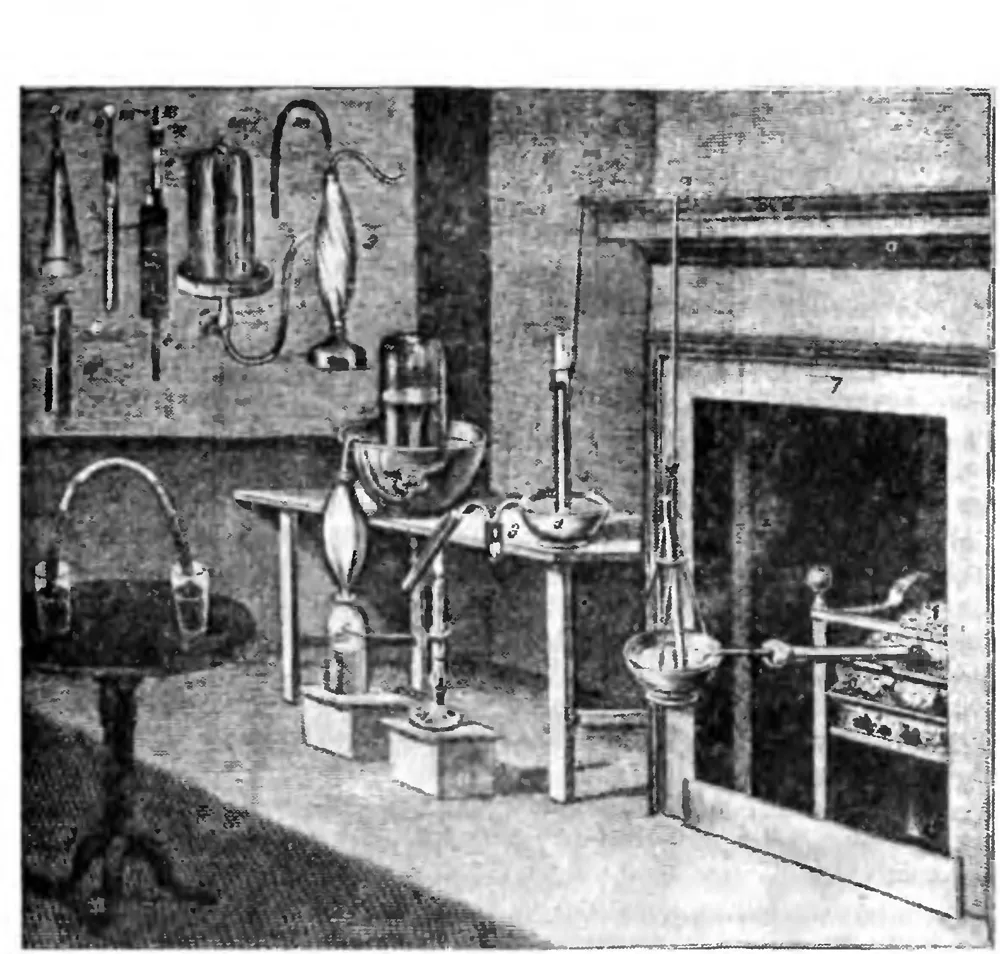
Now the task was to obtain “vital air”. But how was it to be done? Perhaps nitric acid gave it off? Its salts, saltpetre for example, also help things burn. Gunpowder, after all, is made from saltpetre. If copper wire were heated with dilute nitric acid, might “vital air” be given off?
Priestley began to experiment diligently. He took a thick glass tube, sealed it at one end, filled it with mercury and, closing it with his finger, plunged its open end into a trough of mercury. Then, connecting another tube containing nitric acid and copper filings to the tube filled with mercury, he began to heat the mixture of reagents. In a short while bubbles of a colourless gas began to drive the mercury out of the tube, and it began to fill with a new substance. Priestley carefully took out the tube, unstopped it and bent down to smell it. And suddenly he froze in amazement: the colourless gas began to escape, turning before his eyes into another, reddish-brown fumes with a pungent smell like that of nitric acid.
“Can this really be a new kind of air?”
Priestley had indeed obtained a new colourless gas, which at that time he called dephlogisticated nitrous air11. On contact with the oxygen of the air this gas instantly turned into nitrogen dioxide.
Yet Priestley never did succeed in obtaining “vital air”. True, his experiments led him to discover two new gases. Still the scientist did not lose hope and went on experimenting. He worked with many other compounds, but each time he obtained some new gas. Nobody knew of them at the time, and Priestley gave them names of his own: “alkaline air” (ammonia), “marine acid air” (hydrogen chloride), sulphur dioxide...12
Many years passed. Priestley went on studying gases, observed the process of fermentation, put his observations in order and drew conclusions. He described his research in a large work, “Experiments and Observations on Different Kinds of Air”13. Priestley described the research carried out by other scientists, Joseph Black, Stephen Hales14 and Henry Cavendish15, and yet most of the data he had obtained and described were new and greatly enriched the chemistry of gases.
As in his youth, Priestley worked to a strict daily routine. At a set hour he left the laboratory and went to his study to go on working on “The History of Light”16 or his philosophical treatises. He usually spent the evening with his family. Settled comfortably in an armchair by the fire, Priestley would ask his wife how her day had gone, hear his daughter's lessons or play with his four-year-old son. Often Joseph's brother Timothy came to visit and brightened their evenings. Priestley always talked in a lively, absorbing way; he often told funny stories and smiled with pleasure to see the others laugh. But even in these pleasant hours of rest the scientist never parted with his pen. A notebook always lay on his knees, and in between, when a silence fell, he was sure to write something. Priestley wrote most of his literary works in just such moments.
Priestley's research in chemistry and physics brought him fame. In 1772 he was elected an honorary member of the Paris Academy of Sciences, an honour few scientists received. In December of that year he was visited by William Fitzmaurice Petty, Lord Shelburne, one of the most highly placed politicians in England. He offered Priestley well-paid work on his private estates.
“I should like to offer you work in my library. Most of the books are at Calne, the rest in Berkeley Square in London. I know your interests are very varied, so on top of a salary of 150 pounds you will receive 40 pounds specifically for scientific work. I place at your disposal the house at Calne and some of the rooms in the London house.”
Priestley accepted. Work in the library and lessons with his patron's sons took up his mornings. The afternoons he gave entirely to his scientific research.
The scientist zealously developed the phlogiston theory and stubbornly went on studying gases. Now his attention was drawn to hydrogen. This colourless gas was obtained when metals reacted with acids, and it burned without residue (Priestley did not notice the water formed in the process). In his view combustion was a process of decomposition (the basic view of the supporters of the phlogiston theory), and for a number of years he believed that hydrogen was phlogiston, as yet undiscovered by anyone.
To collect gases pure, Priestley filled his vessels not with water but with mercury. This was an important innovation: in this way gases that dissolve in water could also be collected. In his laboratory stood a large trough filled with mercury. This wonderful metal could be obtained from calx of mercury, which, however, was dephlogisticated mercury, and that meant that phlogiston was taken up on heating.
With the money he received from Lord Shelburne, Priestley bought a large glass lens. He needed to test what effect light had on calx of mercury18. Might phlogiston be light? After all, its release is accompanied by the appearance of flame.
The first of August 1774 came. The day was sunny and so suited to the experiment. Priestley put a thick layer of yellow powder, a salt of mercury, on the bottom of a large jar and directed on to it the sun's rays, gathered and concentrated by the lens. The rays made a dazzlingly bright spot on the powder. Priestley watched it closely and suddenly noticed something strange: the tiny specks crackled faintly and jumped, as though someone were blowing on them. A few minutes later the first tiny drops of mercury appeared on the spot.
“So light is phlogiston! Or perhaps the phlogiston has stayed in the glass vessel?”
Priestley lit a splinter and put it into the jar to set fire to the phlogiston. What a surprise! The gas caught fire, and the flame became even stronger and brighter. He quickly took out the splinter and put out the flame, but the smouldering splinter flared up again.
“A new air?!”
Priestley could not take up the study of the new gas at once: he had to accompany Lord Shelburne on his tour of Europe. They soon left for Holland. Their journey through the countries of Europe dragged on for a long time, though it was not without its pleasures. Besides Holland, they visited Belgium, Germany and France.
In Paris Priestley's arrival was awaited with great impatience. Immediately on arriving he called at the Academy of Sciences, where he told the scientists about his research on gases. There too he met Lavoisier, and they continued their conversation in Lavoisier's laboratory.
Lavoisier knew of Priestley's research: he followed everything English scientists published and wrote abstracts of their work in French. But he had his own interpretation of the facts, which at times differed sharply from Priestley's view. The meeting was something both scientists needed, and it helped them a good deal in their later work. They discussed a great many questions, giving most attention to combustion. Lavoisier was looking for the right explanation of it, for, unlike Priestley, who was a believer in phlogiston, he understood that the phlogiston theory would not hold. In the course of the conversation Priestley let Lavoisier into the secret of the new gas and showed his French colleague how to obtain it. Lavoisier realised that the study of this gas would throw light on many unresolved questions, and he set about investigating it at once.
Priestley returned to England at the beginning of November 1774. Following Lavoisier, he too began to study the properties of the new gas. Within a few months he was able to establish that this gas is contained in air, is purer than air, and supports not only breathing but burning too. It was oxygen, which Priestley called dephlogisticated air.
Priestley established that another gas could be obtained from ordinary air, “phlogisticated air” (nitrogen)19, which supports neither breathing nor burning, but is not “fixed air”, because it is not absorbed by alkaline solutions. These discoveries allowed him to put forward his own view of the composition of air. He supposed that air consists of nitric acid and earth so heavily saturated with phlogiston that they turn into “air” (gas). Priestley held to this mistaken view to the end of his life. Even the successful progress of chemical science, which owed him the discovery of oxygen, could not convince the scientist, a faithful supporter of the phlogiston theory.
Lavoisier, however, building on this discovery, brought about a revolution in chemistry and opened a new era in its development.
For many years scientists argued over who had priority in the discovery of oxygen and its properties.
Priestley was the first to discover oxygen, and he told Lavoisier about it20. Independently of him, the Swedish scientist Carl Wilhelm Scheele also discovered and studied oxygen, but he published the results of his research three years later21. He also worked out several new ways of obtaining oxygen. Lavoisier studied oxygen as well, but his merit lies chiefly in having linked the study of oxygen with the problems of combustion: he created a new, oxygen theory of combustion, dealt the phlogiston theory a crushing blow and opened the way for the development of modern chemistry.
Priestley, for his part, was let down by his blind faith in the phlogiston theory. It was not for nothing that Georges Cuvier22 remarked very aptly on this: “Priestley is the father of modern chemistry, but he never acknowledged his own daughter.” In the last years of his life Priestley went on studying gases, respiration and the physiology of plants. He established that the gas given off as bubbles on certain water plants is oxygen, and that its amount increases by day and decreases at night.
By this time Priestley's relations with Lord Shelburne had worsened, and so he decided to move to Birmingham, where his wife's brother, John Wilkinson, lived. He provided his brother-in-law's family with a large house outside the town. It was spacious and comfortable. Priestley spent several hours a day in the garden, digging, planting and watering. His elder children helped him: his daughter and two sons, Joseph and William. His wife usually looked after the youngest, Henry.
A few months after moving to Birmingham Priestley was given a post in a congregation: now he was a minister again. His friends, knowing that the church could not provide the scientist with the means he needed for his research, organised a collection on his behalf. Joseph Priestley, an honorary member of the Paris Academy of Sciences and of the academies of sciences of Turin, St Petersburg23 and Haarlem, was in need of money!
A rich widow, Elizabeth Rayner, gave him 100 guineas; Priestley's friend Wedgwood24, the pottery manufacturer, granted him an annual subsidy and supplied him with all the apparatus his laboratory needed. Samuel Parker, an optician in London, supplied him with all kinds of glass instruments and vessels... Many people tried to help the scientist25.
In Birmingham Priestley continued his research on oxygen and on the life of water plants. Now he had an assistant working beside him in the laboratory, William Bewley.
In 1781 Priestley began to study the action of the electric spark on gases. He carried out the experiments together with John Warltire26, who had also been studying gases for a number of years. The new electrical machine was very powerful, and the sparks it gave produced astonishing effects. In a short time the scientists succeeded in decomposing “alkaline air” (ammonia) into phlogiston (hydrogen) and “phlogisticated air” (nitrogen). Passing sparks through a mixture of hydrogen and oxygen, they noticed drops of “dew” forming on the walls of the vessel. Priestley was unable to turn these experiments into a new discovery, but they formed the basis of the work of Henry Cavendish, who repeated them, made more accurate measurements, and was able to establish that water is not an element but a compound of hydrogen and oxygen. On one of his journeys to London Priestley met Cavendish and learned of his discovery.
Two years later, at a meeting of a society of Birmingham scientists, Priestley learned that James Watt27 was carrying out similar research.
“It's perfectly clear that water is not a simple element,” said Watt. “It is a compound, and it consists of dephlogisticated air and phlogiston.”
“Henry Cavendish says much the same,” Priestley remarked.
“Cavendish?” Watt exclaimed in agitation. “How do you know?”
“The year before last, when we met, he told me about his experiments and expressed this very view.”
“It can't be! I've been working on it for more than two years too. He can't possibly have known about it! Have I been deceived?”
Both Watt and Cavendish laid claim to priority in this discovery, but for the progress of science what always matters more is the discovery itself. And so yet another age-old error was cast aside: from then on water was considered a complex compound and not a simple element.
Priestley took no part in the dispute about the composition of water, for to him water remained a mysterious substance. Later he studied the oxidation of iron and the reduction of iron oxide by hydrogen. His experiments were very accurate, both in their quantitative measurements and in identifying the substances formed in the reaction. Priestley established that “inflammable air” (hydrogen), when heated, turns calx of iron into metallic iron, and that the gases formed contain water. But he rejected Lavoisier's theory of the connection between the oxidation of metals and the reduction of their oxides.
“Water is contained in all gases, including ‘inflammable air’. If the latter combines with calx of iron, the metal is formed and the water is set free,” Priestley maintained.
“Cavendish's experiments say the same,” Watt assured him. “Gases contain water. When they are decomposed by the electric spark, other substances are formed and water is given off.”
“In essence Cavendish is decomposing ‘dephlogisticated air’ (oxygen) and ‘inflammable air’ (hydrogen) and making them give up the water they contain.”
Both scientists stubbornly held to the phlogiston theory and, relying on it, tried to explain the phenomena of nature. Together they discussed the results of their experiments, drew conclusions and rejected the new ideas of Lavoisier, ideas that in the near future would become the only sound foundation of advanced scientific thought.
Priestley went on working. He studied a number of combustible gases, which he grouped under the common name of “inflammable air”: they were hydrogen, carbon monoxide and some combustible gaseous organic compounds. In one of his papers Priestley described their properties in detail, but he still saw no difference between them and often confused them.
Priestley was also interested in the electrical conductivity of gases. In 1789 he began to study the effect of temperature on the conductivity of gases. But the echoes of the French Revolution reached England and for a time pushed this work aside.
Priestley greeted the news of the revolutionary events in France with delight. He had long known the country and loved its freedom-loving people. He followed the political events as they unfolded with close attention and interest. In his philosophical lectures he proclaimed the triumph of reason.
The industrial revolution in England demanded radical social change. An opponent of absolutism, who in his articles and speeches welcomed the breaking up of the old social order, Priestley drew upon himself the hatred of the English aristocracy. Now not only the church but many members of the ruling class too fell on the scientist in their fury, accusing him of plagiarism and shamelessly declaring that he had contributed nothing of substance to science. Priestley did not give in: one after another his philosophical, literary, political and theological articles appeared28. More and more often his speeches called for reform. The scientist spoke out against the shameful slave trade, which condemned thousands of black Africans to suffering and to a starving existence full of privation and humiliation.
Liberty, equality, fraternity: these were the ideals of the new society. It was of these that he spoke in his sermon on the eve of 1791.
In England the number of supporters of the French Revolution grew day by day. A “Constitutional Society” was founded to fight for reform in England. A few months after its foundation its members decided to celebrate 14 July, the day of the storming of the Bastille, with due ceremony. Priestley was determined to take part in the celebration and invited his friends to it. But, to his no small surprise, William Hutton flatly refused.
“The situation is unsettled just now, Dr Priestley. Being present at such a celebration may cause unwelcome repercussions.”
“I see no grounds for alarm. Honouring the anniversary of this momentous event is an important political act.”
“Yes, and that is just what makes it dangerous.”
Hutton was not mistaken. On 10 July preachers of the Church of England publicly declared Priestley a heretic and “a comrade-in-arms of the devil”. They also denounced the constitutionalists, who supposedly “sought to plunge England into an abyss of ruin and misfortune”.
Early in the morning of 14 July Adam Walker, a lecturer in physics, arrived at Priestley's house from London. They had only just begun to talk when Mrs Priestley came into her husband's study.
“Jo, there's a note for you. It's from your friend Russell.”
Priestley read the message.
“The situation really is becoming serious. I'm being warned and urged not to take part in the celebration. What am I to make of it?”
“All the same, you ought to take Russell's advice,” said his anxious wife.
“We'll think about it. There's plenty of time yet before the celebration.”
“Perhaps it would be wiser to stay at home, Mr Priestley?” the guest suggested.
“Let's not get upset over trifles. Come into the laboratory, Mr Walker, please.”
They spent the morning in the scientist's laboratory in pleasant conversation. But they did not manage to discuss everything in that time, and Priestley decided to continue the conversation after dinner. Dusk was already falling when Priestley, having seen his visitor off, came into the spacious hall, where his wife and three sons were waiting for him. His daughter had married and lived apart from the family.
“Mary, shall we have a game of chess?”
“With pleasure.”
Meanwhile something terrible was happening in Birmingham. The members of the constitutional council had gathered at Thomas Dadley's hotel: the dinner and the speeches went on until late in the evening. Meanwhile crowds of people filled the streets. Stirred up by the clergy, the enraged people moved on the hotel.
“Revolutionaries!” came shouts from every side.
Stones and logs flew at the hotel windows, broken glass rang, smashed doors fell with a crash... The crowd burst into the hall, but found no one there. Those at the meeting had slipped out of the building and decided to take refuge in the New Meeting chapel.
“On to the New Meeting!” roared the crowd. “That's where they're hiding!”
Terrible blows shook the walls of the New Meeting. The mob smashed everything that came to hand and even set fire to the pews.
“This is no house of God but a den of the devil! Here Satan, hurling his thunderbolts, swore oaths to him!”
The flames caught the roof, driving back the dusk that had settled over the town.
“He must be punished too, that shameless infidel!” And the crowd rushed towards Priestley's house.
Priestley peered anxiously into the distance: the shouting and the fire in the town boded no good. Suddenly there was an urgent knocking at the locked garden gate. His eldest son Joseph ran out into the garden.
“What do you want?” he asked the newcomer in agitation, without, however, opening the gate.
“Mr Russell has sent a covered carriage for you. You must leave here at once,” came the answer.
“Perhaps they'll calm down and won't get as far as our house,” Priestley said hopefully.
“We mustn't lose a minute, Father! We're leaving at once.”
Half an hour after they had left, the crowd broke into the scientist's house. The gates cracked and fell under heavy blows. A hail of stones flew at the windows. Everything in Priestley's house was given over to barbaric destruction. The apparatus that the great scientist had made with his own hands, with such love and care, was turned in an instant into a heap of wreckage. The frenzied crowd did not spare Priestley's unique library either: rare books, set alight by someone, burned, and priceless manuscripts burned with them.
The disturbances in Birmingham went on for several months. Priestley could not even think of returning to the town. For a while after the tragedy he lived with friends, and in the autumn he became minister at Hackney.
The events in England caused an outburst of indignation all over the world. Many eminent scientists in England, France, Germany and Sweden expressed their solidarity and sympathy with Priestley. In September 1792 he was proclaimed an honorary citizen of France and invited to stand for election as a deputy to the National Convention, and dozens of well-wishers and admirers sent money to England to restore the scientist's laboratory and library.
Life at Hackney flowed on calmly and happily, but in the evenings, when the whole family gathered by the fire, they came back more than once to the thought of leaving England: the wound dealt them in their own country was deep, and it had to be healed far from home.
In August 1793 Priestley's sons sailed for America. The house was empty, and there were no more heart-to-heart talks by the fire in the evenings. Mrs Priestley often wept.
“Joseph and William are grown men, but Henry is still only a boy. His health isn't very strong. I wonder what they're doing there now?”
“They are quite able to look after themselves, and they'll settle down there well enough,” Priestley would say, looking tenderly at his wife. “Calm yourself; there's no need to worry.”
“No. I can't. I shan't be calm until I'm with them.”
On 7 April 1794, at the port of Sansamed.2, Priestley and his wife went aboard an ocean-going ship and sailed for New York. Priestley did not like the noisy city. When they had rested from the voyage, which had lasted almost two months, they went on to Pennsylvania, where their eldest son had a farm of his own. The scientist took to the small town of Northumberland29. He built a house of his own, but life in it brought no happiness: his youngest son Henry died of consumption. The following year the scientist's wife died too, of grief, mourning her beloved son.
Priestley went to live with his eldest son Joseph. He spent most of his time in his study, among his books and manuscripts. The discoveries he had made had to be explained and understood from the standpoint of the phlogiston theory.
No! He could not accept the ideas Lavoisier proclaimed! That would destroy the philosophical conception that had given Priestley the researcher and thinker his strength all his life. Must he now, at the end of his life, give up phlogiston?!30 How could he destroy in an instant what he had been building all his life? Bent over his desk, Priestley wrote and wrote... Philosophy had now become his chief passion.
Sometimes he would sit in the shade of a spreading oak to rest and breathe the fresh air. Usually at such moments his favourite granddaughter Eliza would run up to him and ask in her thin little voice:
“Tell me a story, Grandad.”
“I'm busy, my child. I have to write.”
“Do you write stories, Grandad?”
“Stories, yes, but for grown-ups – for learned people...”
The book on phlogiston came out in Philadelphia in 1803. In the same year Priestley was offered the post of principal of a newly opening university in Pennsylvania; he flatly refused. Dr Priestley wrote tirelessly. One of his last works was “Reflections on Phlogiston”. A few months after he had finished the manuscript Joseph Priestley died. It was on 6 February 1804.”
When she had finished the story, Miss Parkes sat with her lips pressed together in sorrow, her eyes fixed on the lens. The guests were silent. Then the hostess sighed deeply and went on, her voice full of emotion:
“My friends, time is merciless even to the greatest minds of mankind. Fourteen years later, when Joseph Priestley the younger decided to leave Pennsylvania, all Dr Priestley's belongings went under the hammer. His library, some four thousand volumes, was sold off at auction for next to nothing. Only the electrical machine survived, the one bought in Nantwich; it now belongs to Mr James Martineau. Priestley's second electrical machine is kept in the museum of the Royal Society of London. My treasure, the lens, you have just had the good fortune to behold.”
Notes
- 1. Joseph Priestley was born on 13 (24) March 1733 at Fieldhead (Great Britain).
- 1а. Jan (Johann) Baptist van Helmont [1579 (or 1580) – 1644], a Dutch naturalist and a prominent iatrochemist. Van Helmont's work on gases began their study. He was the first to introduce into science the notion of “gas”, which later became the generic term for a group of substances. On van Helmont see: Partington J., ук. соч., т. 2, с. 209—243; Great chemists. Ed. by E. Farber. — New York — London, 1961, p. 81—115; Bugge G., ук. соч., с. 142—150.
- 2. On the history of the study of air see L. P. Petrov's article in: Крицман В. А., ук. соч., ч. I, с. 144—153.
- 3. Priestley knew nine languages: German, French, Italian, Latin, Greek, Arabic, Syriac, Chaldee and Hebrew.
- 4. John Locke (1632–1704), an English philosopher and deist, the author of the theory of sensationalism, which derives all knowledge from sense experience. On Locke see: Философский словарь/Под ред. И. Т. Фролова. — 4-е изд. — М.: Политиздат, 1980, с. 189—190.
- 4а. Thomas Hobbes (1588–1679), an English materialist philosopher, an atheist and the author of many books. On Hobbes see: Философский энциклопедический словарь. — М.: Сов. энцикл., 1983, с. 119—120.
- 4б. David Hartley (1705–1757), an English psychologist, physician and materialist philosopher, one of the founders (with T. Hobbes and J. Locke) of associationist psychology, which held that the whole of mental life is built up from sensations and the simplest feelings by their association into complex wholes. On Hartley see: Философский энциклопедический словарь, ук. соч., с. 102.
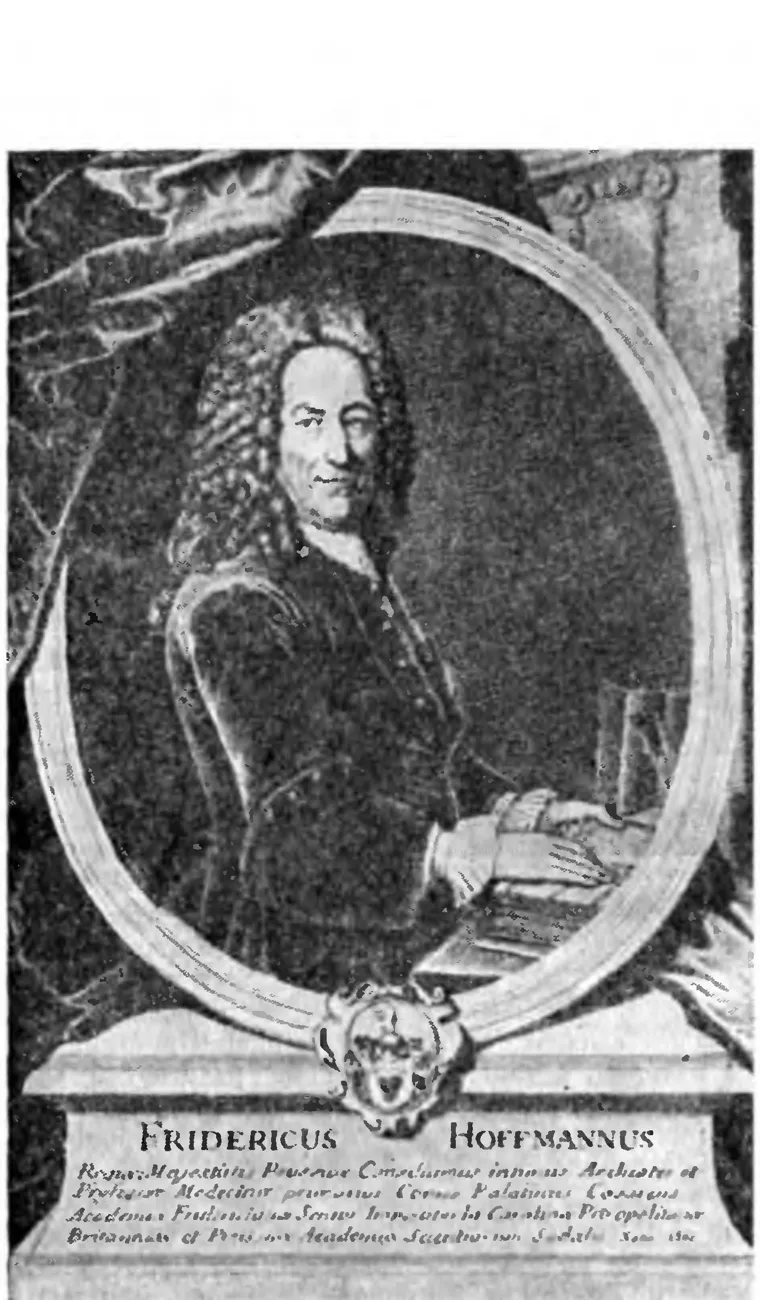
- 4в. Frederick Hoffmann, a German chemist.
- 5. Priestley was elected a Fellow of the Royal Society of London after the publication of his work “The History and Present State of Electricity”. A detailed review of this work is given in: Partington J. R., ук. соч., т. 3, с. 240—247.
- 6. John Canton (1718–1772), a Fellow of the Royal Society of London from 1749 and the head of a private school in London. He studied electrical and magnetic phenomena, was the first to measure the compressibility of water, prepared phosphorescent calcium sulphide and studied ultraviolet rays. On Canton see: Partington J. R., ук. соч., т. 3, с. 241.
- 6а. William Watson (1707–1787), an English physicist who studied electrical phenomena.
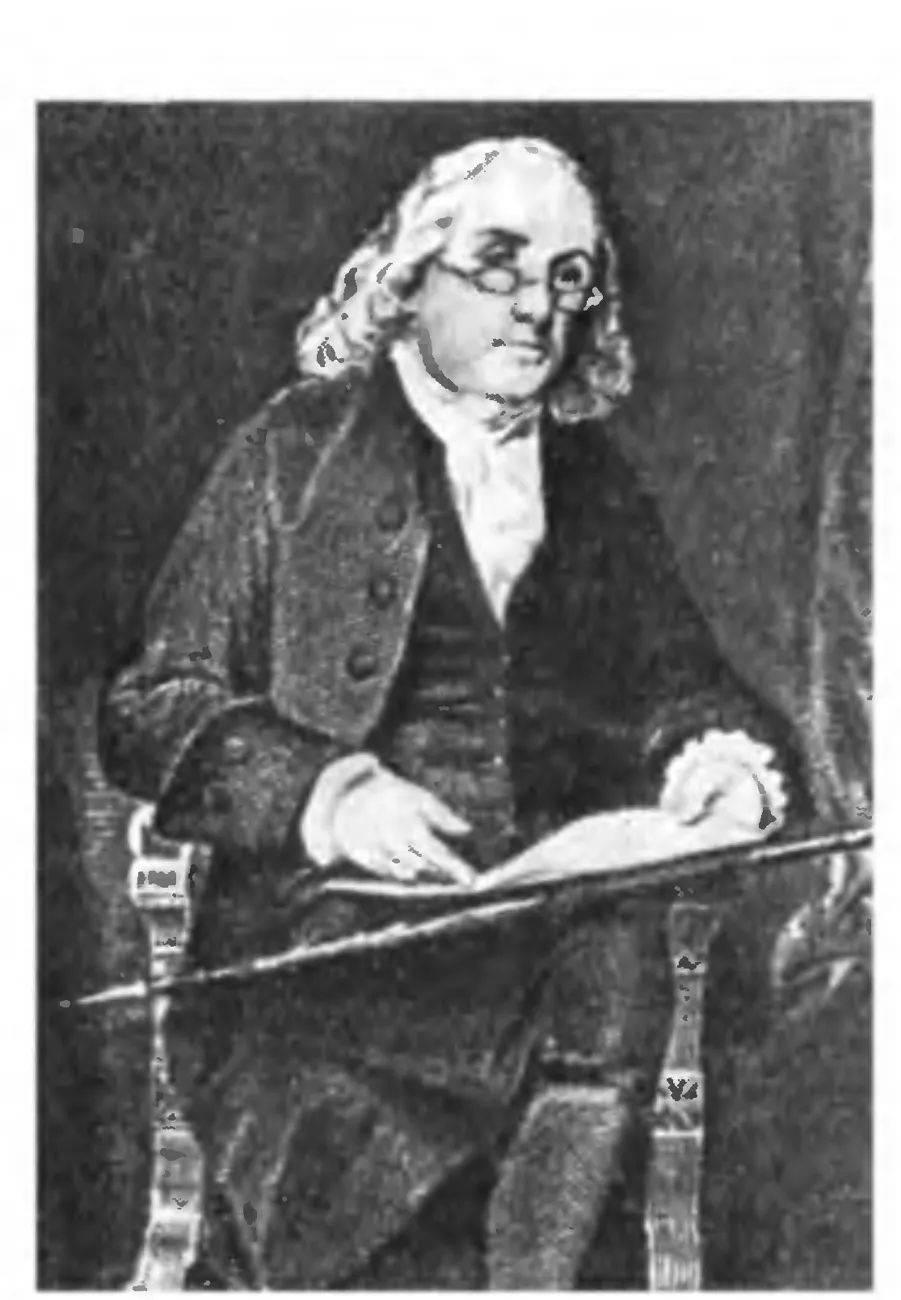
- 7. On one of his journeys to London Priestley met the famous American scientist and statesman Benjamin Franklin (1706–1790). In 1731 Franklin founded in Philadelphia the first public library in the United States, in 1740 the University of Pennsylvania, and in 1743 he organised the American Philosophical Society. He argued for making the US Constitution of 1787 more democratic and called for an end to racial discrimination. Franklin, one of the pioneers of the study of atmospheric electricity, proposed the lightning conductor. On Franklin see: Льоцци М., ук. соч., с. 174—176 и др.; Биографический словарь деятелей естествознания и техники, ук. соч., т. 2, с. 321—322; Капица П. Л. Усп. физ. наук, 58, 169 (1956); Стекольников И. С. Электричество, № 1 (1956); Баскин М. П. Вопросы философии, № 6 (1955); Франклин В. Опыты и наблюдения над электричеством. — М.: ИЛ, 1956 (имеется обширная библиография работ Франклина и литературы о нем); Радовский М. И. Вениамин Франклин. — М.—Л.: Наука, 1965; Иванов Р. Ф. Франклин. — М.: Мол. гвардия, 1972; Голин Г. М., ук. соч., с. 34—38.
- 8. Charles Augustin de Coulomb (1736–1806), a French physicist and a member of the Paris Academy of Sciences from 1781, supported the view of his predecessor Du Fay (1698–1739), who explained conduction by two fluids of opposite properties, positive and negative charges. Coulomb helped to establish this dualistic theory; he invented a torsion balance of special sensitivity and used it to study electrical and magnetic phenomena, and he established the law of interaction of electric charges and of magnetic poles, which gave the impetus to the discovery of the connection between these phenomena. Coulomb's law is the basis of all electrical calculations. On Coulomb see: Льоцци М., ук. соч., с. 184—190 и др.; Лежнева О. А. Тр. Ин-та истории естествознания и техники АН СССР, 1957, т. 19, с. 386—396; Выдающиеся физики мира, ук. соч., с. 124—128.
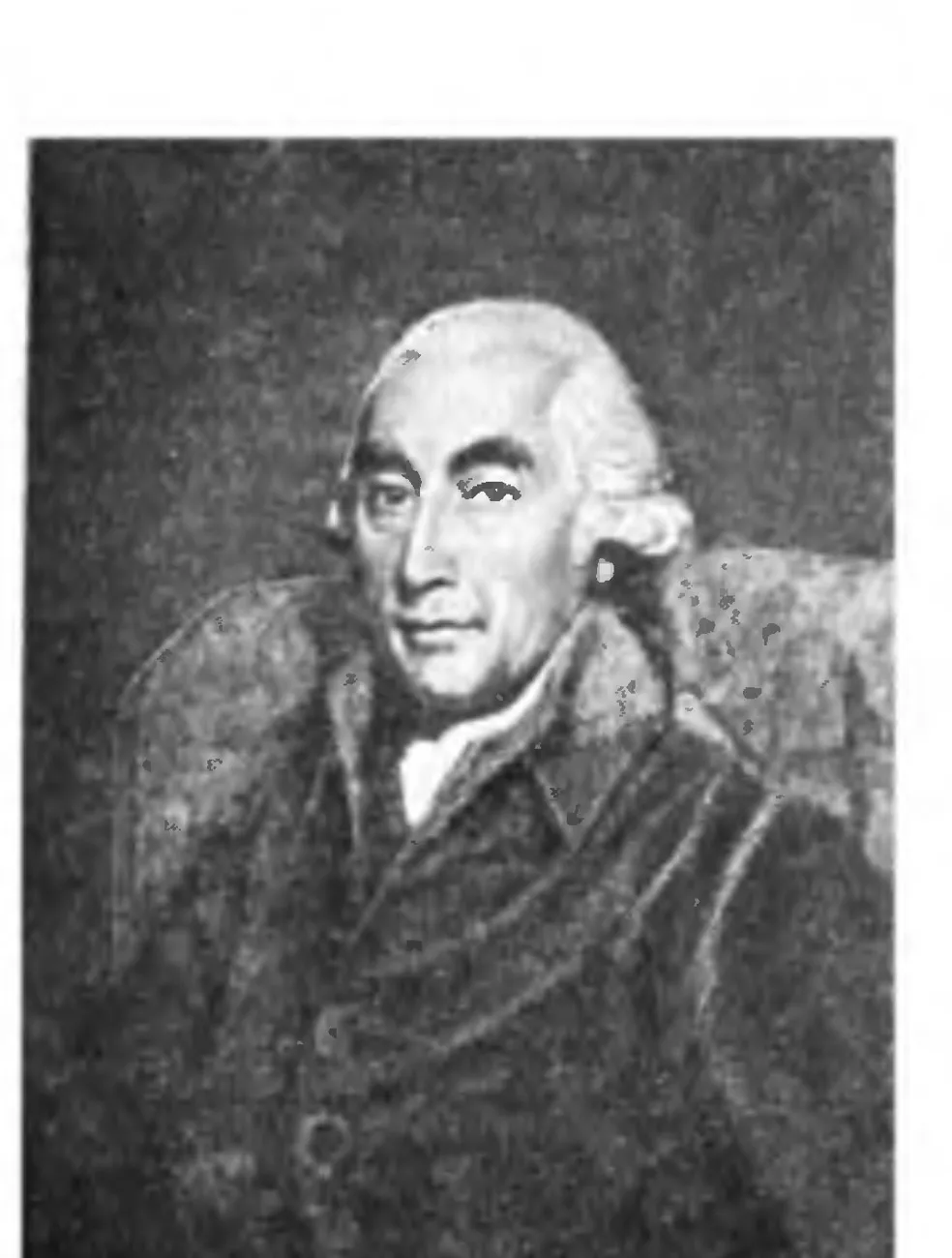
- 9. Joseph Black (1728–1799), an English chemist and physicist, an honorary member of the St Petersburg Academy of Sciences from 1783 and one of the greatest chemists of the eighteenth century. A skilful experimenter, Black made a systematic study of alkalis, alkaline earths and carbonic anhydride, which he called fixed air (later called “fixable air”). In 1756 Black discovered carbon dioxide; in 1757 he introduced the notions of the latent heat of fusion and of vaporisation, and later that of heat capacity. On Black see: Джуа М., ук. соч., с. 111—114; Partington J. R., ук. соч., т. 3, с. 130—143 (приведен список литературы о Блэке); Bugge G., ук. соч., с. 240—252; Соловьев Ю. И. История химии: Развитие химии с древнейших времен до конца XIX века. — 2-е изд., перераб. — М.: Просвещение, 1983, с. 64; Волков В. А., Вонский Е. В., Кузнецова Г. И. Химики: Биографический справочник. — Киев: Наукова думка, с. 62.
- 10. Priestley's first success as a chemist was the making of soda water (a solution of CO₂ in water). For this invention he was awarded the highest honour of the Royal Society of London, the Copley Medal. Soda water became the first marketable product of the chemistry of gases (Бернал Дж. Наука в истории общества. Пер. с англ. — М.: ИЛ, 1956, с. 347).
- 11. By the action of nitric acid on metals Priestley obtained a gas he called nitrous air (1772). It was nitric oxide. The scientist noticed that after long contact with sulphur and iron the properties of the gas changed: in “nitrous air” a lighted candle went out, while in the altered “nitrous air”, which Priestley called dephlogisticated nitrous air, it went on burning. Priestley also noted that “dephlogisticated nitrous air” does not turn red on contact with atmospheric air. The second gas he had discovered was nitrous oxide (Джуа М., ук. соч., с. 116—117).
- 12. Priestley also obtained hydrogen fluoride, silicon fluoride (1774) and carbon monoxide (1796). He discovered these and other gases (ten in all) partly because he was the first to point out that mercury must be used for collecting gases, since water, then used for the purpose, dissolved them.
- 13. The full title of this book of Priestley's is “Experiments and Observations on Different Kinds of Air”. It came out in three volumes and contains the results of the experiments in pneumatics that Priestley carried out in 1772–1777. Some chapters of the work exist in Russian translation (Пристли Дж. Избранные сочинения. — М.: Гос. соц.-эконом. изд., 1934).
- 14. Stephen Hales (1677–1761), the inventor of apparatus for producing and collecting gases. In particular, he proposed the “pneumatic trough”, used for collecting gases over water. On Hales see: Фигуровский Н. А., ук. соч.; Джуа М., ук. соч., с. 86, 137; Partington J. R., ук. соч., т. 3, с. 112—123.
- 15. Henry Cavendish (1731–1810), a founder of pneumatic chemistry. He did research in the physics and chemistry of gases, identified hydrogen as a distinct gas, obtained it pure (1766) and determined its density. Cavendish also discovered “phlogisticated air”, nitrogen (1772), and in 1784 established (following J. Warltire) that water is formed when a mixture of ordinary air and “inflammable air” is exploded. On Cavendish see: Джуа М., ук. соч., с. 111—114; Фигуровский Н. А., ук. соч., с. 296—304; Мусабеков Ю. С., Черняк А. Я., ук. соч., с. 46—49; Partington J. R., ук. соч., т. 3, с. 302—344; Bugge G., ук. соч., с. 253—262; Биографии великих химиков, ук. соч., с. 68—72.
- 16. Priestley J. The History and present State of discoveries relating to Vision, Light and Colours. — London, 1772.
- 18. This refers to the heating of mercurius calcinatus per se (mercury oxide) with a burning lens. On this experiment in detail see: Соловьев Ю. И. Эволюция основных теоретических проблем химии. — М.: Наука, 1971, с. 56—57.
- 19. “Phlogisticated air”, or “mephitic air”, later named nitrogen, was discovered by Cavendish, but since he did not publish the results of his research, the credit for the discovery of nitrogen (1772) goes to the English physician and botanist D. Rutherford (1749–1819). See: Фигуровский Н. А. Открытие элементов и происхождение их названий. — М.: Наука, 1970, с. 45—49.
- 20. Besides obtaining oxygen by heating mercurius calcinatus per se (red mercury oxide HgO), Priestley also proposed a second way of obtaining it, by heating red lead Pb₃O₄ (Джуа М., ук. соч., с. 117).
- 21. The supposition that oxygen exists as a component of air and plays a part in combustion is found in eighth-century Chinese manuscripts of the alchemist Mao Khoa, and also in the writings of Leonardo da Vinci (1452–1519). The Swedish scientist C. Scheele obtained oxygen in 1769–1771 from no fewer than seven different substances (for example, magnesium nitrate, saltpetre, red lead and others); he understood that atmospheric oxygen combines with metals, phosphorus, hydrogen, linseed oil and other substances. But his book was printed only in 1777; the “discovery” of oxygen is usually credited to Priestley (Смит А. Введение в неорганическую химию. Т. I. — М.—Л.: Госиздат, 1928, с. 78—80). It later emerged, however, that oxygen had been discovered at the beginning of the seventeenth century by C. Drebbel and used in the submarine he invented. This discovery was kept secret and had no influence on later research. On the discovery of oxygen see: Петров Л. П. В кн.: Книга для чтения по неорганической химии. Ч. I. — М.: Просвещение, 1983, с. 141—153.
- 22. Georges Cuvier (1769–1832), the famous French scientist, a member of the Paris Academy of Sciences from 1795. His best-known works are on anatomy, the classification of animals and palaeontology. He was the author of a “History of the Natural Sciences”, published posthumously in 1845 in five volumes. On Cuvier see: Канаев И. И. Жорж Кювье. — Л.: Наука, 1976.
- 23. Priestley was elected an honorary foreign member of the St Petersburg Academy of Sciences on 19 September 1780 (Раскин Н. М. Химическая лаборатория М. В. Ломоносова. — М.—Л.: Наука, 1962, с. 275 и сл.).
- 24. Josiah Wedgwood (1730–1795), the founder of the English pottery industry and a Fellow of the Royal Society of London from 1784, invented a pyrometer and studied manganese dioxide. On Wedgwood see: Partington J. R., ук. соч., т. 3, с. 297.
- 25. In Birmingham Priestley made friends and kept company with a group of progressive figures in science and culture who formed the “Lunar Society”, so called from their custom of meeting and dining once a month at the full moon, “to have the benefit of its light in returning home”. Besides Priestley, the “Lunar Society” included Dr Erasmus Darwin (1731–1802), the grandfather of Charles Darwin, James Watt, John Wilkinson (1728–1808), Wedgwood, Edgeworth, Thomas Day, Murdock (1754–1839), the inventor of gas lighting, the Birmingham manufacturer Matthew Boulton (1728–1809) and others. On the “Lunar Society” see: Бернал Дж., ук. соч., с. 293—294.
- 26. John Warltire (1739–1810) established (1777) that when a spark is passed through a eudiometer containing a mixture of ordinary air and “inflammable air” (hydrogen), a mist is formed. Cavendish's experiments proved that water is formed under these conditions (Дорфман Я. Г., ук. соч., с. 160—161; Джуа М., ук. соч., с. 114).
- 27. James Watt (1736–1819), the English inventor of the steam engine (1784). In 1783 he showed that water consists of dephlogisticated air (“pure air”) and “inflammable air”, or phlogiston. On Watt see: Бернал Дж., ук. соч., с. 325 и др.; Конфедератов И. Я. Джемс Уатт — изобретатель паровой машины. — М.: Наука, 1969; Лесников М. П. Джемс Уатт. — М.: Мол. гвардия, 1935. — (ЖЗЛ).
- 28. Priestley wrote 12 books on the history of science and on people, on theology, politics and other subjects, as well as about 100 scientific papers. Priestley's main works are listed and analysed in: Partington J. R., ук. соч., с. 240, 244—249.
- 29. Priestley's house in Northumberland has survived. In the twentieth century it was turned into a museum. Next to the museum a fireproof building has been put up, which holds many of his instruments, the large lens, apparatus made by Priestley's own hands, and some of the scientist's personal belongings.
- 30. While in America, Priestley renounced his views on phlogistoned.3 in letters addressed to the Paris Academy of Sciences (Ладенбург А. Лекции по истории развития химии от Лавуазье до нашего времени. — Одесса: Матезис, 1917, с. 16—17).
From the site's editors
- ed.1 Priestley's “nitrous air” was nitric oxide, NO: it is this gas that turns into brown nitrogen dioxide, NO₂, in air. Nitrous oxide, N₂O (“dephlogisticated nitrous air”), is another gas, which Priestley later obtained from nitric oxide.
- ed.2 Sansam was not a port: it is the ship, the Samson, in which Priestley sailed from Gravesend for New York.
- ed.3 This is wrong: Priestley defended the phlogiston theory to the end of his life, and in 1800 published a book in its defence, “The Doctrine of Phlogiston Established”, a second edition of which appeared in 1803.