1711–1765. A Russian polymath and the first Russian academician in chemistry: he showed that the mass of matter is conserved when metals are calcined, and gave physical chemistry its name.
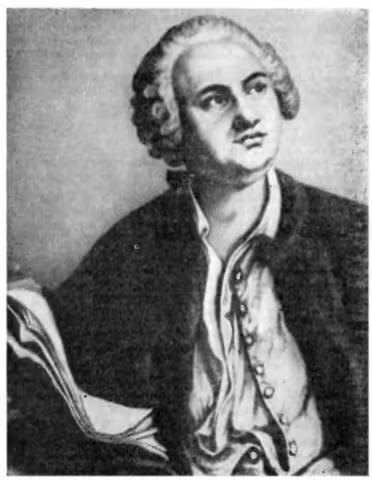
Mikhail Vasilyevich Lomonosov (19 November 1711 – 15 April 1765) was a Russian scientist and a member of the St Petersburg Academy of Sciences (from 1745). He was born in the village of Denisovka (now the village of Lomonosovo in the Arkhangelsk region). From 1731 to 1735 he studied at the Slavic Greek Latin Academy in Moscow. In 1735 he was sent to St Petersburg, to the Academy's university, and in 1736 to Germany, where he studied at the University of Marburg (1736–1739) and at the mining school in Freiberg (1739–1741). From 1741 to 1745 he was an adjunct in the physics class of the St Petersburg Academy of Sciences, from 1745 its professor of chemistry, and from 1748 he worked in the Academy's Chemical Laboratory, founded on his initiative. From 1756 he also carried out research at the glassworks he had founded at Ust-Ruditsa, near St Petersburg, and in his laboratory at home.
Lomonosov's work is remarkable both for the extraordinary breadth of his interests and for how deeply he saw into the secrets of nature. His research covers mathematics, physics, chemistry, the earth sciences and astronomy. He drew attention (1756) to the fundamental importance of the law of conservation of mass in chemical reactions; set out (1741–1750) the foundations of his atomic and corpuscular theory; put forward (1744–1748) a kinetic theory of heat; and argued (1747–1752) that physics must be brought in to explain chemical phenomena, proposing the name “physical chemistry” for the theoretical part of chemistry and “technical chemistry” for its practical part. His work marked a boundary in the development of science, separating natural philosophy from experimental natural science.
Until 1748 Lomonosov was chiefly engaged in physical research; from 1748 to 1757 his work was devoted mainly to theoretical and experimental questions of chemistry. Developing atomistic ideas, he held that bodies consist of “corpuscles”, and these in turn of “elements”, which corresponds to the modern notions of molecules and atoms. He pioneered the use of mathematical and physical methods of research in chemistry, and was the first to give at the St Petersburg Academy of Sciences an independent “course of true physical chemistry”. A broad programme of experimental research was carried out in the Academy's Chemical Laboratory under his direction. He developed accurate methods of weighing and used volumetric methods of quantitative analysis. By calcining metals in sealed vessels he showed (1756) that their weight did not change on heating, and that R. Boyle's opinion that a “matter of heat” combines with metals was mistaken.
He studied the liquid, gaseous and solid states of bodies. He determined the coefficients of expansion of gases with fair accuracy. He studied the solubility of salts at different temperatures. He investigated the effect of electric current on salt solutions, and established that the temperature falls when salts dissolve and that a solution freezes at a lower point than the pure solvent. He distinguished between the dissolution of metals in acid, which is accompanied by chemical change, and the dissolution of salts in water, which proceeds without chemical change in the substances dissolved. He built various instruments (a viscometer, an apparatus for filtering under vacuum, a hardness tester, a gas barometer, a pyrometer, a vessel for studying substances at low and high pressure), and calibrated thermometers with fair accuracy.
He founded many branches of chemical manufacture in Russia (inorganic pigments, glazes, glass, porcelain). He worked out the technology and the recipes of coloured glasses, which he used to make mosaic pictures. He invented a porcelain body. He analysed ores, salts and other products. In “The First Foundations of Metallurgy, or Mining” (1763) he examined the properties of various metals, classified them and described how they are obtained. Together with his other writings on chemistry, this book laid the foundations of the Russian chemical language. He considered how various minerals and non-ore bodies are formed in nature. He put forward the idea that soil humus is of biological origin. He argued for the organic origin of petroleum, coal, peat and amber. He described the preparation of green vitriol, of copper from blue vitriol, of sulphur from sulphur ores, of alums, and of sulphuric, nitric and hydrochloric acids.
He was the first Russian academician to set about writing textbooks of chemistry and metallurgy (“A Course of Physical Chemistry”, 1754; “The First Foundations of Metallurgy, or Mining”, 1763). To him belongs the credit for founding Moscow University (1755), whose plan and curriculum he drew up himself. The building of the Chemical Laboratory of the St Petersburg Academy of Sciences was completed to his design in 1748. From 1760 he was in charge of the gymnasium and the university attached to the St Petersburg Academy of Sciences. He laid the foundations of the modern Russian literary language. He wrote a number of works on history, economics and philology.
He was a member of several academies of sciences. Named after Lomonosov are Moscow University (1940), the Moscow Institute of Fine Chemical Technology (1940) and the town of Lomonosov (formerly Oranienbaum, 1948). The Academy of Sciences of the USSR established (1956) the M. V. Lomonosov Gold Medal for outstanding work in chemistry and the other natural sciences.
From Kaloyan Manolov's “Great Chemists”
The black clouds hanging over the sea suddenly began to race across the sky, as if a savage beast of prey had fallen on a flock of birds flying south.
“There's a storm coming,” said the bearded Pomor, and leaned on his oars.
The fishing boat shot forward.
“The others have picked up speed too,” said the fair-haired lad beside him.
“Make things fast at the stern, Mikhailo! See, it's coming on, curse it.” The fisherman raised his head: the clouds were piling one on another like giant monsters.
A blinding flash of lightning split the sky in two. A cold, piercing wind drove the boats southwards. The sea groaned; huge foaming waves tossed the boat from side to side. The old fisherman shouted something to his son, but the noise of the wind and the roar of the waves drowned his words. Now they had to fight the raging elements, and they could count only on their own strength and skill.
Mikhailo rowed with all his might. The Chaika, laden with a rich catch, rolled from side to side but would not give in to the storm. She was one of the biggest fishing boats in Denisovka, and the Lomonosovs, father and son, were known as the best seamen in the village. It grew quite dark, and the other Pomors' boats were lost to sight.
This was the first big fishing trip of the spring. The fishermen usually sailed as far as the ice of the Arctic Ocean, filled their boats with fish in a few days and came back, but the elements often lay in wait for them, as they did today. A deafening crack put Mikhailo on his guard: a huge iceberg was bearing down on the boat. If the waves dashed her against the ice, the Chaika would not survive – she would break apart. A powerful wave was carrying the boat straight at the block of ice. Mikhailo shut his eyes, and at that very moment a sharp jolt knocked him off his feet... For an instant all was still. When he came to, he felt a hard, smooth surface beside him.
“We're saved!” his father was shouting with all his strength above the howl of the wind.
Mikhailo did not at once understand what had happened. He wiped his wet face with his palm and looked around. The flat-bottomed boat lay peacefully on the block of ice, like an enormous bird.
“We must make the boat fast, or the wind will sweep her back into the water.”
The waves rolled over the ice in cold spray, drenching the Pomors. They drove in iron wedges and made the boat fast. Then they wrapped themselves in a sheet of canvas and waited for the storm to die down. But weariness took its toll, and they fell into a heavy sleep. When they opened their eyes again, the sea was calm. They let the boat down into the water and began to row. Now they were heading home. But what of the other Pomors: had they weathered the storm? Perhaps the deep had swallowed them? Only after several days did the boat enter the waters of the White Sea.
Evening was falling when the Chaika came alongside the wooden jetty. The others too had evidently survived: empty boats crowded along the shore.
“Vasily!” the elder Lomonosov heard a familiar voice call. “And we thought you were dead!”
The joyful news spread through the district in no time, and soon the whole village – women, children, old men and seasoned Pomors – was running down to the shore to greet the fishermen who had been so miraculously saved. The eyes of Vasily Lomonosov's wife were swollen with tears: all these days she had waited in vain for her husband's return. She had already given up hope. And here he was at last!
The next day Mikhailo sat down to his books. He was rereading – for the umpteenth time – Smotritsky's Slavonic Grammar. He was irresistibly drawn to books, but in Kholmogory, as ill luck would have it, there were only religious ones. They did nothing for his imagination. He wanted to learn a great deal, so as to help people build their lives. Magnitsky's Arithmetic, the grammar and two or three other books – that was all he had managed to find!1 And he dreamed of studying, of discovering a new world of knowledge, of great deeds.
“Mikhailo, reading again!” his stepmother cried indignantly. “Is there no work in the house?”
“I am working, mother. This is very serious work.”
“Don't you mock me, you idler! Better move that tub – can't you see it's heavy?”
Mikhailo helped his stepmother and went back to his reading.
This was not the life he wanted. He could not settle at home. They did not go to sea every day: his father had other work as well. Mikhailo helped him in the workshop where a new boat was being built, toiled in the fields and felled trees in the forest. But the young man dreamed of something else. He must study! Perhaps he should go to Moscow? The thought, once it had crossed his mind, gave him no peace. What if he really did set off for Moscow with the sledge train and went to school there? But no one must know of it. And so Mikhailo came to have a secret of his own... When the first cold winds blew and a thick layer of snow covered the ground, the peasants of Denisovka began to prepare for the long journey by sledge. They loaded the sledges heavily with goods, then, putting on their sheepskin coats, set off on the long road to Moscow.
This was at the beginning of December 1730.
“A good journey to you, Mikhailo,” Vasily Lomonosov said in farewell to his son1а.
“Goodbye, father.”
“When you sell the goods, take counsel with Timofei Petrov. You're no child, and you ought to manage on your own, but Timofei is a clever man and will give you sound advice.”
“Don't worry, father. I'll do everything properly.”
A gusty wind blinded him with snow. Mikhailo buried his face in the collar of his sheepskin and quickened his pace. The heavily laden sledges moved slowly over the crusted snow. The drivers walked behind them, every now and then urging on the tired horses.
Short frosty days gave way to long northern nights. The sledge train was on the road for about a month and a half. It was a hard journey to Moscow.
And here it was at last, the white-stoned city! The snow in the streets was packed hard. The sledges slid more easily, and the men's stride lengthened. Sellers of hot pies shouted at the tops of their voices to tempt the passers-by. Rich ladies wrapped in costly furs peered curiously out of the tiny windows of their carriages at the clumsy sheepskins of the visiting northern merchants. Mikhailo seemed to know no weariness. At the inn he unharnessed the horses in a moment, put away the goods and went out into the crowded streets.
His attention was caught by a sign on a large building: “Spassky Schools”2. What if he went in now and asked to be taken on as a pupil? But he was already nineteen. Was it not rather late for school? He walked past. Then his eye fell on another sign: “State Lyceum”3. Without a second thought the young man flung open the door.
The director, a dry, greying old man in gilt spectacles, refused him flatly.
“The lyceum is for the nobility only, my good fellow. We cannot take you.”
For the nobility! But in what way were they better than anyone else? Cleverer? Did they know more? And was his own desire to learn any the less strong because he was not of noble birth? His father had money – he would help him study. No, he must not give up, and Mikhailo went back to the Spassky Schools.
“I am from Kholmogory. My father is a nobleman...”
He was accepted.
Mikhailo sold the salted fish, the sacks of salt and the bright fabrics bought from the ships that sailed from Europe to the White Sea. Sending his respects to his father, he said goodbye to his fellow villagers when they set off for home, and began his studies at the Slavic Greek Latin Academy.
Life at the Academy was far from easy. The teachers, most of them foreigners, insulted and humiliated the pupils and tried to instil in them the fear of God3а. But Mikhailo Lomonosov had the hardest time of all: angered by his son's wilfulness, his father refused to send money for his keep at the Academy. Sometimes a crust of bread and a cup of kvass were all he had to eat in a day, but there was food in plenty for the inquiring young mind. The Academy had a large library, and Lomonosov read a great deal. In a few years he had mastered Latin, Russian and mathematics, leaving the best pupils behind. Mikhailo was the teachers' favourite – he amazed everyone with the depth and range of his knowledge. But what a blow it was for them all when they learned that he had lied in calling himself a nobleman. What was to be done? His peasant birth did not allow young Lomonosov to continue at the Academy, but his tireless diligence was so winning and so exemplary that, despite what the law required, the teachers decided to let him finish his course. Lomonosov worked harder still. Two years went by. The time was drawing near when Lomonosov would have to leave the Academy. In five years he had mastered more than one science. His fellow students went on with their education at the Academy, studying theology. But Lomonosov showed no particular interest in it. His mind was taken up with practical sciences, with knowledge that would be of use to people.
In the autumn Lomonosov would wander for hours along the paths of the shady park, thinking about the future. Where should he go next? Where should he begin? The answer to the questions that troubled him came unexpectedly.
The lean figure of the rector appeared in the avenue. Lomonosov bowed politely.
“Ah, Mikhailo Lomonosov,” said the rector, pleased. “You are just the man I need. Let us sit down on this bench, young man. Today I received a letter from St Petersburg, from the director of the St Petersburg Academy of Sciences, Baron Korff3б. I should like to read it to you.”
Lomonosov looked at the rector in bewilderment. The rector unfolded a white sheet of paper, covered in handsome writing, and evidently found the passage he wanted.
“Here, here, listen: ‘I hope you are aware that the University and the St Petersburg Academy of Sciences have been united. We shall now deal with the problems of science and education together. It has also been decided, solely at my insistence, to select educated and able pupils from all the schools of Russia and enrol them as students of the University. If there are such pupils in the Slavic Greek Latin Academy entrusted to you, you will do us an honour by recommending them for enrolment as students of the University.’”
The rector looked thoughtfully at the young man.
“We shall send you, Lomonosov. What do you say to that?”
“Good heavens! I ought to kiss your hands in gratitude! You are doing more for me than a father can do for his son. I bow to the ground before you for it. There is no other way to express my gratitude.”
“You have proved, Lomonosov, that you are able to go on studying. You have proved that you love learning, and in spite of everything it is you I am sending. Besides, it is a university – the rules there are different3в...”
Lomonosov spent his last months at the Academy dreaming of St Petersburg. This happy turn in his fortunes meant the end of a life of poverty. In January 1736 he became a student at the university. But a few months later he had to prepare for yet another journey. The many expeditions organised by the Academy of Sciences to study Russia's natural resources needed scientists – chemists and metallurgists. It was decided to send the three best students to study in Germany4.
One of them was Mikhail Lomonosov. They set off in the autumn of 1736, and a ship carried them to Hamburg. The student friends were in no hurry to leave the town. The free life and merry company were much to their liking. So the summer flew by and the rainy days of autumn set in. Cold winds began to blow from the north, and the young Russians loaded their baggage into a coach and set off for Marburg. They arrived there late in the autumn and presented themselves to Professor Wolff5, who corresponded with Baron Korff and had been told that the Russians were coming.
A new and wonderful life began: work at the university. Here Lomonosov first came to know the modern theories of physics and chemistry. Christian Wolff was then thought one of the greatest scholars in Europe. Lomonosov loved to hear his lectures, and he agreed with the professor that scientific research must be founded on experiment. Christian Wolff introduced Lomonosov to the corpuscular theory. Mikhail read about the discoveries of Boyle and Galileo6, and learned of Wolff's own new theories. But Wolff's authority did not keep Lomonosov from taking a critical view of many of his postulates. He sought to work out his own point of view in science. Wolff's teaching on weightless fluids, for instance, struck him as highly fanciful. Lomonosov thought hard and looked for answers to all these questions.
What was the nature of this weightless fluid, “caloric”, which flowed from a warmer body into a colder one? And phlogiston, the notion introduced by Georg Stahl? Stahl was a physician, but he also worked at chemistry. He knew the teaching of Becher. Becher had carried on Boyle's research into burning. In his view every substance that can burn contains some special component. Becher called it terra pinguis, “fatty earth”. Stahl gave this burning component the name phlogiston (phlogistos is Greek for “inflammable”). According to Stahl, phlogiston was present in all combustible substances and escaped when they took fire. The more phlogiston a substance contained, the better it burned. Charcoal consisted of almost pure phlogiston, since very little residue remained after it was burned. Metals also contained phlogiston, because on calcination they turned into ash. But when the ash of a metal was mixed with charcoal and strongly heated, it combined with the phlogiston of the charcoal, and the metal was obtained. Stahl's theory explained many phenomena but could not answer one question: why was the ash of a metal heavier than the metal it came from, when on calcination the metal had lost part of its phlogiston? Stahl's followers then suggested that phlogiston was a substance of negative weight. That was more fanciful still. How could one accept the existence of a substance of negative weight? How was all this to be brought together? How was it to be connected with the teaching on corpuscles?
Lomonosov could not get answers to the questions that occupied him from the lectures on chemistry and physics. The Russian student attended lectures on philosophy too, and since many other problems also interested him, he heard lectures on literature, history and geography as well. His inquiring mind was looking for what was new and of practical use. He heard lectures on German grammar, literature and poetry, and thought about Russian grammar and poetry. How imperfect his native grammar seemed beside the grammars of other peoples! The time for reform had come, Lomonosov decided. The syllabic versification9 that Russian poets used was too monotonous and inexpressive. Tonic versification10 must be introduced. Examples were needed to prove it, of course. And Lomonosov began to write verse11. He was living at that time in Freiberg, where he attended Henckel's12 lectures on metallurgy. Here he finished his first ode, “On the Taking of Khotin”, and sent it to the St Petersburg Academy with a long letter setting out his views on Russian versification.
Lomonosov did not live long in Freiberg, only a year, but the town stayed in his heart for ever. He did not get on with the professor: Henckel's lectures were built on theories already out of date, for Henckel was a zealous adherent of the phlogiston theory.
One day, when Lomonosov was explaining metallurgical processes and, unlike the professor, applying the more advanced principles of mechanics and hydrodynamics, Henckel rudely cut him short. Lomonosov, red with anger, left the hall and resolved never to go back to the university. He strode down the street in great agitation, a thousand thoughts crowding his head, his eyes flashing with anger. Suddenly, like a bright ray of sun in foul weather, he saw a girl of fairy-tale beauty. She went up to a flower seller and stretched out a delicate hand towards some splendid carnations. Forgetting everything in the world, Lomonosov gazed at the beauty. The girl was embarrassed and dropped her purse. He at once picked it up and handed it back to its owner.
“Thank you,” she said shyly.
“Please, tell me your name.”
“Elisabeth Zilch,” the girl replied, and gracefully gathering up the hem of her skirt she hurried away.
“Elisabeth Zilch,” Lomonosov repeated, and followed her as if spellbound.
A few weeks later the young couple stopped by the flower seller again. This time Elisabeth wore a snow-white dress. Lomonosov held her hand tenderly. His blue eyes shone with happiness.
“Take the red ones,” the carnation seller suggested. “Red is the colour of love.”
“I'd rather have the white,” said the girl.
“With that bouquet you are a real bride,” Lomonosov exclaimed at the sight of the white carnations in Elisabeth's hands.
Hand in hand, the young couple went on their way.
That day Elisabeth really did become a bride. A priest married them in secret, and the young couple decided to go away. For a year they travelled about Germany: Munich, Frankfurt, Cologne, Kassel, Altenburg, Dresden, Berlin... They were happy together. Tall and broad-shouldered, his face shining with joy, Mikhail saw nothing around him. For him now only his beloved wife existed.
But time went by, their modest savings melted away, and willy-nilly they had to come down from the clouds to the sinful earth.
“Soon it's back to Russia,” Lomonosov remarked gloomily one day.
“Aren't you glad you'll see your homeland again?”
“Glad is not the word. I dream of the day when I'll breathe Russian air again, but I'm sorry to leave you.”
Elisabeth started.
“Are we to part, then?”
“Of course not, my dear. But remember how angry your father was when he learned of our marriage. I'm afraid he'll do everything he can to stop you coming with me13.”
Lomonosov was not mistaken. Three whole years passed before Elisabeth received the Elector of Württemberg's permission to leave.
Meanwhile Lomonosov was working in St Petersburg, where he had been appointed adjunct in physics. In January 1742 the atmosphere at the St Petersburg Academy was extremely tense. Enmity and quarrels among the scholars seriously hampered research. The Academy was split into two camps: the “foreigners”, backed by the director Schumacher, and the “Russians”, who were very few. The influence of the foreigners was strongly felt at the Academy; they were mostly Germans, who strove with all their might to keep their dominant position and would not recognise Russian scholars. At first Lomonosov fell out with no one, but when he understood that what drew most of the foreigners to Russia was nothing but generous salaries and privileges of every kind, he became the Germans' implacable enemy and took the lead of the Russian group of scholars. The science the country needed could be developed only by Russian minds; of that Lomonosov was firmly convinced. But how was research to be developed when Schumacher was doing all he could to hold the work back? Lomonosov's “Elements of Mathematical Chemistry”14 had already appeared, yet he could not carry out research in metallurgy or analyse the ores, minerals and salts that the many expeditions brought to the Academy: there was no laboratory. To create a laboratory meant fighting Schumacher and his circle. At times the meetings of the Academy turned into a real battlefield. The German scholars always rejected any proposal of Lomonosov's. The Russians were quick to subject the Germans' scientific papers to withering criticism.
And still Lomonosov went on working at a great many problems, among them questions of language. In 1743 he compiled “A Short Guide to Rhetoric”15. His odes, written in pure literary Russian, were a fine example of the new versification.
Lomonosov was still living alone. Elisabeth wrote to him that she hoped to receive permission to leave soon and to come to St Petersburg before long. He waited for her impatiently. At the beginning of the summer of 1744 a white ship dropped anchor in the port of St Petersburg. On the gangway appeared Elisabeth and Katenka, Lomonosov's daughter, born in Germany after he had left.
“You've changed a great deal, my love. Tell me, what has happened?”
“I've simply missed you both. And you haven't changed a bit, Lischen. As beautiful as ever. Well, tell me, how did you get on there without me?”
“Let's not dwell on the past. We're happy now, aren't we?”
“Of course, my dear.”
The carriage rolled swiftly along the embankment. Katenka held her mother's hand and every now and then glanced at Lomonosov. She could not get used to the idea that this big “uncle” was her father.
“How wonderfully beautiful the Neva is!” said Elisabeth.
The carriage stopped at a two-storey building.
“Here we are.”
“So soon?” Elisabeth was surprised. “And I should have liked to drive on with you for ever,” she added with a smile.
“Come, Lischen. I'll show you our garden. Do you see the white building at the far end? That's the summer house. Next to it is the wing for the servants.”
They went up the stairs, looked over the rooms of the house and talked without stopping. Elisabeth sank wearily onto a couch.
“That's enough for today. Tomorrow I'll see everything for myself. Now tell me about yourself, about your work.”
“Let's leave that, my dear. I'll only say that Russian science has a hard time making its way. It has many opponents, and it takes strength to fight them. But I'm not one to give in. Today, for instance...”
“Today?” She looked at him in surprise.
“Yes. I have to go out soon. I'm to give a paper at the Academy.”
Lomonosov entered the hall: it was almost full. There were a few minutes left before the meeting began.
“You are late, Herr Lomonosov,” Schumacher remarked, not without malice.
“Your remark is out of place, Herr Schumacher,” Lomonosov threw back sharply as he made his way to the lectern.
“Before I come to the substance of the question, I should like to remind you of certain propositions I set out in my work ‘Elements of Mathematical Chemistry’. Bodies, then, consist of corpuscles, which in turn contain a certain number of elements. Corpuscles are homogeneous if they consist of the same number of the same elements joined together in the same way. Corpuscles are heterogeneous if their elements are unlike and are joined together in a different way or in a different number. On this depends the infinite variety of bodies. Bodies are simple when they are made up of homogeneous corpuscles, and mixed when they consist of several heterogeneous corpuscles. The properties of bodies are not accidental: they depend on the properties of the corpuscles that make them up. Let us consider the first of them, heat. What is it? A weightless fluid that can flow from one body into another? No. Galileo already held that corpuscles are in motion. In my view this is the first and fundamental property of corpuscles. But motion produces heat. Everyone knows that when a wheel turns, its axle grows hot. The corpuscles of a body move, rotate about their own axes, rub against one another and produce heat.”
Lomonosov spoke for a long time. He explained the properties of gases and solutions by the particular ways in which corpuscles move. At last he finished and began to gather up the pages of his paper scattered over the lectern. The Germans stirred. Taubert16 was the first to rise.
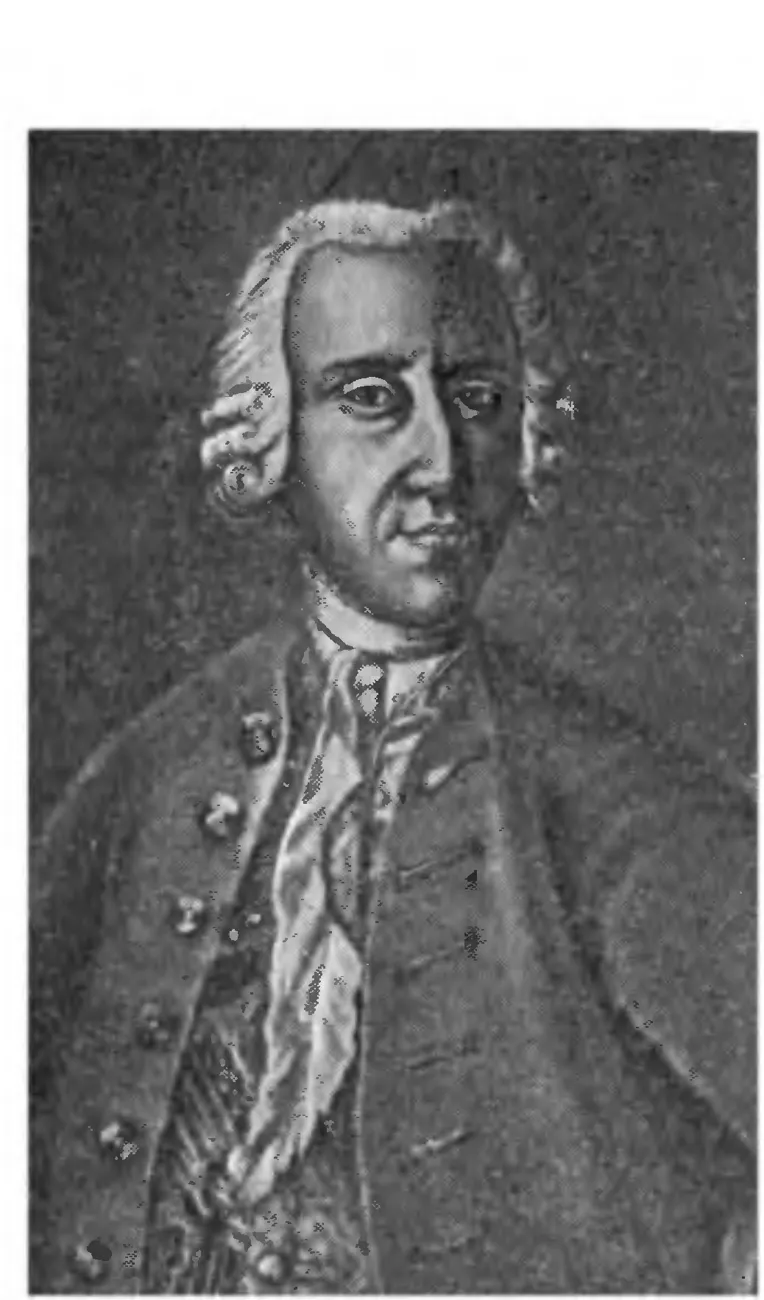
“Herr Lomonosov's ideas are interesting, but they all rest on some sort of abstract corpuscles. So long as the modern theory of phlogiston stands in complete contradiction to these speculations, I consider that none of this can be accepted as a serious achievement.”
Before he had finished, Schumacher, casting a look full of hatred at Lomonosov, shouted from his seat:
“Why don't you take up more serious work, Herr Lomonosov?”
“And more useful work,” came a voice from the hall.
Lomonosov could restrain himself no longer. He leapt up and spoke heatedly:
“I am sorry for you, Herr Schumacher. Owing to your narrowness you cannot understand my ideas, and you talk all manner of nonsense.”
“Pitiful man!” Schumacher yelled. “You trade on your hypotheses, but I will not let you lead us astray.”
“And what do you propose? That we agree with the absurdities you preach?” Lomonosov replied.
Lomonosov's sharp answer horrified the Germans. The Russian's insolence was unheard of. Yet great as their hatred was, no one could find anything to say against the Russian genius: Lomonosov's arguments were unanswerable.
In spite of the intrigues, in August 1745 Lomonosov was elected an academician, which meant that he also became professor of chemistry at the university. He had to carry on endless negotiations over the building of a chemical laboratory. He drew up detailed plans himself and in the end got his way: the necessary funds were granted, and building began.
By this time Lomonosov had finished translating “Wolffian Experimental Physics”16а, and the very next year he was giving his lectures in Russian. Lomonosov had a perfect command of Latin and was acknowledged as one of the best Latinists in Europe, but the students needed knowledge, and they could acquire it and master it better only in their native tongue. This bold innovation of the Russian scholar gave rise to new and bitter attacks from the German scholars. The laboratory building was almost ready, but a great deal still remained unfinished. Lomonosov had acquired everything needed for the work. The time was not far off when every vessel and every bottle of chemicals would be taken out of the crates piled up in the yard and put in its appointed place in the laboratory. In leather bags and packets hundreds of samples of various ores and minerals were waiting to be analysed. Every day Lomonosov checked the progress of the work himself. He was helped with the building by Richmann17, the scholar's close friend.
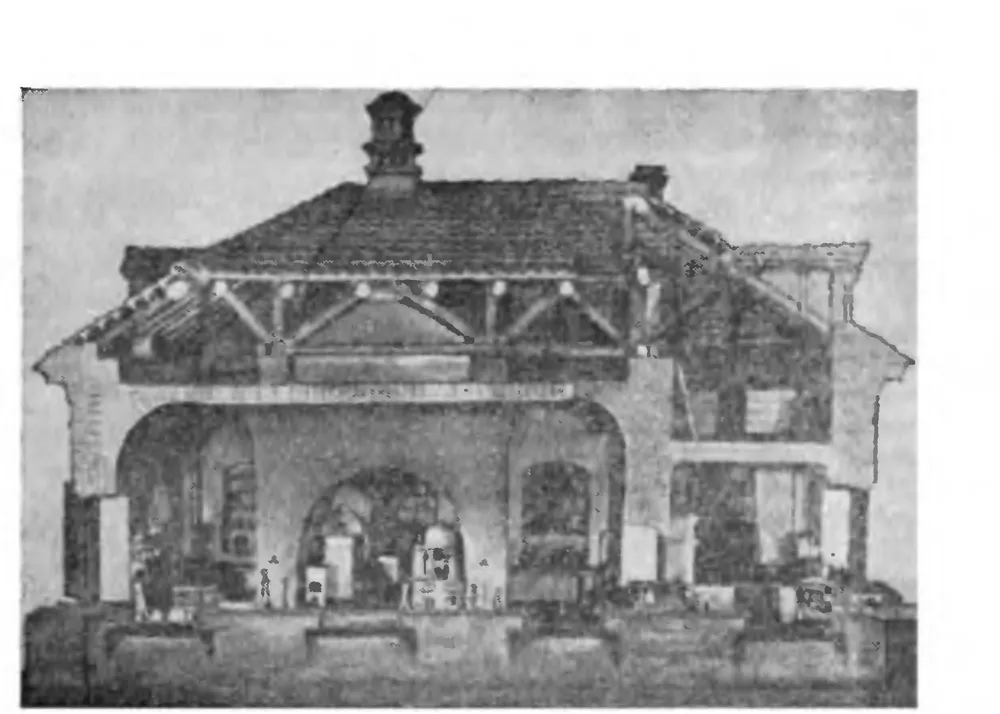
“Here we'll put a ‘hearth’18 for when we have to work with poisonous and noxious substances; with it they won't foul the air of the laboratory. Here we'll set up the furnaces, and over there the instruments for studying the physical changes of substances,” Lomonosov reckoned as he went round the rooms of the laboratory.
“And where shall we make our electrical measurements?” asked Richmann.
“Nowhere, for the present. What we do in your physical cabinet is enough to begin with.”
“What an enormous force there is in electricity! If we manage to master it, we shall work miracles.”
“To master it we must know it, and so far we know very little.”
They left the laboratory and, absorbed in conversation, did not notice that they had reached Richmann's house. Here, in a laboratory cluttered with complicated apparatus, Lomonosov and Richmann were trying to solve the mystery of electricity.
Some months later, in the autumn of 1748, the chemical laboratory was finished at last. Lomonosov felt boundlessly happy. To mark the occasion he wrote an ode of praise, in which he sang of the grandeur of nature and of the value of science to the successful growth of industry.
He told of his great victory, the completion of the laboratory, in a letter to Euler19. He spent several weeks composing it. As always, Lomonosov was not content with a few lines but set out at length his views on the corpuscular structure of substances. In the same letter he touched on the question of changes in nature: “But all the changes that occur in nature take place in such a way that if something is added to anything, the same amount is taken away from something else. Thus as much matter as is added to any body, so much is lost by another; as many hours as I spend in sleep, so many I take away from waking, and so on. Since this is a universal law of nature, it extends to the rules of motion too: a body that by its impulse sets another in motion loses as much of its own motion as it imparts to the other that it moves...” These were thoughts that no one before Lomonosov had expressed. They marked a revolution in science, the beginning of a new era; now science could explain the changes of substances, one of the chief questions that occupied scientists' minds at the time.
Lomonosov chose several of the best students as his assistants and gave them a special course of lectures in the new laboratory: “An Introduction to True Physical Chemistry”20. The students often stayed after a lecture to help Lomonosov with his experiments.
Lomonosov went back to the study of burning. He was convinced that the explanations earlier scientists had given of it would not stand. He rejected the phlogiston theory entirely. After all, Stahl had created his “phlogiston” in disregard of a fact established long before by the great Boyle. Boyle, as is well known, strongly heated metals in sealed glass vessels. He obtained a metallic ash and then weighed it. The weight of this ash was always greater than that of the metal taken. Boyle supposed that the gain in the weight of the ash was due to caloric passing from the fire into the metals. A century later Professor Wolff too was convinced that there were weightless fluids that flowed from one body into another. Such a fluid, he maintained, was “caloric”. And “caloric”, or phlogiston, had in the opinion of Stahl's followers a negative weight.
Who, then, was right? Where was the truth?
For several years these thoughts had given Lomonosov no peace. Philosophical reasoning alone was not enough to arrive at the right answer. But experiment, he believed, would help to settle this too.
Why had Boyle opened the vessels after heating? If he had, something might have escaped from them, and their weight might have changed. The experiments must be repeated, but with all the observations and measurements made in a closed vessel. And there is air in it.
Lomonosov prepared a special vessel and put lead filings into it; then he blew up the fire with the bellows and heated the neck of the vessel until the glass softened. With a clamp he sealed the glass and at once put the vessel on the fire. Now he was quite sure that nothing would get into the vessel and nothing would escape from it. The bellows filled for the last time, and the little blue flames died away in the glowing heap of charcoal. Lomonosov carefully set the vessel on the table and began to prepare the next. The experiment had to be repeated many times, calcining not only lead but other metals as well: iron, copper...
Lomonosov weighed the cooled vessels, set them on the coals in a large furnace and began to blow up the fire. At first the bellows worked slowly, but little by little the stream of air grew stronger, and with it came little bluish flames. The walls of the vessel turned red and the lead filings melted. The glittering silvery-white drops were quickly covered with a greyish-yellow film. The red copper filings turned into a black-brown powder. The iron filings went black.
Had the “caloric” entered the vessels, he wondered? Had it combined with the metals? If so, the weight of the vessel must have increased. But the balance showed that the weight of every vessel was unchanged!
Lomonosov fell to thinking.
And what of the ash of the metals? Its weight must be compared with the weight of the metal. The next day the investigator repeated the experiments. He weighed the metal filings before sealing the vessel. After calcining he weighed the vessels again, then opened them and weighed the metallic ash obtained. The ash was heavier than the metal he had taken!
“These experiments refute Robert Boyle's opinion. The metals do not combine with ‘caloric’: the weight of the vessel does not change. That is beyond dispute. And yet the ash is heavier.” Lomonosov thought again. But there had been a certain amount of air in the vessel... Perhaps the metals combined with the corpuscles of the air? Since the metallic ash in the vessel had grown heavier, the air in the vessel must have lost just as much in weight. Unless air comes in from outside, the weight of the metal will stay unchanged!
This was a truly great discovery, and thanks to it the fundamental law of chemical science could be formulated21. Lomonosov was jubilant. He wanted the world to learn of this important discovery as soon as possible. Perhaps he ought to write an ode! He flew home as if on wings. Now there would be time for his studies in art too. Lomonosov had long ago turned the small building at the far end of the garden into an artist's workshop. There he found his faithful pupils, Vasilyev and Melnikov22, at work. Bending over a box, Vasilyev was choosing the glass he needed, while Melnikov, at the frame, was laying the last pieces of glass into a splendid mosaic portrait.
“Bravo! You've finished it all, I see!” Lomonosov exclaimed.
“There's very little left.”
“Now I'll do some work on ‘Peter the Great’ too.”
Lomonosov looked into the box, picked out a few pieces of glass and began skilfully setting them into the board. The mosaic shimmered in the light with all the colours of the rainbow. Lomonosov worked with inspiration.
“You know, my friends, I have something grand in mind. We shall make twelve huge mosaics to adorn the walls of the Cathedral of St Peter and St Paul. In them we shall immortalise the events of Peter's age. I've already made sketches for the first.”
His assistants stopped work and came over to Lomonosov. The scholar pulled out a cartoon:
“This is how ‘The Battle of Poltava’ will look. Peter the Great on a white horse. On this side we'll place the Russian troops and their commanders, and on this side the Swedes. To my mind it looks impressive.”
“But the work will take a great deal of glass. What we make in the laboratory is not enough,” said Vasilyev.
“I've thought of that too. We shall build a glass factory at Ust-Ruditsa, and then we shall have plenty of glass at our disposal.”
When spring came in 1753, Lomonosov hired workmen, and at Ust-Ruditsa the work was soon in full swing. Craftsmen built the furnace, masons put up the building. Lomonosov hoped that the building would be finished before winter set in and the factory would begin work. On the way back from Ust-Ruditsa he often called on Richmann. The friends had fitted out a laboratory in a small country house that stood in a pretty clearing, buried in the lush green of spreading trees.
One day at the height of summer Lomonosov decided to visit his friend and at the same time to rest after the tiring journey. Languid from the sun and the heat, he entered the laboratory and sank heavily onto a chair. Richmann was busy with a large apparatus set up on the table.
“From Ust-Ruditsa?”
“Yes. And you, I see, have made a new electrical indicator?23”
“Yes. The one we worked on together turned out to be too small. I think we need a big one to measure the electricity of lightning. What do you say?”
A kind of humming came from the ceiling. Lomonosov glanced at the wall and exclaimed:
“Oho! Look at the needle of the anemometer, how the wind has risen!”
“Yes. So there's no escaping a storm.”
The anemometer Lomonosov had designed two years before worked accurately and never failed. Now its needle had risen to the last divisions of the scale. The wind grew stronger still. Lightning flashed, and the first peals of thunder were heard.
“You're just in time,” said Richmann. “You can help me with some interesting experiments. When shall we finally conquer this force?”
Standing by the large electrical indicator, Richmann turned the switch. There was a deafening crash, a blinding blue-green light flashed, and at once everything was plunged into darkness. Lomonosov fell senseless. When he opened his eyes, he saw among the wreckage of the apparatus the motionless body of Richmann, who had been killed24.
Lomonosov trudged home, crushed with grief. The rain lashed his face and the wind tore at his clothes, but the scholar seemed not to notice...
After Richmann's tragic death the “fathers” of the Church furiously took up arms against Lomonosov, calling him a blasphemer and a heretic. But the scholar seemed not to notice their attacks. Lomonosov had already written a good many books: “On the Strata of the Earth”25, “A Discourse on the Causes of Heat and Cold”26, “A Discourse on the Usefulness of Chemistry”27, “A Letter on the Usefulness of Glass”28, “Rhetoric”29. On his desk lay the materials for a “Russian Grammar”30... But he put this work aside to carry on the research he had begun so successfully with Richmann. He did not give up the study of electricity, and set to work on a new book: “A Discourse on Atmospheric Phenomena Arising from Electrical Force”31. In it he was the first to explain many phenomena, trying to find their cause in natural electricity. He held that the corpuscles of the air, as they rotate, rub against one another and become electrified. In the same way huge masses of air become electrified as they move. This electricity gives rise to lightning and to the northern lights. He supposed that comets too shine as a result of the same electrical forces. This was an entirely new explanation of natural phenomena, a first step towards discovering their real nature. But Lomonosov was stirred by yet another idea, which led him into dispute with the members of the Academy once again. Russia needed scientists. The St Petersburg university alone was not enough to train them. In his speeches Lomonosov argued more than once that a new university must be opened. He also drew up the curricula, from which theology was excluded for the first time. “No one needs it, and no benefit can be had from it.”
In 1755, on Lomonosov's initiative and with his direct participation, the doors of university lecture halls opened in Moscow for the first time. The rules at Moscow University were then more democratic than at St Petersburg, but after the university opened Lomonosov had more enemies than ever. The scholar's fame gave them no peace, and they did all they could to hinder his work. Sometimes they succeeded. Thus two years after Moscow University opened, Lomonosov was asked to hand over to someone else the chair of chemistry he held at the Academy. Another blow awaited him: although Lomonosov had been appointed a councillor of the Academy, he was forbidden to use the laboratory, which forced him to fit out one of his own at home. The rooms were rebuilt very quickly, and within a year the scholar could set to work in his new laboratory. There, alongside his research in chemistry, he designed optical instruments.
At the Academy Lomonosov was elected head of the Geographical Department. This obliged the scholar to give a good deal of time to geographical work. He took a particularly keen interest in the northern regions and in the Arctic Ocean. He was interested in the origin of polar ice, and he also worked on a classification of ice32.
One day, working in his study, Lomonosov was entering on a huge map the data he had received from the great Siberian expedition. Absorbed in the work, he did not notice Elisabeth come up to the desk and stop beside him. Her face shone with joy. Sensing that someone else was in the room, Lomonosov turned round sharply.
“Lischen, what is it?”
“Good news, my love.”
“Then why did you come in so quietly?”
“I wanted to admire you, my dear Doctor honoris causa Mikhailo Lomonosov!” she answered softly.
“I don't understand. What Doctor honoris causa?”
“What do you mean, what? Of the Swedish Academy of Sciences! The news has just come from Stockholm. You've been elected an honorary member!33”
Lomonosov sank into an armchair. Recognition had come at last! Then he jumped up and began to pace up and down the room:
“They recognise what I have done! They recognise it! But it's not our people, it's the Swedes!” His wife caught a note of resentment in his voice. “How long will they go on thinking in Russia that we Russians are people of a lower culture? How long will the foreigners who have made themselves at home in St Petersburg look down on us?”
“Calm yourself, I beg you. They think differently of you, at least. You serve science honestly, to the glory of Russia.”
“It's not about me. It's about Russian scientists, about Russian science. How many great minds the Russian people have given the world! They must have scientists of their own too. The genius of Russia is in no way inferior to the genius of Europe. And that must be understood first of all here at home, by our statesmen.”
Three years later he was elected an honorary member of the St Petersburg Academy of Arts, and a year after that word came from Italy: Lomonosov was a Doctor honoris causa of the Academy of Sciences in Bologna34.
But recognition came to him late. Ceaseless work in hard conditions and the constant strain on his strength had undermined the scholar's health. A few months later, on 4 April 1765ed.1, Lomonosov died.
Lomonosov's death was an irreparable loss to Russian science. His genius boldly made its way into every field of human knowledge: he was a man of letters, a poet, a linguist, a historian, a geographer, a geologist, a metallurgist, a physicist, a chemist and an artist.
Living in an age when chemistry was only beginning to take shape as a science, Lomonosov was able, in defiance of the false notions of the phlogiston theory, to arrive at generalisations that still lie at the foundation of physical and chemical science today. He was the first to formulate the law of conservation of matter and energy, the first to point out the road that many scientists were to follow.
Notes
- 1. Lomonosov regarded as “the gates of his learning” the Slavonic Grammar of Meletius Gerasimovich Smotritsky (c. 1578–1633), very difficult to read, published at Vievis (Lithuania) in 1619 and in Moscow in 1648; the classic Arithmetic of Leonty Filippovich Magnitsky [1669–(1739 or 1742)], published in 1703; and the Rhymed Psalter of Simeon Polotsky (Морозов А. А. Михаил Васильевич Ломоносов. 5-е изд. — Мол. гвардия, 1965, с. 96—101).
- 1а. In fact Lomonosov left home (on 9 December 1730) without his father's permission. He obtained a passport “not openly, but through Ivan Vasilyevich Milyukov, who was then in charge of local affairs in Kholmogory”, and “having begged of his neighbour Foma Shubnoy a nankeen half-caftan and borrowed three roubles in money, he set off on the road without telling his household” (Морозов А. А., ук. соч., с. 107—108). Further inaccuracies in the biography are not pointed out.
- 2. The Moscow Slavic Greek Latin Academy (popularly the “Spassky Schools”) was the first ecclesiastical institution of higher learning in the Muscovite state, founded in 1685 and officially opened in 1687 under the name of the “Hellenic Greek Academy”. In 1814 it was reorganised as the Moscow Theological Academy and moved to the Trinity Lavra of St Sergius. In the senior classes of the theological academy the students were given the elements (outdated, it is true) of psychology and the natural sciences (Морозов А. А., ук. соч., с. 111—115).
- 3. There were no “state lyceums”, that is, secondary schools, in Moscow at that time. Before applying for admission to the Slavic Greek Latin Academy (15 January 1731), Lomonosov tried to enter the Cipher School housed in the Sukharev Tower, but he found that “learning too little” (Морозов А. А., ук. соч., с. 117).
- 3а. Among the teachers and pupils of the Slavic Greek Latin Academy there were also progressive, educated Russians. Tarasy Postnikov, Ivan Kargopolsky and Ivan Gorlitsky, for example, studied at the Sorbonne by decree of Peter I (Морозов А. А., ук. соч., с. 105 и др.).
- 3б. Johann Albrecht Korff (1697–1766), president of the St Petersburg Academy of Sciences from 1734, officially styled the Academy's chief commander. On Korff see: Страдынь Я. П., Валескалн П. И. Из истории естествознания и техники Прибалтики. I. — Рига, 1968, с. 65—79.
- 3в. The author does not mention M. V. Lomonosov's time at the Kiev-Mohyla Academy. Here in the autumn of 1734 the young Mikhailo Lomonosov studied mathematics, astronomy, physics, alchemy, philosophy, rhetoric and poetics, and first came to know the phlogiston theory and the works of I. Newton, R. Descartes, G. Leibniz and B. Spinoza. In his notes from the 1740s the following jotting has been found: “To speak of founding a university in Kiev.”
- 4. The decision to send three students of the St Petersburg Academy of Sciences abroad (M. V. Lomonosov, D. V. Vinogradov and G. U. Raiser) was taken by the Cabinet of Ministers on the Academy's initiative. The students left for Germany on 19 September 1736 (Морозов А. А., ук. соч., с. 185; Летописи жизни и творчества М. В. Ломоносова. — М.—Л.: Изд-во АН СССР, 1961, с. 32).
- 5. Christian Wolff (1679–1754), a German idealist philosopher and follower of Leibniz, a scholar widely known not only in Germany but throughout Europe. Wolff agreed to teach the Russian students and to direct their studies “in chemical science, mining, natural history, physics, geometry, trigonometry, mechanics, hydraulics and hydraulic engineering” (Морозов А. А., ук. соч., с. 185, 205—210).
- 6. Galileo Galilei (1564–1642), an Italian astronomer, physicist and mechanician, one of the founders of exact natural science. He discovered the law of inertia, the laws of falling bodies and of the swinging of the pendulum, and so on. He was the first to observe the heavenly bodies through a telescope of his own making. He discovered (1609–1610) the mountains on the Moon, four satellites of Jupiter, the phases of Venus and the stellar structure of the Milky Way, and observed spots on the Sun. In his book “Dialogue Concerning the Two Chief World Systems, Ptolemaic and Copernican” (1632) he brilliantly developed the teaching of N. Copernicus (1473–1543), for which in 1633 he was condemned by a Catholic court in Rome. On Galileo see: (Бублеников Ф. Д. Галилео Галилей. — М.: Просвещение, 1964; Кузнецов Б. Г. Галилей. — М.: Наука, 1964; Галилео Галилей. Избранные труды: В 2-х томах. — М.: Наука, 1964. — (Классики науки), Штекли А. Э. Галилей. — М.: Мол. гвардия, 1972. — (ЖЗЛ).
- 9. Syllabic versification (from the Latin syllaba, a syllable) is versification by syllables, or by syllable count, based on a fixed number of syllables in each line of verse, with a stress in the middle and at the end of the line.
- 10. Tonic versification (from the Greek tonos, stress) is based on lines of verse with a more or less equal number of stressed syllables and a varying number of unstressed ones.
- 11. Apparently in 1738 Lomonosov translated Anacreon's ode “To the Lyre” into Russian. At the same time, as proof of his progress in versification, he sent to St Petersburg a translation of an ode by Fénelon. In this way Lomonosov showed an attempt to move from the old syllabic system of versification to the new syllabo-tonic one (Морозов А. А., ук. соч., с. 228—229).
- 12. Johann Friedrich Henckel (1679–1744), a well-known German chemist and metallurgist. He was the first in Europe to obtain metallic zinc (1725).
- 13. Here the author is mistaken: Elisabeth Zilch's father had died before she married Lomonosov.
- 14. Lomonosov's work “Elements of Mathematical Chemistry” was written in 1741 and became the basis of the scholar's later physico-chemical research. (Полное собрание сочинений М. В. Ломоносова (ПСС): В 10-ти томах. — М.—Л.: Изд-во АН СССР, 1950—1959. — Т. 1, 1959, с. 65—83, 545—546).
- 15. The full title of this work of Lomonosov's is “A Short Guide to Rhetoric, Composed for the Benefit of Lovers of Eloquence”; it is thought to date from 1743. Questions of style had long engaged Lomonosov's attention, and he was well prepared to take them up, having attended special courses at the Slavic Greek Latin Academy and in the philosophical faculty of the University of Marburg (ПСС, т. 7, 1977, с. 20—79, 790—800).
- 16. Johann Caspar (Ivan Ivanovich) Taubert (1717–1771), an adjunct, historian and librarian of the Academy of Sciences, a councillor of the Academy Chancellery, and a relative of J. D. Schumacher (1690–1761), at first librarian of the St Petersburg Academy of Sciences and from 1724 a councillor of the Academy Chancellery (Морозов А. А., ук. соч., с. 524—525).
- 16а. M. V. Lomonosov made his translation of “Wolffian Experimental Physics” in 1744. Not counting, it seems, on support for his proposal to publish the translation, M. V. Lomonosov went round the Academy of Sciences and handed the manuscript to Count M. I. Vorontsov, who showed it in the Senate. The Senate submitted the translation to the Academy of Sciences for approval. Having received a favourable opinion from the Academy, the Senate decided on 17 October 1745 to print Lomonosov's manuscript, and in March 1746 the book came out (ПСС, т. 1, 1959, с. 421—530, 577—592).
- 17. Georg Wilhelm Richmann (1711–1753), a Russian physicist, academician from 1741. He wrote on electricity and on the theory of heat. In 1744 he derived a formula for the temperature of a mixture of like liquids; in 1745 he invented the first electrical measuring instrument, the “electrical indicator”; and he discovered electrostatic induction (1748–1751). He was killed while studying atmospheric electricity on 26 July 1753. On Richmann see: Биографический словарь деятелей естествознания и техники: В 2-х томах. — М.: Сов. энцикл., 1958—1959. Т. 2, с. 176—177; Елисеев А. А., Мурзин А. М. Изв. АН СССР, Отд. техн. наук, № 8, 1953, (приведена библиография трудов Рихмана и литературы о нем); Елисеев А. А. Г.-В. Рихман. — М.: Просвещение, 1975; Цверава Г. К. Георг-Вильгельм Рихман. — Л.: Наука, 1977; Выдающиеся физики мира, ук. соч., с. 108—113.
- 18. A structure in the form of a large vault with a chimney, set on four pillars, needed, as Lomonosov wrote, “so that smoke and noxious vapours can easily escape”; the “hearth” was the prototype of the modern fume hood, and the furnaces were placed under it during work. Мюрсепп Л. В. Биографии выдающихся математиков XVII и XVIII веков. — Таллин: Валгус, 1975; Замечательные ученые. — М.: Наука, 1980, с. 54—65. — (Квант); Яковлев А. Я. Леонард Эйлер. — М.: Просвещение, 1983. — (Люди науки).ed.2
- 19. Leonhard Euler (1707–1783), a great mathematician, physicist and astronomer, a full member of the St Petersburg Academy of Sciences. Born in Switzerland, he worked in Russia in 1727–1741 and 1766–1783. Euler was the author of a great many works on mathematical analysis, differential geometry, the theory of numbers, approximate calculation, celestial mechanics, mathematical physics, optics, ballistics, shipbuilding, the theory of music and more. On Euler see: Биографический словарь деятелей естествознания и техники. Т. 2, ук. соч., с. 400—404 (в статье приведена библиография основных трудов Эйлера и литературы о нем); Леонард Эйлер: Сб. статей в связи с 250-летием со дня рождения, представленных АН СССР. — М.: Изд-во АН СССР, 1959; История Академии наук СССР. Т. 1. — М.: Изд-во АН СССР, 1958, с. 71—91; Мюрсепп П. В. Биографии выдающихся математиков XVII и XVIII веков. — Таллин: Валгус, 1975; Замечательные ученые. — М.: Наука, 1980, с. 54—65. — (Квант); Яковлев А. Я. Леонард Эйлер. — М.: Просвещение, 1983. — (Люди науки). Euler thought highly of Lomonosov's research. In his letter to Euler of 16 February 1748 Lomonosov wrote: “Your letter... in which you were kind enough to speak of my work in the best of terms gave me the greatest joy...” (ПСС, т. 10, с. 137).
- 20. Lomonosov began to lecture on the new course of physical chemistry he had drawn up in the spring of 1752. His students were M. Sofronov, I. N. Fedorovsky and V. I. Klementyev. The lectures went on until May 1753. A summary of Lomonosov's lectures, “An Introduction to True Physical Chemistry”, made by his student V. I. Klementyev, has survived (Раскин Н. М., Химическая лаборатория М. В. Ломоносова: Химия в Петербургской Академии наук во 2-й половине XVIII века. — М.—Л.: Изд-во АН СССР, 1962, с. 132—137.
- 21. The law of conservation of mass is meant.
- 22. Seven craftsmen helped Lomonosov to make the mosaic pictures of “The Battle of Poltava”. The most gifted of them was Matvei Vasilyev, who did the most demanding parts of the pictures (Морозов А. А., ук. соч., с. 564).
- 23. Lomonosov and Richmann carried out a systematic study of atmospheric electricity.
- 24. The scene of Richmann's death is an artistic invention. Richmann is known to have been killed while studying atmospheric electricity in his own house on 26 July 1753. Lomonosov was making the same observations in his own house at the time. Lomonosov described Richmann's death the same day in a letter to his influential patron, the statesman Ivan Ivanovich Shuvalov (1727–1797), an honorary member of the Academy of Sciences. In it he spoke of Richmann's heroism and his devotion to science and asked for a pension for his dead friend's family; he also wrote: “Meanwhile, so that this accident may not be construed against the advancement of the sciences, I most humbly beg you to show favour to the sciences” (ПСС, т. 10, с. 484—485, 816—817).
- 25. The work “On the Strata of the Earth” was the “second supplement” to Lomonosov's “The First Foundations of Metallurgy, or Mining”, which came out in 1763, although it had been prepared as early as 1742. The treatise “On the Strata of the Earth” was of exceptional importance for the history of science. Academician V. I. Vernadsky (1863–1945) wrote of it: “In the whole literature of the eighteenth century, Russian and foreign, it is the first brilliant sketch of geological science” (Вернадский В. И. В сб.: Труды Ломоносова в области естественно-исторических наук. — СПб.: Изд. Академии наук, 1911, с. 27; этот труд Ломоносова приведен в ПСС, т. 5, с. 530—631, 693—694).
- 26. “A Discourse on the Causes of Heat and Cold” was first published in 1750. In preparing the edition of Lomonosov's Complete Works in 1950, another work was found as well, “On the Cause of Heat and Cold”. Lomonosov considered this work one of his most important, since it contained a complete and consistently developed molecular-kinetic theory of heat (ПСС, т. 2, с. 7—55, 647—652).
- 27. The full title of this work is “A Discourse on the Usefulness of Chemistry, Delivered by Mikhail Lomonosov at a Public Assembly of the Imperial Academy of Sciences on 6 September 1751”. In the “Discourse” Lomonosov set out at length his views on the tasks of chemistry, its importance for the growth of industry and the ways of developing it in Russia (ПСС, т. 2, с. 344—369, 678—680; Крицман В. А., ук. соч., ч. I, с. 72—92).
- 28. The full title is “A Letter on the Usefulness of Glass to His High Excellency Lieutenant General, Actual Chamberlain to Her Imperial Majesty, Curator of Moscow University Ivan Ivanovich Shuvalov, Written in the Year 1752”. In the “Letter”, written in the form of an epistle in verse, Lomonosov conveyed his new and progressive technical and scientific ideas in poetic images. It is one of Lomonosov's most inspired poems (ПСС, т. 8, с. 508—522, 1003—1008; Крицман В. А., ук. соч., ч. 2, с. 144—149).
- 29. See note 15.
- 30. Lomonosov wrote the “Russian Grammar” in 1754–1755; it was first published in 1757 (ПСС, т. 7, с. 389—578, 844—888).
- 31. “A Discourse on Atmospheric Phenomena Arising from Electrical Force, Presented by Mikhail Lomonosov” was first published at the end of 1753 and written between May and October 1753. The work drew on data Lomonosov had obtained in the experiments he described in his report for 1752: “I made electrical observations of the air at no small danger.” These experiments made it possible to confirm that lightning and the electric spark are entirely the same in nature (ПСС, т. 3, с. 15—99, 512—522).
- 32. In 1760 Lomonosov sent the Swedish Academy of Sciences his work “A Discourse on the Origin of Ice Mountains in the Northern Seas”. It was published in the Transactions of the Swedish Academy of Sciences in 1763. The work was written between May and July 1760 (ПСС, т. 3, с. 447—459, 577—579).
- 33. On 30 April 1760 the Swedish Academy of Sciences elected Lomonosov an honorary member. The diploma of election was signed by the permanent secretary of the Swedish Academy of Sciences, P. Wargentin, on 7 May 1760, and it was handed to Lomonosov in May. The diploma stated: “Mr Mikhail Lomonosov, councillor and professor of chemistry of the Imperial Academy of Sciences of St Petersburg, has long since won a famous name in the learned world by his eminent services to knowledge, and now improves and elucidates the sciences, above all the physical ones, with such diligence and success that the Royal Swedish Academy of Sciences has judged it to its honour and benefit to enter into the closest association with this outstanding man...” As a mark of his respect for the Swedish Academy of Sciences, Lomonosov sent it his study (see note 32) (Модзалевский Л. Б. Ломоносов — член Шведской Академии наук. — В сб.: Ломоносов. — М.—Л.: Изд-во АН СССР, 1946, с. 277—279).
- 34. Lomonosov was elected a member of the Bologna Academy of Sciences (Italy) in April 1764.
From the site's editors
- ed.1 4 April is the Old Style (Julian) date; by the New Style it is 15 April 1765, as in the entry at the head of this page.
- ed.2 The list of works on Euler at the end of note 18 belongs to note 19: the book printed it twice by mistake.