1604–1670. A seventeenth-century German practical chemist: he made pure nitric and hydrochloric acids, Glauber's salt and water glass.
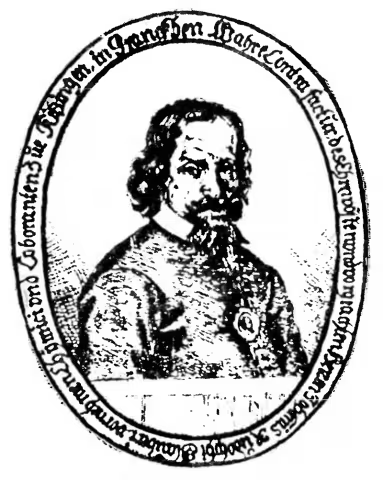
Johann Rudolf Glauber (1604 – 10 March 1670) was a German chemist. He was born in Karlstadt. Almost nothing is known of his life before 1644. In 1644 he was apothecary to the royal court at Giessen. In 1645 he moved to Bonn, and then (1648) to Amsterdam. In 1651 he bought a house in Kitzingen and set up a laboratory in it.
He made a notable contribution to the preparation of a number of inorganic substances. He prepared several salts intended for use as medicines. He was the first to describe (1649) crude benzene, obtained by distilling coal tar. By distilling a mixture of saltpetre and sulphuric acid he obtained pure nitric acid, and by heating a mixture of common salt and sulphuric acid, pure hydrochloric acid and sodium sulphate (1648; Glauber's salt). He was one of the first to use glass for making chemical apparatus. He founded industrial glassmaking in Thuringia.
He obtained water glass (potassium or sodium metasilicate). He was the first to describe (1648) the production of acetic acid by the dry distillation of plant matter.
From Kaloyan Manolov's “Great Chemists”
The year 1625 brought fresh misery to the German people. For seven years a fratricidal war between Catholics and Protestants had been laying the country waste1. Backed by the French Jesuits, the supporters of Catholicism dealt ruthlessly with their opponents. Many Protestants, left without a roof over their heads and dreading a cruel end, took to the forests. But the forests were no less dangerous.
Along a road lined with ancient trees a young traveller trudged slowly, a leather bag on his back. Two days had passed since he left Linz, and Vienna was still a long way off. Yet something strange was happening to him: his legs felt as heavy as lead and his body burned as if on fire. An illness had caught up with him, it seemed, and at the worst possible moment, the young man thought with annoyance. By sheer force of will he made himself go on: he covered another stretch of the road, and suddenly dropped to the ground like a stone...
When he came to, his eyes picked out of the half-dark a guttering candle, its feeble flame barely lighting a wretched dwelling.
“Where am I?”
“Among good people,” replied a grey-haired old man in a monk's habit.
“How did I get here?”
“You are gravely ill, my son. You were found senseless, over there, on the road.”
“Who are you?”
“A hermit. A man of God. Tell me your name, my boy.”
“My name is Rudolf Glauber, but my mother just called me Johann. I come from Karlstadt.”
“And where are you bound?”
“For Vienna. I am a mirror-maker2, and I hope to find a good place there.”
“Your father taught you the trade, I suppose?”
“I hardly remember my father. He was a barber. Once he cut his hand, the wound festered... and so he died, when I was still a boy. Now I wander the world alone. I see a great deal and learn a great deal. But it is not so easy to earn one's bread.”
“You must be hungry.”
“No, not really. But I would not say no to some water: something is burning inside me... Tell me, good man, is it far from here to Vienna?”
“Far, and yet not so far. But you are still weak; will you get there? Spend the night in my cell.”
Rudolf did not answer: his head swam and he sank helplessly onto the bench spread with bracken. Once again he lost consciousness.
The hermit gathered healing herbs and knew how to treat all kinds of illness, but for this one he had no remedy.
“The Hungarian disease*. Ever heard of it?” the old man said to Rudolf when at last he opened his eyes again.
“No,” the young man groaned.
“A rash comes out on the body, a fire burns you, your hair falls out... Perhaps you will be lucky, perhaps you will still recover.”
Rudolf listened to the old man in horror.
“And is there no cure for this disease?”
“I don't rightly know. People say that in the vineyards of Neustadt there is a spring that cures it. If you could drink its holy water, perhaps you would be healed.”
“Father, hand me my bag.” Rudolf took a purse out of it and held it out to the old man.
“Here, this is all I have. Take it and lead me to the spring.”
They were long on the way, the old man worn out by life's hardships and the youth broken by illness...
For almost a month they lived in the forest. They knocked together a shelter. The monk carried water in mugs, the sick man's only medicine. The days went by. Rudolf slowly recovered. Little by little he began to walk to the spring himself. What a wonder, what healing power this water held! And in those days of miraculous recovery he understood that on earth there is one highest, noblest calling: to help people; to know that you can cure the sick, that they need you. His former life now seemed empty and pointless. How much precious time had been wasted!
In Neustadt Glauber made friends with the apothecary Eisner; he would sit with him for hours, asking about the wonderful properties of the mineral spring.
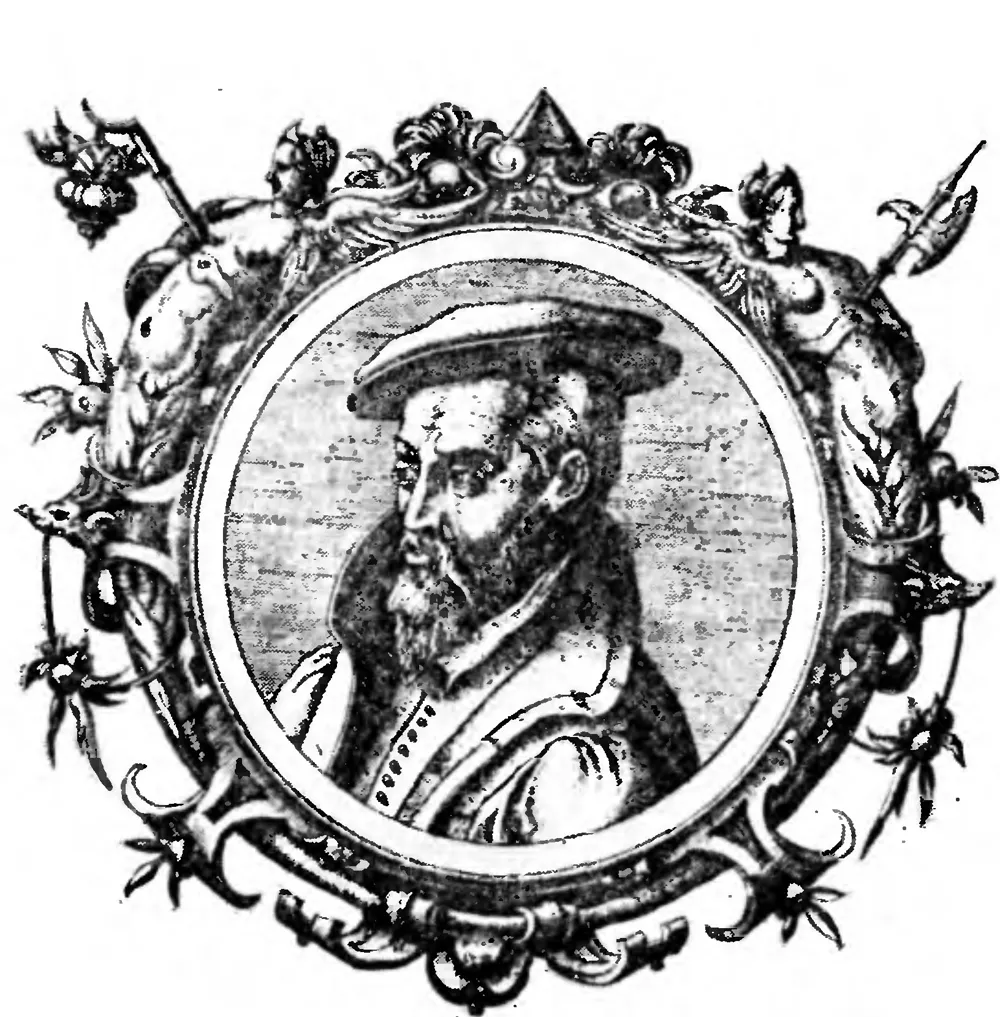
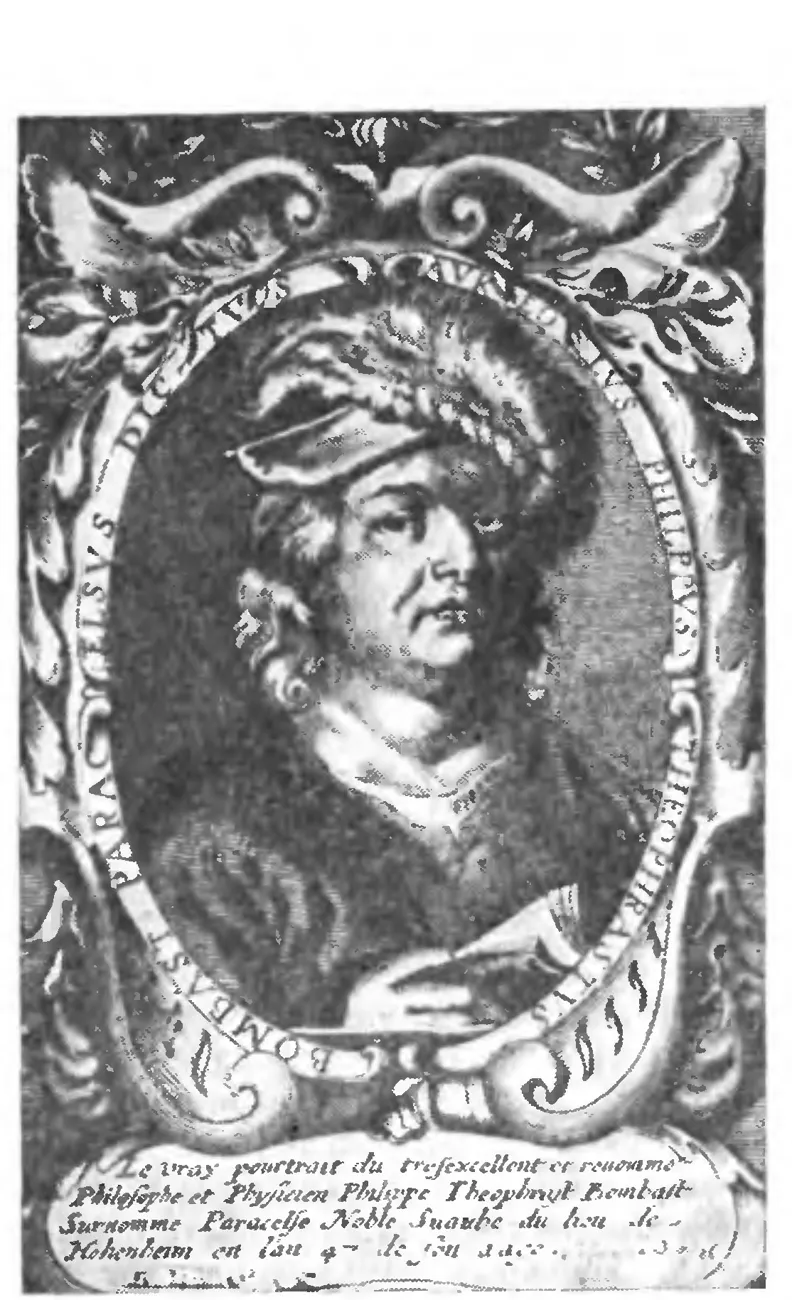
“The water of the spring was studied by the Swiss Paracelsus3,” Eisner told him one day. “In one of his books he wrote that the water contains a salt, which he called ‘sal enixum’4, but in my opinion it is saltpetre.”
“I have worked in an apothecary's shop before. I never imagined that there too one could make important discoveries, could obtain and study substances of such miraculous power. Herr Eisner, I beg you, take me on. My dream is to devote my life to science. I swear to you, I will be true to it to the end of my days.”
“There is not so much work in my shop, and I manage without assistants, but I am ready to do you a service: work for me first and get your strength back after your illness. And later on, I hope, my good friends in Vienna will not leave you without a living and will help you to find a place.”
Glauber's heart overflowed with joy and gratitude. He studied the thick folios with their time-faded pages diligently, and sat working for hours beside Eisner.
Though he was widening his knowledge and gaining experience, Rudolf still could not put the Neustadt spring out of his mind. He made a thorough study of its water and isolated the salt it contained. It turned out to be nothing like saltpetre. Glauber gave it the name “sal mirabile”5.
A year later Glauber joined one of the apothecaries' shops in Vienna, where he worked with the same zeal. Within three years he had mastered the craft and gained the title of apothecary6.
Rudolf turned twenty-five. He was young, and he loved travel as passionately as he loved science. A settled life held no attraction for him. Glauber dreamed of visiting other cities, of meeting new people, of seeing the world with his own eyes and learning its secrets. He said goodbye to Vienna and set out for Salzburg, a city he did not know. It was there that the great Paracelsus had once worked, the scholar in whose footsteps Glauber followed and whom he revered above all others.
Rudolf knelt at the gravestone: “Theophrastus Bombastus von Hohenheim, called Paracelsus, 1493–1541”. The young scholar held this name in awe: it was none other than Paracelsus who, by his example, had moved the alchemists to look for medicinal substances and to study their action on the human body. One thought kept returning to Glauber's mind: “I am your follower, great teacher. I do not seek your fame, but I want to learn everything you did, so that I too may fight for human life and make death give way before science.”
He worked hard. Apothecaries' shops in Salzburg, Kassel, Paris, Hanau, Giessen... More than once the troubled years of war forced him to move on.
In 1644 Glauber was invited to take charge of the count's pharmacy in Giessen. By then he was already known as one of the most skilful apothecaries.
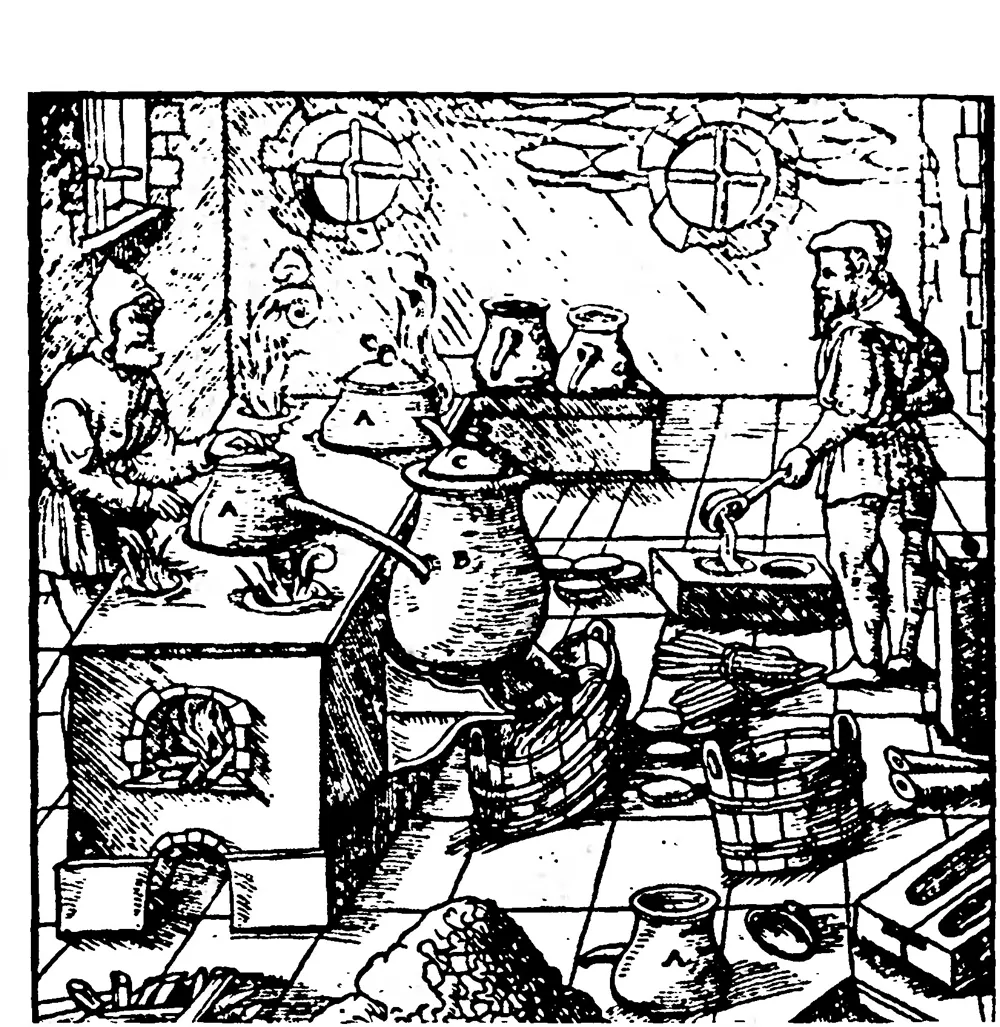
The pharmacy in Giessen was astonishingly large. But the air in its laboratories, crowded with flasks of every kind of mineral substance, balsam, oil and medicinal herb, was always thick with their fumes. Glauber worked tirelessly: he gave orders to his assistants and prepared all manner of medicines together with them. Only one of the laboratories no one was allowed to enter. There Glauber worked alone, compounding various medicines whose recipes he kept strictly secret. In that laboratory stood a brick furnace carrying a large glass retort, a round vessel with a long spout bent downwards, so that it looked like an upturned tobacco pipe. Glauber filled the retort with pale green crystals, known as green vitriol7 (green stone, or iron sulphate), and lit a strong fire. First the crystals melted, then the whole mass turned white, and drops of a clear liquid began to run from the spout of the retort. When the fire blazed up still more and dense white clouds of smoke appeared in the retort, an oily liquid began to flow from the spout. Glauber called it “acidum oleum vitrioli”. It was concentrated sulphuric acid8. He already knew that this very corrosive acid liquid could dissolve not only copper but also the copper ores brought from the Harz. When Glauber put copper ore or copper into the liquid and warmed it, a blue solution formed, from which, after standing overnight, beautiful crystals settled out. Glauber called them blue vitriol9 (blue stone). He also obtained “white vitriol”10 by dissolving “zinc ash” (zinc oxide) in sulphuric acid. From these crystals Glauber's assistants prepared a great variety of medicines and ointments.
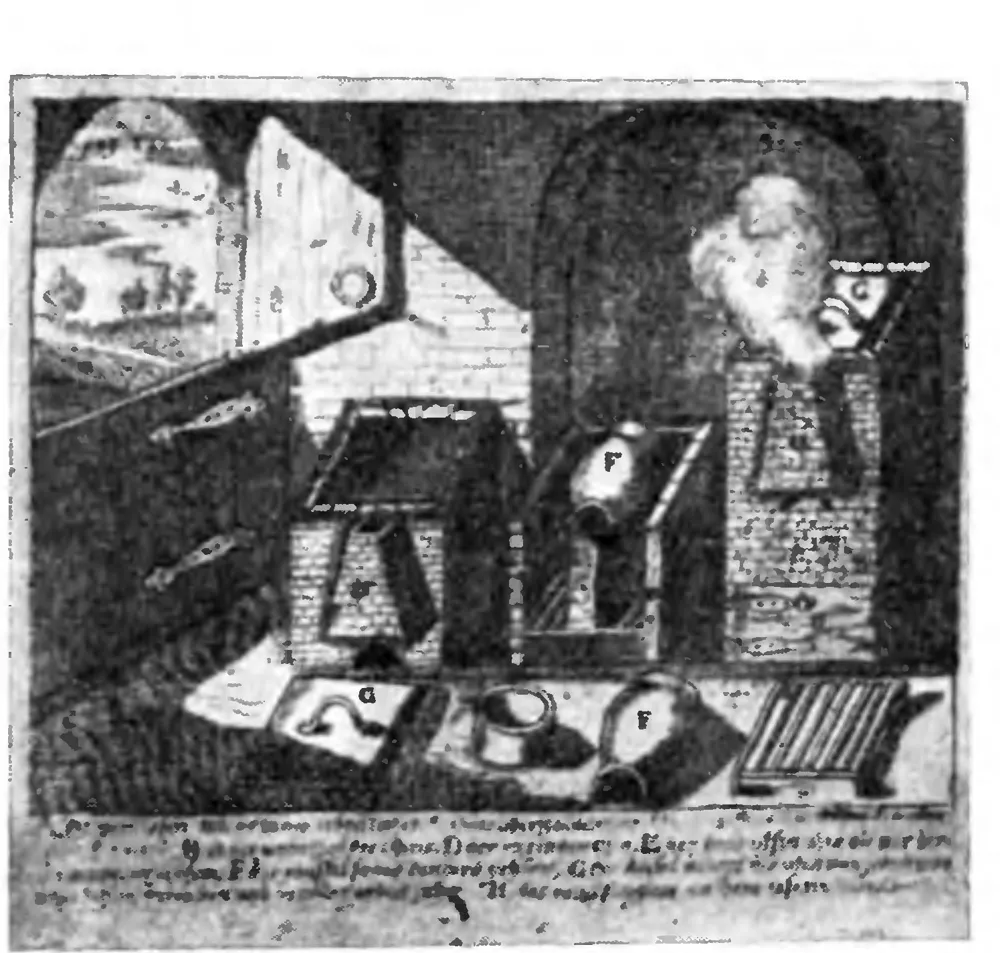
But here too the war interfered with his experiments. The troops of the French Jesuits were moving from Cologne towards Nassau, on the outskirts of which the Protestants had pitched their camp. The battle of Giessen was drawing near. Packing his books and loading his baggage into a carriage, Glauber set off for the north of Holland. There he hoped to find a quiet place for his scientific work. The journey was not an easy one. The days dragged by, full of hardship and privation. At last a damp wind off the North Sea told him that his goal was not far away. Towards evening Glauber rode into Amsterdam.
A great centre of trade and crafts, Amsterdam was a promised land for Glauber. Here he meant to buy a small house and set up on his own.
In the northern part of the city, beyond the canal, stood a large but neglected house. It was always locked up, for no one could be found who wanted it. Rumour had it that a famous alchemist had once lived there and called up spirits, who had settled for ever in the building's gloomy cellars. Glauber obtained permission to buy the house. First of all he set about restoring the old laboratory. He not only directed the building work but also helped the craftsmen to make a furnace for distillation and all sorts of apparatus and glass vessels. And at last the time came for experiments. With two assistants Glauber set to work. Now he won fame not only as a skilful apothecary but also as the maker of many valuable substances. Yet he kept secret his methods of preparing the various acids and salts. Glauber sold his medicines cheaply, and this allowed him to build up connections with wealthy merchants, apothecaries and craftsmen. He could trust his secrets to only one of his assistants, Bidstor, a tall red-haired youth with sunken eyes in a pale, drawn face. Working with poisonous substances was slowly but steadily ruining the health of them both, Glauber and young Bidstor alike.
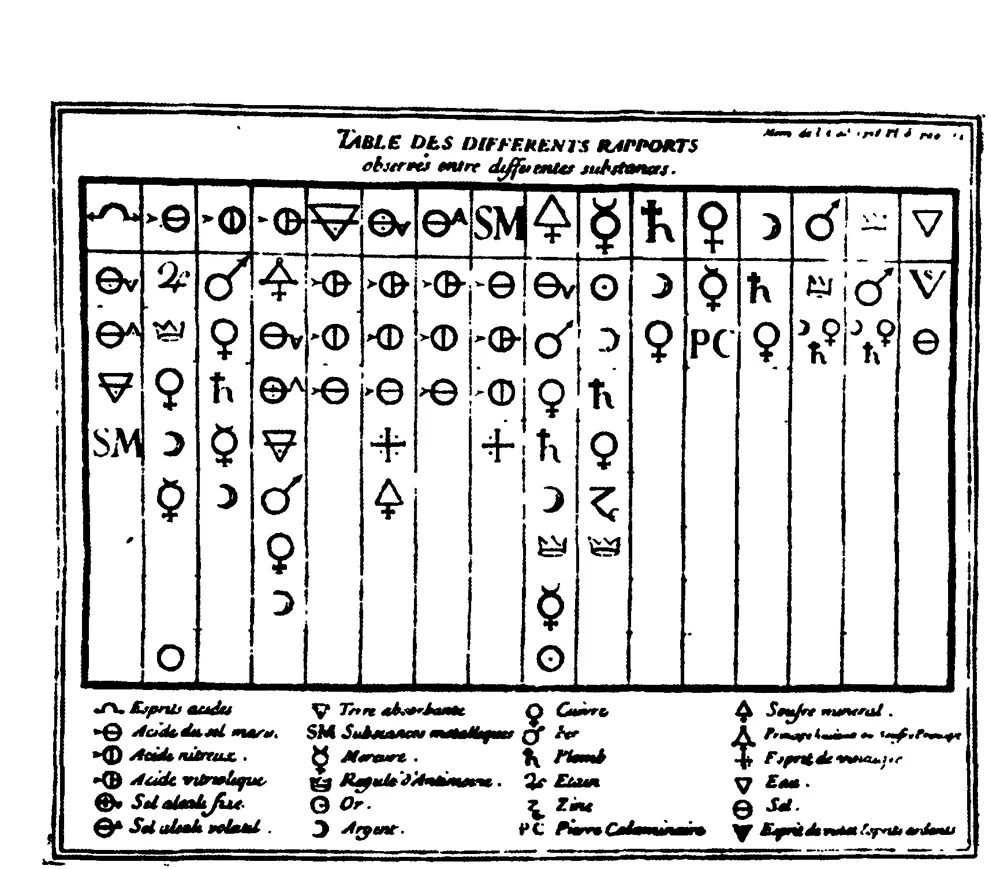
Glauber could obtain sulphuric acid by distilling “green vitriol” (green stone), alum or “white vitriol” (zinc sulphate). A metallic ash (oxide) remained in the retort: iron ash, zinc ash or calcined “terra alumen” (aluminium oxide). He knew that sulphuric acid could be used to obtain other acids too, because it is able to displace metals from salts. For a long time he kept this secret from everyone, but one day he could not hold back and told it to Bidstor. They happened to need some nitric acid. There was almost a whole chest of alum, and Bidstor fetched a sack of saltpetre from the cellar.
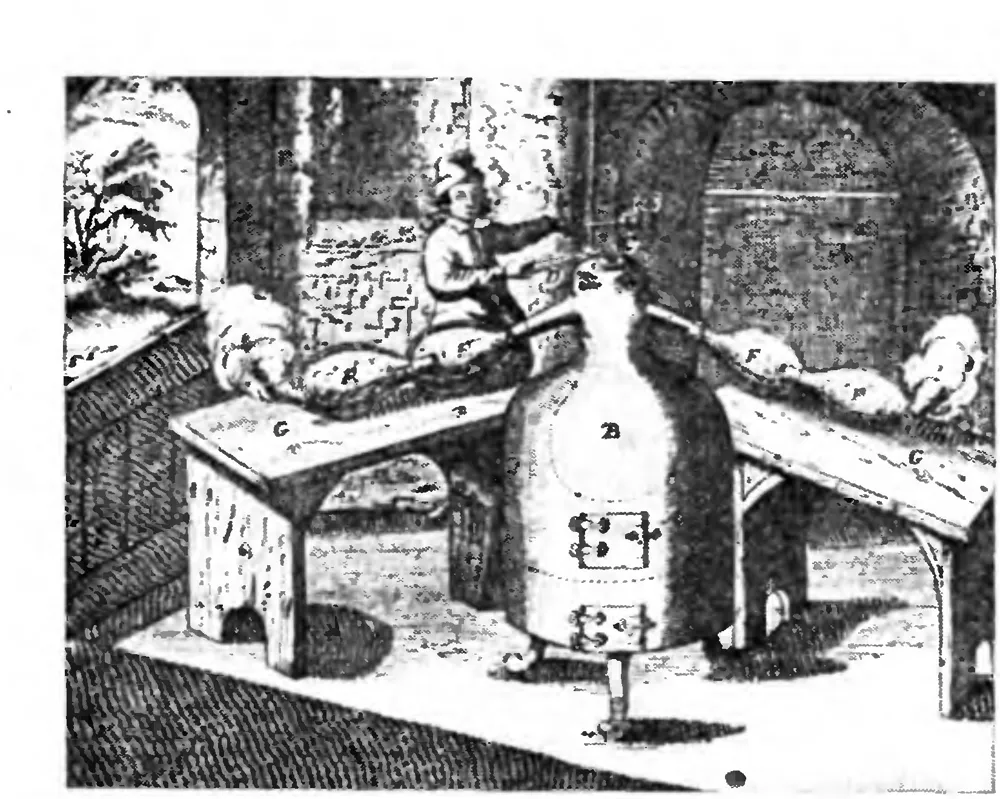
“Today, Bidstor, we shall make ‘spiritus nitri’ (nitric acid) not from alum and saltpetre but by another way. Put saltpetre into the retort and bring the bottle of ‘acidum oleum vitrioli’10а.”
The youth quickly did as he was told.
“Shall I light the fire?” he asked.
“Yes, we shall heat it.”
“Which receiver shall I put on?”
“A glass bottle.”
When Glauber poured the sulphuric acid over the saltpetre, the retort filled with reddish-brown fumes. The thick mash foamed up, and a yellowish-red liquid began to drip into the glass bottle. It was concentrated nitric acid, which they called “spiritus nitri”. This liquid was powerfully corrosive. It dissolved many metals.
“Can ‘spiritus nitri’ dissolve even the moon?” asked Bidstor in amazement.
“Yes, just imagine: the moon, and Mars, and Venus,” his master replied.
They called silver the moon, iron Mars and copper Venus11. They treated oxides, which were called ashes, or carbonates with acids. They gave the products the most astonishing names. The whole floor was crowded with wide, shallow vessels filled with all kinds of solutions, and at the bottom of many of them lay beautiful crystals of different colours. To obtain pure crystals Glauber dissolved them in water several times over and then left them to crystallise again. As soon as he was fully satisfied with the purity of the crystals, he separated them from the solution and put them into jars.
Glauber knew the secret of making yet another acid, which he called “spiritus salis” (hydrochloric acid)12. A colourless, choking gas with a sharp smell, pouring in clouds from the glass retort, was absorbed by the water in the receiver and formed an almost colourless, faintly yellowish solution. Glauber obtained it by heating common salt with sulphuric acid. In his book of recipes he wrote: “Heat one part of common salt and one and a quarter parts of ‘acidum oleum vitrioli’ in a glass retort and collect the volatile spirit in a glass receiver containing water.” Glauber dissolved the residue in the retort in water and left it to crystallise. He obtained clear, colourless crystals, which he named “sal Glauberi”. We still call sodium sulphate Glauber's salt.
With the help of hydrochloric acid Glauber obtained crystalline salts of many of the metals then known.
By heating a mixture of common salt and sand with “spiritus nitri”, Glauber obtained a yellowish-brown liquid which the alchemists called “aqua regia” (royal water13). But it was more concentrated and acted more strongly than the liquid made by the method generally known at the time, by heating nitric acid with ammonium chloride. Of “aqua regia” Glauber wrote: “It has such power that it can dissolve all metals and minerals except the moon and sulphur**.” By evaporating a solution of gold, Glauber obtained dark brown crystals (gold trichloride).
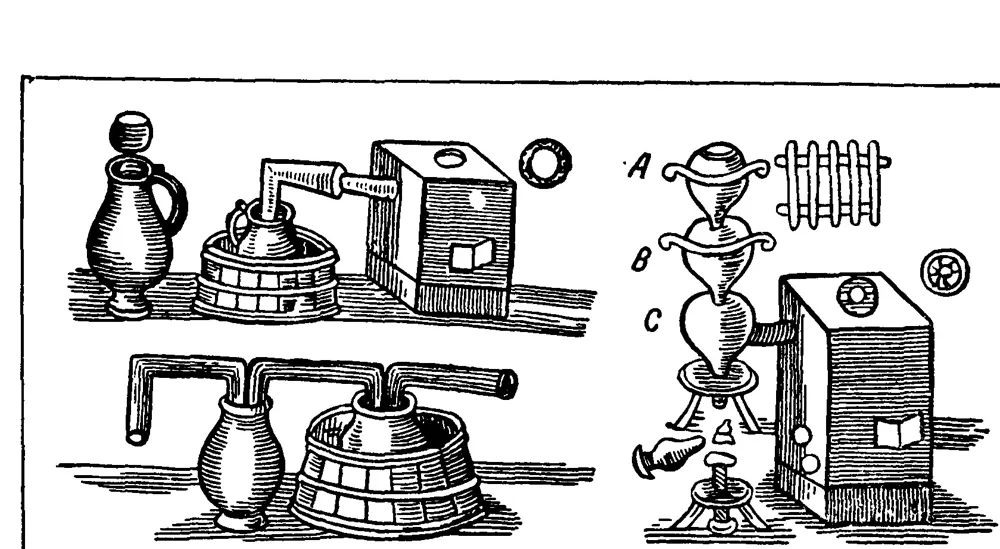
Glauber decided to describe all the methods and recipes he had worked out and improved. In his methods the mixtures were always placed in a retort set in a special furnace. That is why he called his first large work “New Philosophical Furnaces, or a Description of a Newly Invented Art of Distilling”14. Its five volumes set out every method known to Glauber for obtaining the various acids, salts and other substances.
The year 1648 came, putting an end to the Thirty Years' War in Germany. The news from Münster that the Peace of Westphalia had been signed awoke hopes of a quiet life in the German people, worn out by war and reduced to utter poverty. Glauber too had his dreams. He dreamed of seeing his native land again, of visiting Karlstadt. He went down to the harbour. A motley crowd filled the whole quayside. He slowly made his way through it, looking intently towards the boats and ships lying at anchor in the roads.
“What does the gentleman want?” asked a short but sturdily built bearded man.
“A boat that would take me to Frankfurt.”
“That's no easy matter... Germany is full of robbers now. Like as not, the French will seize the Rhine valley. It's a dangerous journey; hardly anyone will take the risk.”
“And if I offer money?”
“Then it might just be done. I'd take it on, but for five hundred thalers, not a penny less.”
“Five hundred? For that money you could buy a whole ship!” exclaimed Glauber, but at once he made up his mind: “When can we set off?”
“A week from today.”
On the appointed day a tiny boat slipped easily between the huge ships and entered the muddy waters of the Rhine.
They sailed for many days and nights. Dozens of towns were left behind. Then came Wiesbaden, then Frankfurt am Main... But the nearer Glauber came to home, the more his heart ached. The towns had fallen into desolation. It felt as though you had come into a land of the doomed, a land of hunger and suffering. It was hard to find work in Frankfurt. He went on to Wertheim, where he managed to rent a house and in a short time turned its largest room into a laboratory. There was nowhere to buy the chemicals he needed for his work, but he had a rich store of natural treasures at his disposal: deposits of coal had been found near the town. Glauber filled a sack with shining black lumps and brought them to the laboratory. He put small coal into a glass retort and lit the fire. The coal softened, bubbles of gas began to come off, and soon clouds of smoke filled the whole vessel. The receiver, meanwhile, slowly filled with a thick, black, tarry liquid. Glauber poured off the liquid that floated to the top, transferred the black tar to another retort, added hydrochloric acid and heated it again. From the bent tube of the retort a clear liquid began to drip, which evaporated very quickly.
After a while Glauber noticed that the drops running down the tube had turned cloudy and become less mobile. At once he changed the receiver and separated the new liquid. Its smell was not as pleasant as that of the first, and it did not evaporate. The distillation was not yet over when Glauber felt an itch on his hand where the liquid had soiled it; the skin there had turned noticeably red.
“The substance has quite a strong effect on the body. It will probably make good medicines,” the scholar thought.
The liquid that caught the investigator's attention contained the substance we now call phenol. Glauber used it successfully to treat various diseases15.
The clear liquid obtained at the start of the distillation Glauber did not study. In spite of its pleasant smell, it held no interest for him, since it had no noticeable effect on the human body. Glauber did not know that it was a mixture of benzene and toluene. He did, however, describe how to obtain it in another of his large works, “Pharmacopoea spagyrica”16, and at the end of the recipe he added: “Since this spirit has no effect on the body, I leave its study to other hands.” Those “other hands” were the hands of Faraday, who almost two hundred years later obtained and studied benzene17.
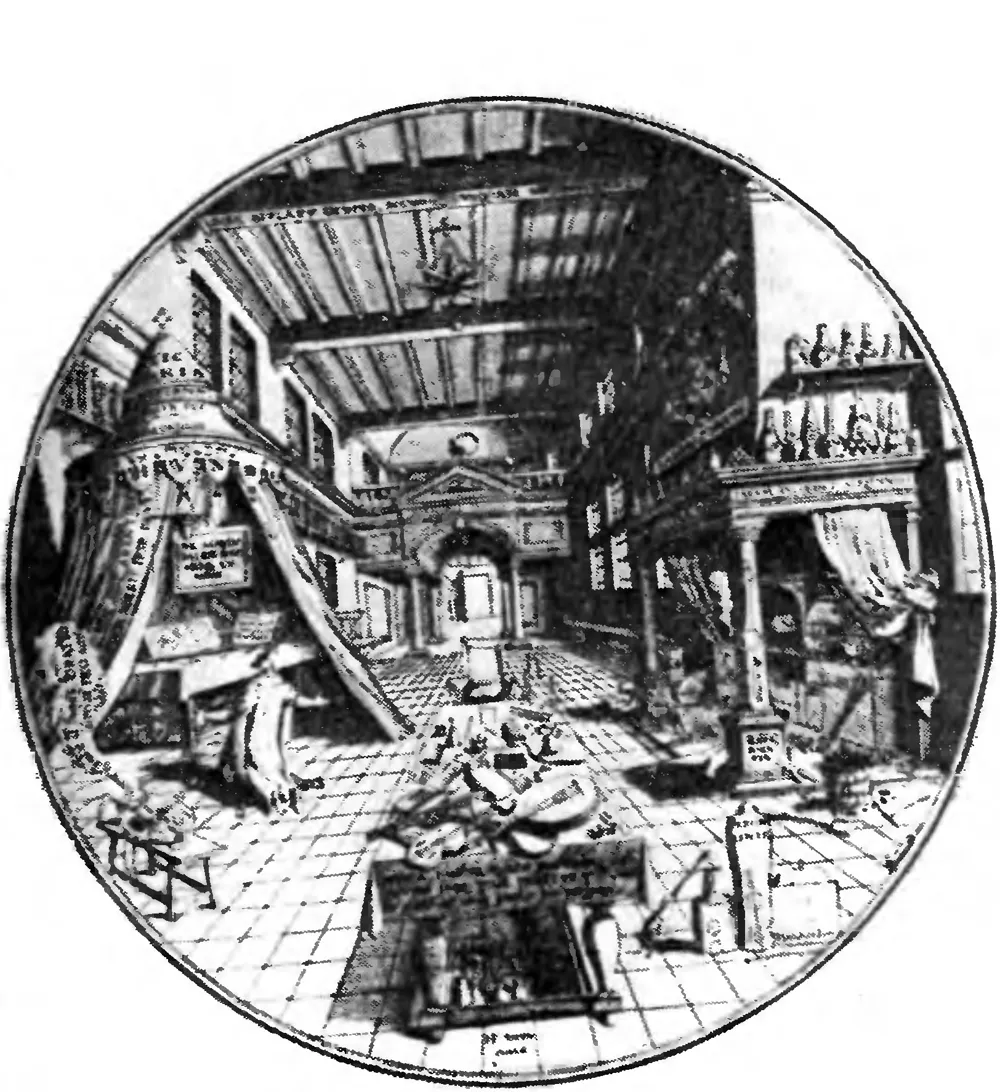
Glauber's laboratory was unlike an ordinary apothecary's laboratory. Everywhere stood furnaces, huge for those times, and glass retorts and receivers. The salts, acids and liquids obtained by distillation Glauber poured into large bottles, kept in chests, or even simply in sacks. They bore labels that were a mystery to the uninitiated: “spiritus salis”18, “spiritus volatilis vitrioli”19, “oleum aluminis”20, “sal ammoniac”21, “sal tartari”22. Glauber's laboratory was more like a chemical workshop. It was, as it were, the forerunner of the great chemical works of today.
Very often the laboratory filled with dense, acrid fumes, since it had no ventilation. Sometimes those working there were simply choking and had to run outside for a breath of fresh air. Harmful substances built up in the body little by little, and although Glauber had been blessed with excellent health, the work in the laboratory gradually sapped his strength. One day an unbearable pain in his head and joints forced him to take to his bed. But Glauber did not lose heart, and when he felt better a few days later he went back to work.
Many practical questions caught Glauber's attention. He was not satisfied, for example, with the way wine was then made23. He decided to buy a vineyard so as to find ways of improving the quality of wines, and for that reason he settled in Kitzingen.
Besides furnaces and retorts, Glauber's laboratory now held a press for grape juice and casks for fermentation. Glauber distilled the residue left after fermentation in a retort. A colourless liquid with a pleasant smell ran into the receiver. He called it “spiritus vini”; it was spirit of wine.
One day he lingered at the press, and the retort for distilling the spirit became badly overheated. The liquid in it boiled away completely, and the dry vegetable residue began to char. Dense clouds of smoke came out of the tube, and a yellowish-brown liquid smelling of vinegar dripped into the receiver. A second distillation gave a colourless liquid with a very sharp smell of vinegar. It had the properties of an acid, but acted more strongly than ordinary vinegar, since it was more concentrated. Glauber established that in its properties this acid did not differ from vinegar, and called it acetic acid24. It could be obtained by the dry distillation of any plant material.
His methods of making wine and vinegar were successful, and Glauber received a special licence from the Elector at Mainz to produce them. The licence gave him the right not only to make these products but also to sell them, which turned the town's winegrowers against Glauber. One of his enemies was Farner, the bell-ringer of the Catholic cathedral. Short, plump, with small cunning eyes, Farner hated Glauber, this thin physician with grey, wrinkled skin who “had made friends with the Devil himself”. He was waiting for a suitable chance to slander the scholar.
Every day dozens of sick people came to Glauber for medicines. One day Farner too called on him, although there was nothing wrong with his health.
“What is your complaint?” Glauber asked him.
“Sometimes, you know, I get such cramps in my stomach that yellow circles swim before my eyes, and sometimes I even faint,” said Farner slyly.
“Here is ‘panacea antimonialis’ for you.” Glauber reached for one of the jars of orange powder: antimony pentasulphide25, which he had made in his “furnaces”. He treated a great many diseases with this remarkable powder.
A few days later Farner looked into Glauber's laboratory again and was amazed at the sight of a pile of bulky books dumped against the wall: the whole printing of the “New Philosophical Furnaces” had just been delivered to Glauber from Frankfurt.
“I have taken the liberty of troubling you once more,” Farner began.
“How are you feeling, my good sir?” Glauber interrupted him.
“Splendid. Your medicine works wonders. The very next day I felt almost well,” Farner lied: the day before, on leaving Glauber, he had simply thrown the powder away.
“And what can I do for you now?”
Having made sure that no one could hear them, the bell-ringer whispered:
“I want to make you an offer. You are a learned man. It is simply astonishing how anyone can write so many thick books. Of course, one learns a great deal from them, but I am sure you know still more secrets and mysteries. I have plenty of gold, Herr Glauber; sell me a few of the methods you keep secret. After all, you cannot make medicines using all your methods at once. Sell them to me, I beg you.”
Glauber thought it over. And really, why not?
“Let us talk,” he said to Farner.
He had agreed! Farner shot a spiteful glance at the scholar. The next day, trying not to be seen by passers-by, the bell-ringer made his way to Glauber's house. Glauber initiated him into the secrets of his difficult craft, but never received the promised gold in return.
On the very first Sunday after this, the church, acting on a false denunciation, anathematised Glauber's works and forbade the faithful to take medicines from him.
Farner's treachery knew no bounds. He stubbornly spread the rumour that Glauber, “that charlatan and heretic”, had sold him his “secret methods”, but that no medicines could be made by following them. Some of the winegrowers, those who did not care to have a strong competitor as a neighbour, helped the spiteful bell-ringer to hound the scholar.
For three years Glauber fought the slanderers, but in the end he was forced to give up. At the end of 1655 he left Kitzingen and returned to Amsterdam, where he bought a house and a small plot of land, which he soon turned into a flourishing garden.
From morning till late at night Glauber worked in his new laboratory. He now had six assistants. By heating urine mixed with lime, he obtained a gas which he called “ammonia”26. This gas reacted with acids to form colourless crystalline substances, “sal ammoniac”. Glauber collected the gas in a receiver into which he had first poured sulphuric acid. Colourless crystals with remarkable properties formed in the receiver. When he fertilised the sandy soil of his garden with them, Glauber got a rich harvest of fruit. He called this salt “sal ammoniacum secretum Glauberi” (ammonium sulphate). Glauber also grew medicinal plants in his garden. From their leaves, twigs, fruits and roots he extracted poisonous substances. He knew that in very small amounts these poisons can also act as medicines. He covered the chopped plants with “spiritus nitri” (nitric acid), strained the solution a few days later and added “liquor nitri fixi” (potassium carbonate). A fine precipitate formed at the bottom of the vessel, or, as Glauber wrote in his recipe, there was obtained “an improved vegetable or animal principle in the form of a powder”. We now call these substances alkaloids27. Today strychnine, brucine, morphine and other such substances are extracted in almost the same way as Glauber did in his time.
Glauber made and sold large quantities of saltpetre. His recipes say: “Put ‘liquor nitri fixi’ into ‘spiritus nitri’ until the noise of small bubbles bursting on the surface can no longer be heard. Then boil until a crust forms, and let it cool so that the crystals settle out.”
This description shows that Glauber had some notion of reactions that go to completion, of the state of equilibrium and of neutral media. He judged the end of the reaction by a “sound indicator”: the bubbles of escaping carbon dioxide had to stop bursting. Glass retorts often cracked on heating, and everything had to be started again. Knowing that Glauber had a good deal of money, the glassblowers sold him retorts at fabulous prices. This made him master glassblowing too28. In one of the four rooms of his laboratory Glauber built a glass furnace.
A young apprentice of his named Heinz turned out to be a gifted glassblower and often helped the scholar in this work. One day Glauber noticed that the colour of the glass changed when various substances were added.
“Heinz, what did you add? The glass has turned yellow.”
“The same as always: sand, limestone and a little of... this.” The youth pointed to a basket of white powder (a natural carbonate contaminated with iron compounds).
“Now then, add a handful of ‘magnesia nigra’ (pyrolusite).”
Heinz hurried to do as his master said.
“Now take a sample of the glass.”
To the surprise of them both, when it had cooled the glass was pale violet.
“Why, it's amethyst!”
“No, we have simply learned to make coloured glass; that is one more secret.”
“And could we not make precious stones?” asked Heinz, and his eyes lit up.
“We shall try.”
Shut up in Glauber's house, they spent days and nights on end preparing all kinds of mixtures. Their labour was crowned with success: the melt gave a glass as red as a ruby. To get it, Glauber added yellow gold powder to the molten mass. To obtain the powder he dissolved gold in “aqua regia” and then added “tinctura silicum”, potassium silicate obtained by fusing a mixture of potash and sand.
The glasses dazzled with their splendid range of colours, but even they no longer gave Glauber any joy. A lifetime of working with harmful substances was telling more and more ruinously on his health. Early in 1660 his legs became partly paralysed. Glauber grew thin, the skin of his face turned a yellowish grey... Work in the laboratory came to a standstill: one after another his assistants left the scholar's house. Only Heinz stayed by him: he had not lost hope of learning the secrets his master possessed. It never occurred to the greedy youth that Glauber's successes lay in the particular insight of his remarkable mind and in his immense creative powers.
The following year Glauber managed to print the seven volumes of his “Opera omnia”29, in which he described all the preparations and observations he had made in his many years of service to science.
Day by day Glauber grew worse. His illness kept him in bed for a long time. Having lost hope of getting rich, young Heinz lost no time in leaving his master. The scholar died utterly alone. He was buried on 10 March 166830 in the cemetery of the Westerkerk, not far from Amsterdam.
Notes
- 1. The Thirty Years' War (1618–1648) is meant.
- 2. Glassmaking, well known in the ancient world (especially in the Near and Far East), developed in Europe (in Venice) only in the fifteenth century. The rise of manufacture and the growth of trade in the Renaissance created a demand for various chemical goods as well (acids, alkalis and others), and the production of metal and glass expanded. Glauber's interest in chemistry and chemical technology first found expression in the making of mirrors. On glassmaking see: Крицман В. А. Книга для чтения по неорганической химии. Ч. II. — 2-е изд., перераб., доп. — М.: Просвещение, 1984, с. 149—159.
- 2а. A German metallurgist and mineralogist (early sixteenth century).
- 3. Theophrastus Paracelsus (1493–1541) (the pseudonym of Philippus Theophrastus Bombastus von Hohenheim), a German physician and naturalist, the founder of a new direction in chemistry, iatrochemistry, which took the place of alchemy. “The true aim of chemistry is not to make gold but to prepare medicines,” he maintained. According to Paracelsus, illness is caused by an excess or a deficiency of one of the three components (mercury, sulphur, salt) which, in the alchemists' view, make up not only the macrocosm (the Universe) but also the microcosm (man). Paracelsus was the founder of pharmaceutical chemistry; he was the first to use preparations of opium and mercury, and he contributed much to the study of the compounds of arsenic and antimony, of the mineral acids and of spirit of wine. He worked out a way of obtaining concentrated acetic acid by distillation. On Paracelsus see: Проскуряков В. М. Парацельс. — М.: Журнально-газетное объединение, 1935. — (ЖЗЛ); Мусабеков Ю. С., Черняк А. Я. Выдающиеся химики мира: Биобиблиографический указатель. — М.: Книга, 1971, с. 23—26; Биографии великих химиков. Пер. с нем. — М.: Мир, 1981, с. 37—42; Сабадвари Ф., Робинсон А. История аналитической химии. Пер. с англ. — М.: Мир, 1984, с. 29—30.
- 4. “Sal enixum”: literally, “salt of birth” (rebirth); perhaps from the Latin enixus, birth, childbirth.
- 5. “Sal mirabile”, “wonderful salt”, so called for its laxative action, is the crystalline hydrate of sodium sulphate, Na₂SO₄·10H₂O. This compound is sometimes called Glauber's salt.
- 6. In those days the title of apothecary was one of the most honourable titles a craftsman could hold. The role of pharmacies and laboratories grew especially in the period when the iatrochemical school dominated chemistry. The iatrochemists not only noticed such general phenomena as, for example, the likeness between burning, the roasting of metals and breathing, but also learned to make various preparations important for pharmacy. Among them were not only preparations of antimony, arsenic, mercury, iron and so on, which came into wide medical use, but also such as “tincture of iron” (Tinctura Martis, liquid medicines containing iron compounds), “laudanum” (compound medicines whose chief ingredient was opium) and “tartar emetic” (obtained by van Mynsicht by the action of antimony oxide on tartar). The iatrochemists also discovered sulphuric ether and ammonium acetate. Glauber not only brought into pharmaceutical practice the salt that bears his name, but in his researches also came close to the discovery of acetic acid. Other medicines that were chemical compounds also came into use in the iatrochemical period. (Левинштейн И. И. История фармации и организации фармацевтического дела. — М. — Л.: Медгиз, 1939; Джуа М. История химии. Пер. с итал. — М.: Мир, 1966, с. 29—30).
- 7. “Green vitriol”, iron vitriol, FeSO₄·7H₂O, is the surviving technical name of the crystalline hydrate of iron sulphate (greenish crystals). It was formerly called green copperas (Albertus Magnus, 1240) and shoemaker's vitriol (M. V. Lomonosov). The Russian word «купорос» (vitriol) has been in use since the seventeenth century; it probably comes from the French couperose, a corruption of the Latin Cypri rosa, rose of Cyprus (the island where it was mined).
- 8. Sulphuric acid was studied by one of the leading iatrochemists of the late sixteenth and early seventeenth centuries, Andreas Libavius (1550–1616), who also looked for ways of using various substances of mineral origin in medicine. In his treatise “Alchemia” (1597), from which chemistry was taught in many medical faculties, he was the first to point out the likeness of “oil of vitriol”, or “spirit of vitriol”, obtained by calcining alum and vitriols, to the “oil of sulphur” formed when sulphur is burned with saltpetre.
- 9. “Blue vitriol”, copper vitriol, CuSO₄·5H₂O, is the technical name of the crystalline hydrate of copper sulphate (blue crystals).
- 10. “White vitriol”, zinc vitriol, ZnSO₄·7H₂O, is the technical name of the crystalline hydrate of zinc sulphate (white crystals). It was described at the end of the sixteenth century by Basil Valentine. Glauber also obtained a solution of zinc chloride (1648) by dissolving the metal's oxide in hydrochloric acid, and also the chlorides of copper, tin and arsenic.
- 10а. Glauber was apparently the first to make use, unknowingly, of the property expressed by the electrochemical series, in which all the metals standing before hydrogen can displace it from acids.
- 11. The old doctrine linking the planets with the metals, which were supposed to form in the earth under the influence of the heavenly bodies, gave the alchemists grounds for denoting the metals by the signs of the planets; gold, for instance, was denoted by the sign of the Sun ☉, and so on. These signs survived in chemistry until the end of the eighteenth century. On them in detail see: Джуа М., ук. соч., с. 98—99, 104.
- 12. Before Glauber, hydrochloric acid was prepared by the dry distillation of vitriols and alum with common salt. He established that this process produces sulphuric acid, which then reacts with the common salt. So to obtain pure, concentrated hydrochloric acid one must distil common salt with sulphuric acid. He regarded this reaction as one acid driving another out of a salt, since in Glauber's view a salt was a compound of an acid and an alkali. Fuming hydrochloric acid was long called “spiritus salis fumans Glauberi” (Bugge G. Das Buch der grossen Chemiker. — Weinheim: Chemie, 1974, Bd. I, S. 151—172).
- 13. Aqua regia, a mixture of 1 volume of concentrated HNO₃ with 3.6 volumes of concentrated HCl (3HCl + HNO₃ → NOCl + 2Cl + 2H₂O)ed.1, is so called for its ability to dissolve gold, the “king” of metals. Aqua regia is already mentioned by Jabir (Geber, eighth century), but was probably known even earlier. In the writings of Albertus Magnus it is called aqua secunda (“second water”, while “first water”, aqua prima, is Magnus's name for nitric acid); the alchemists called it aqua regia. In Russia it was called royal water (M. V. Lomonosov, 1742), tsar's water (M. Parpua, 1796), nitro-muriatic acid (V. V. Petrov, 1801) and nitro-hydrochloric acid (G. I. Hess, 1831); other names are also known.
- 14. Furni novi philosophici oder Beschreibung einer neu erfundenen Destillier-Kunst. — Amstelodami, 1648—1650.
- 15. Phenol (hydroxybenzene, carbolic acid), C₆H₅OH: colourless crystals that turn pink on keeping, with a characteristic smell. On the skin phenol causes local burns. Carbolic acid was discovered in 1834 by F. F. Runge (1795–1867). On phenol in detail see: Моррисон Р., Бойд Р. Органическая химия. Пер. с англ. — М.: Мир, 1974, с. 750—780. Phenol is an important starting material for making medicines, for example salicylic acid, C₆H₄OHCOOH, used to treat rheumatic diseases in the form of its sodium salt, C₆H₄OHCOONa, and aspirin (acetylsalicylic acid).
- 16. “Pharmacopoea spagyrica” (the analysis and synthesis of pharmaceutical preparations) was included in the collection of Glauber's works in German, “Chemical Writings” (1658). The collection also contained Glauber's works on mineral chemistry, dyeing, glassmaking and other questions of technical chemistry and iatrochemistry. Spagyric art, according to Paracelsus, is the branch of chemistry concerned with the joining and separating of substances. (See: Крицман В. А. Книга для чтения по неорганической химии. Ч. I. — 2-е изд., перераб., доп. — М.: Просвещение, 1983, с. 31—63.)
- 17. Benzene was discovered in oil gas in 1825 by M. Faraday and obtained in 1833 by E. Mitscherlich by the dry distillation of benzoic acid with excess lime.
- 18. “Spiritus salis”: hydrochloric acid (a solution in water).
- 19. “Spiritus volatilis vitrioli”: “volatile spirit of vitriol”, fuming oil of vitriol, or oleum (H₂SO₄·nSO₃, more precisely a mixture of polysulphuric acids, H₂S₂O₇, H₂S₃O₁₀ and others).
- 20. “Oleum aluminis”: oil of alum (a solution of aluminium sulphate).
- 21. “Sal ammoniac”: ammonium salts, usually the nitrate NH₄NO₃ (saltpetre) or the chloride NH₄Cl.
- 22. “Sal tartari”: tartar, consisting mainly of potassium hydrogen tartrate, KHC₄H₄O₆.
- 23. Making wine (and distilling spirit) from grapes has been known since deep antiquity. According to M. Berthelot, spirit was already being made in the time of Marcus Graecus (about the eighth century). In winemaking the glucose contained in grape juice is fermented by a special kind of ferment found in the skins of the berries (S. ellipsoideus). After fermentation the liquid is left to stand until much of the substance known as tartar has settled out. Since the concentration of sugar in grape juice is low, the amount of spirit in the product is also small. Further distillation raises the concentration of spirit. The particular bouquet of wines and brandies depends on other substances contained in the fermented liquid, on the by-products of fermentation and on substances formed by slow chemical processes while the wine is stored. The chemistry of winemaking is described in the book: Меншуткин Б. Н. Курс общей химии. — Л.: Госхимтехиздат, 1933, с. 380. On distilling in old Russia see: Вальден П. Очерк истории химии в России. — Одесса: Матезис, 1917, с. 24—25.
- 24. Acetic acid, CH₃COOH, has been known since ancient times as a weak solution in water, vinegar, which is produced when “mother of vinegar” bacteria oxidise the alcohol in souring wine and other alcoholic liquids. Vinegar contains no more than 5–15 per cent acetic acid. Distilling the fermented liquid gives 80 per cent CH₃COOH, vinegar essence, which can also be obtained from “wood vinegar”, one of the products of the dry distillation of wood. Acetic acid was obtained in concentrated form by G. Stahl in 1700. Glauber may have isolated it even earlier. Its composition was established by J. Berzelius in 1814.
- 25. Antimony pentasulphide, or antimony hemipentasulphide, Sb₂S₅: orange-red crystals. Antimony preparations were recommended by the iatrochemical physicians, and metallic antimony was even prescribed in the form of “everlasting pills”. Overuse of these preparations led to serious cases of poisoning.
- 26. According to B. N. Menshutkin (op. cit., p. 467), the formation of ammonia in rotting animal remains was first described by J. Kunckel in 1716. S. Hales (on him see: Partington J. R. A History of Chemistry. — London: Macmillan, 1973, Vol. 3, p. 112—123) found in 1727 that when a mixture of lime and sal ammoniac is heated in a retort whose neck dips into water, nothing apparently forms, and the water is drawn up into the retort. This experiment, repeated by J. Priestley in 1774 with mercury instead of water, allowed him to collect pure ammonia for the first time and describe its properties; he called ammonia alkaline air (so it is doubtful that Glauber's use of the name “ammonia” in the mid-seventeenth century is justified). In 1785 C. Berthollet established its composition, and in 1787 he named it ammoniaque (from its preparation from sal ammoniac, NH₄Cl). The present Russian name «аммиак» was introduced in Russia by Ya. D. Zakharov (1810), replacing the term “volatile alkaline salt” used until then.
- 27. Alkaloids: a varied group of nitrogen-containing organic compounds of natural (most often plant) origin and basic character. (Юнусов С. Ю. Алкалоиды: Справочник. — 3-е изд. — Ташкент: Фан, 1981.)
- 28. Glauber was the first to use glass for making chemical apparatus. He also founded industrial glassmaking in Thuringia (Germany) and obtained water glass (potassium or sodium metasilicate).
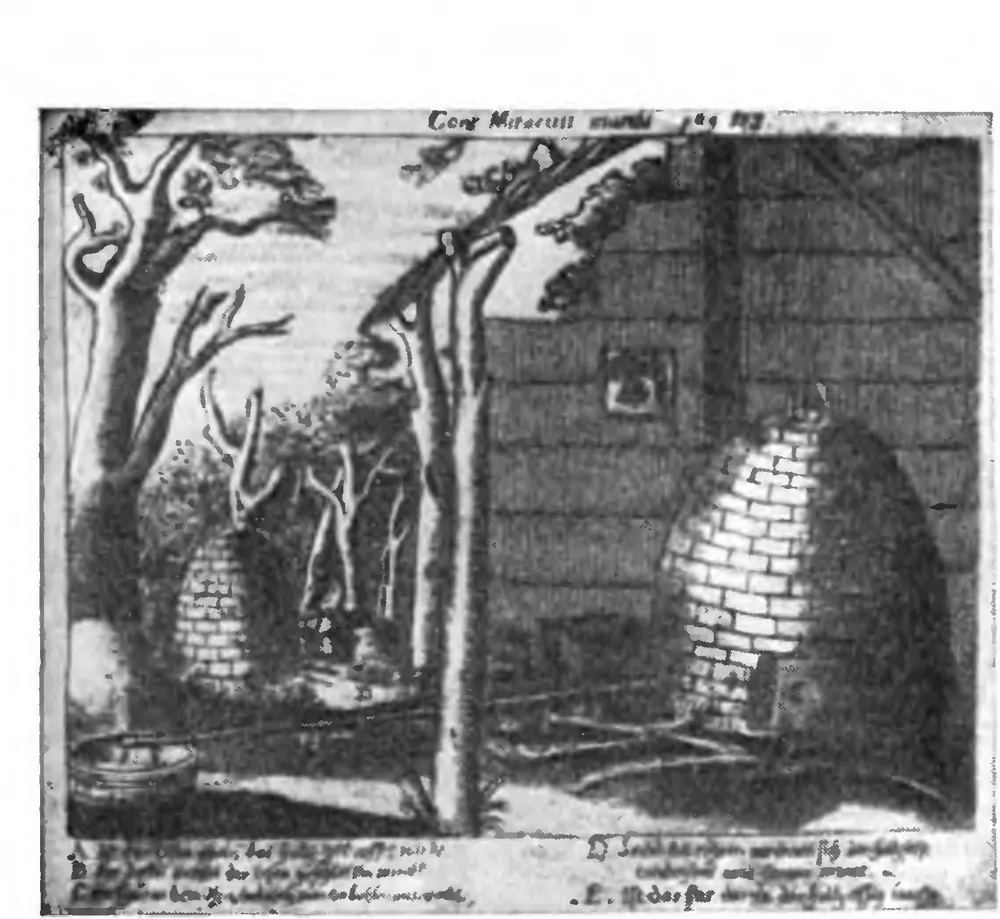
- 28а. One of the varieties of Glauber's furnaces (a popular name).
- 29. Opera omnia. V. 1—7. — Amstelodami, 1661.
- 30. Authors disagree on the date of Glauber's death. E. Meyer and N. A. Figurovsky give 1668, B. N. Menshutkin and V. A. Volkov 1670, and the third edition of the Great Soviet Encyclopedia gives 10 March 1670. These discrepancies are due to the lack of documentary evidence.
- * The Hungarian disease was what typhus was then called.
- ** Sulphur.
From the site's editors
- ed.1 The equation should have Cl₂, a molecule of chlorine, not 2Cl: 3HCl + HNO₃ → NOCl + Cl₂ + 2H₂O.