Organic Syntheses, Volume 65 (1987)
(Cyclohexanebutanoic acid, γ-oxo-, ethyl ester)


Submitted by Eiichi Nakamura and Isao Kuwajima.1
Checked by Jens Wolff and Ian Fleming.
1. Procedure
A. Spiro[4.5]decane-1,4-dione (2). In a dry, 200-mL, two-necked flask with one neck connected to a nitrogen source to maintain a positive pressure and with the other covered with a rubber septum is placed a magnetic stirring bar. Boron trifluoride etherate (5.04 mL, 40.0 mmol) (Note 1) and 40 mL of dry methylene chloride (Note 2) are introduced with a hypodermic syringe and the solution is cooled to ca. −75°C with a dry ice/hexane bath. A mixture of cyclohexanone diethyl ketal (6.88 g, 40 mmol) (Note 3) and 1,2-bis(trimethylsilyloxy)cyclobut-1-ene (9.20 g, 40 mmol) (Note 4) in 20 mL of dry methylene chloride is added during 10 min. The resulting yellow solution is stirred for 30 min at that temperature and 8 mL of trifluoroacetic acid (Note 5) is added. The mixture is warmed to room temperature and stirred for 2 hr (Note 6) before addition of 40 mL of water. The mixture is extracted three times with 100 mL-portions of ether, and the combined extract is washed successively with a 30-mL portion of water, saturated aqueous sodium bicarbonate (2 x 45 mL), and 30 mL of saturated sodium chloride. The extract is dried over anhydrous magnesium sulfate, filtered, and concentrated on a rotary evaporator at aspirator pressure. The crude, viscous oily material is distilled at 0.05 mm with a Kugelrohr apparatus (Note 7) with an oven temperature at 75-80°C to obtain 5.40-6.00 g (81-90%) of spiro[4.5]decane-1,4-dione, which crystallizes on cooling to room temperature, mp 61-62°C (Note 8).
B. Ethyl 4-cyclohexyl-4-oxobutanoate (4). In a dry, 100-mL, two-necked flask with one neck connected to a nitrogen source to maintain a positive pressure and with the other covered with a rubber septum is placed a magnetic stirring bar. Tin tetrachloride (7.50 g, 28.8 mmol) (Note 9) and 15 mL of dry methylene chloride (Note 2) are introduced with a hypodermic syringe and the solution is cooled to ca. −75°C with a dry ice/hexane bath. A mixture of cyclohexanone diethyl ketal (4.82 g, 28.0 mmol) (Note 3) and 1,2-bis(trimethylsilyloxy)cyclobut-1-ene (6.44 g, 28.0 mmol) (Note 4) in 10 mL of methylene chloride is added during 10 min. The yellow solution is stirred for 15 min at −75°C, and for 15 min at −30°C, during which period the solution turns heterogeneous (Note 10). Water (20 mL) and ether (50 mL) are added and the organic layer is separated. The aqueous layer is extracted twice with ether (50 mL) and the combined organic layers are washed successively with 3 x 10-mL portions of 1 N hydrochloric acid, and 20-mL portions each of water, aqueous sodium bicarbonate, and saturated sodium chloride. The oily product (6.30 g) obtained after drying (anhydrous magnesium sulfate) and concentration on a rotary evaporator is distilled to give an analytically pure keto ester (4) (5.27-5.44 g, 90-93%) as a fraction boiling at 110-112°C, 2.5 mm, or 84°C, 0.2 mm (Note 11).
2. Notes
1. Boron trifluoride etherate (Hashimoto Kasei Chemical, Osaka) was distilled before use.
2. Methylene chloride was distilled from phosphorus oxide and stored over molecular sieves.
3. Cyclohexanone diethyl ketal was prepared according to a procedure by Howard and Lorette; see Org. Synth., Collect. Vol. V 1973, 292; bp 80-83°C, 18 mm. The checkers prepared it by keeping cyclohexanone (50 g), triethyl orthoformate (75 g) and concentrated hydrochloric acid (0.2 mL) in absolute ethanol (30 mL) for 10 hr at room temperature, followed by treatment with sodium hydroxide until the solution is basic.
4. 1,2-Bis(trimethylsilyloxy)cyclobut-1-ene was prepared in ca. 80% yield on a 0.5-mol scale by Method 2 described by Bloomfield and Nelke: see Org. Synth. 1977, 57, 1.
5. Commercially available trifluoroacetic acid (Tokyo Kasei Co.) was used as received.
6. If trifluoroacetic acid treatment is omitted, the aldol-type adduct, 2-(1-ethoxycyclohexyl)-2-(trimethylsilyloxy)cyclobutanone (1), is obtained in high (ca. 90%) yield; bp 85-90°C (bath temp), 0.05 mm; IR (neat) cm−1: 1789 (s, C=O); 1H NMR (CCl4) δ: 0.11 (s, 9 H), 0.9-2.2 (m, including t, J = 7 at δ 1.10), 2.2-2.9 (m, 3 H), 3.2-3.7 (AB part of ABX3, 2 H). Treatment of purified 1 with trifluoroacetic acid gives 2 in nearly quantitative yield.
7. Kugelrohr distillation ovens are manufactured by Büchi Glasapparatefabrik.
8. The checkers found variable amounts (0-15%) of the ester (4) in the product. This could easily be removed by recrystallization of the diketone from light petroleum (bp 40-60°C) to give needles, mp 62-64°C. The product has the following spectral properties: IR (CCl4) cm−1: 1720 (vs); 1H NMR (CCl4) δ: 1.58 (br s, 10 H), 2.65 (s, 4 H); MS (70 eV) m/e (relative intensity) 166.0983 (M+, 100, calcd for C10H14O2; 166.0994), 137 (24), 124 (36), 112 (87), 111 (83), 109 (27), 85 (38), 81 (48), 67 (95), 56 (48), 54 (45), 53 (42), 41 (58), 30 (64).
9. Tin tetrachloride (Yoneyama Yakuhin Co.) was distilled before use.
10. If the mixture is quenched with triethylamine before aqueous workup, the intermediate enol silyl ether 3 is obtained; bp 110-115°C (bath temp), 0.04 mm; IR (neat) cm−1: 1745 (s), 1680 (m); 1H NMR (CCl4) δ: 0.12 (s, 9 H), 1.3-2.6 (m, 14 H, including t, J = 7, at 1.26 and s at 2.36), 4.10 (q, J = 7). Addition of aldehydes, acetals, or phenylsulfenyl chloride at this stage gives the respective aldol and sulfenylated products.
11. The product has the following spectral properties: IR (CCl4), cm−1: 1739 (s), 1713 (s); 1H NMR (CCl4) δ: 0.8-1.9 (m, 18 H, including t, J = 1.28, CH2CH3), 4.15 (q, J = 7, OCH2CH3); MS (70 eV) m/e (relative intensity) 212 (M+, 5), 167 (20), 129 (55), 111 (28), 101 (80), 83 (100), 55 (72), 41 (37), 29 (34).
3. Discussion
The present reactions are based on the novel rearrangement of succinoin derivatives such as 1 which are obtainable in high yield by the reaction of 1,2-bis(trimethylsilyloxy)cyclobut-1-ene with carbonyl compounds. The first procedure, Part A, illustrates a general method for preparing a wide range of spiro[4.n]alkane-1,4-diones as well as useful 2-mono- and 2,2-disubstituted cyclopentane-1,3-diones (Table I).2 The combination of an aldol reaction3 and a skeletal rearrangement provides a highly efficient new approach to these synthetically interesting molecules.4 The reaction can be performed either in a single pot or as a two-stage operation by isolating the initial aldol adduct 1. The merit of the sequence as a spiro annelation method is illustrated by the synthesis of a 5,8-methanospiro[4.5]decanedione from norcamphor (Table I). γ-Keto acids and cyclopent-2-ene-1,4-diones also become available from ketals in a few steps.
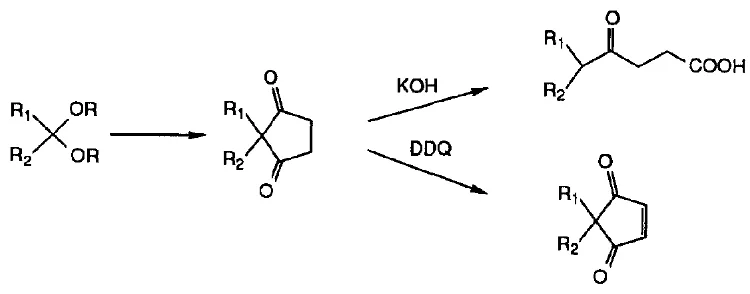
The second procedure, Part B, illustrates an easy synthesis of γ-keto esters by "reductive succinoylation" of a ketal function.5 It is useful not only for the preparation of keto esters, but also as a four-carbon chain-elongation reaction starting from ketones. The reaction is applicable to a diverse range of ketals as shown in Table II. The enol silyl ether intermediate 3 can either be isolated or used in situ for further elaboration. Fluoride-6 and Lewis-acid catalyzed aldol reactions cleanly give aldol adducts,6 and the reaction with phenylsulfenyl chloride gives α-phenylthio ketones in high yield.5
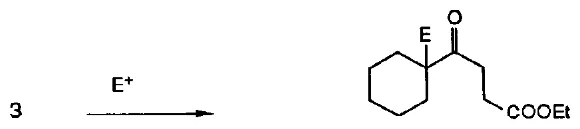
Cyclobutanone 1 is also useful for the stereoselective construction of quaternary carbon centers7 and 2,3-substituted cyclopentenones.8 The synthetic utility of the chemistry of 1 and related compounds has been reviewed.7,9
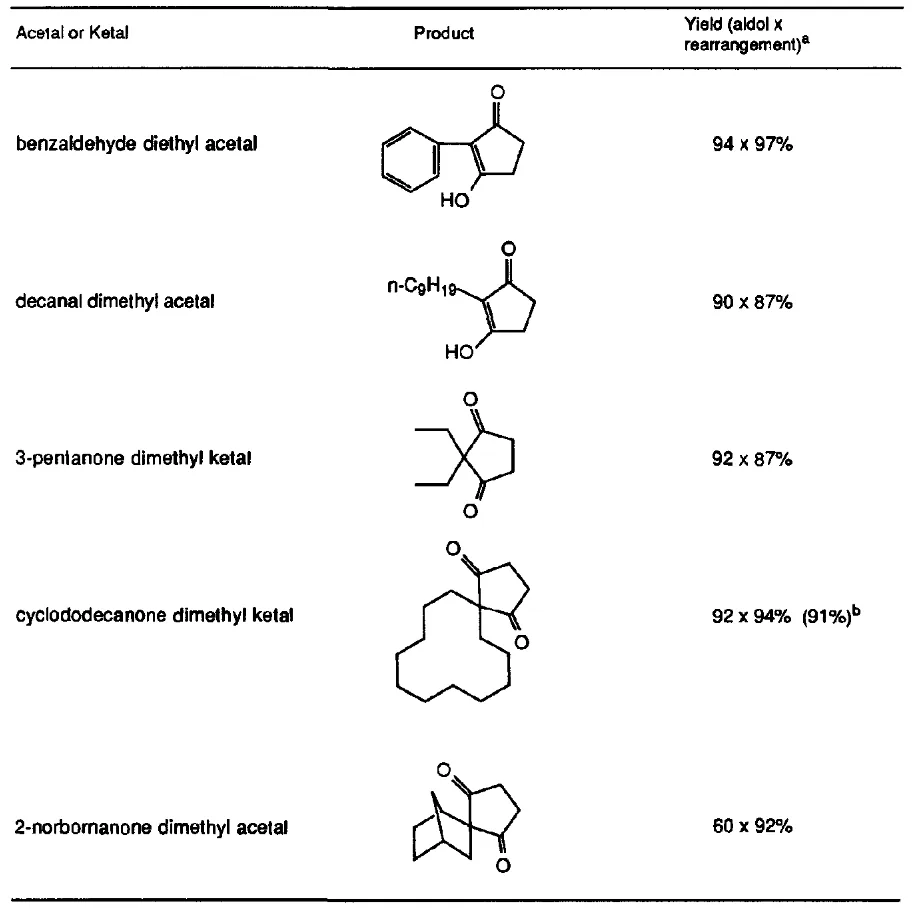
Table I. Synthesis of Cyclopentane-1,3-diones
aThe results in this table were obtained by the two stage procedure (i.e. the isolation of the initial adduct, e.g., 1, is involved). bYield from the single-pot procedure as described in the text.
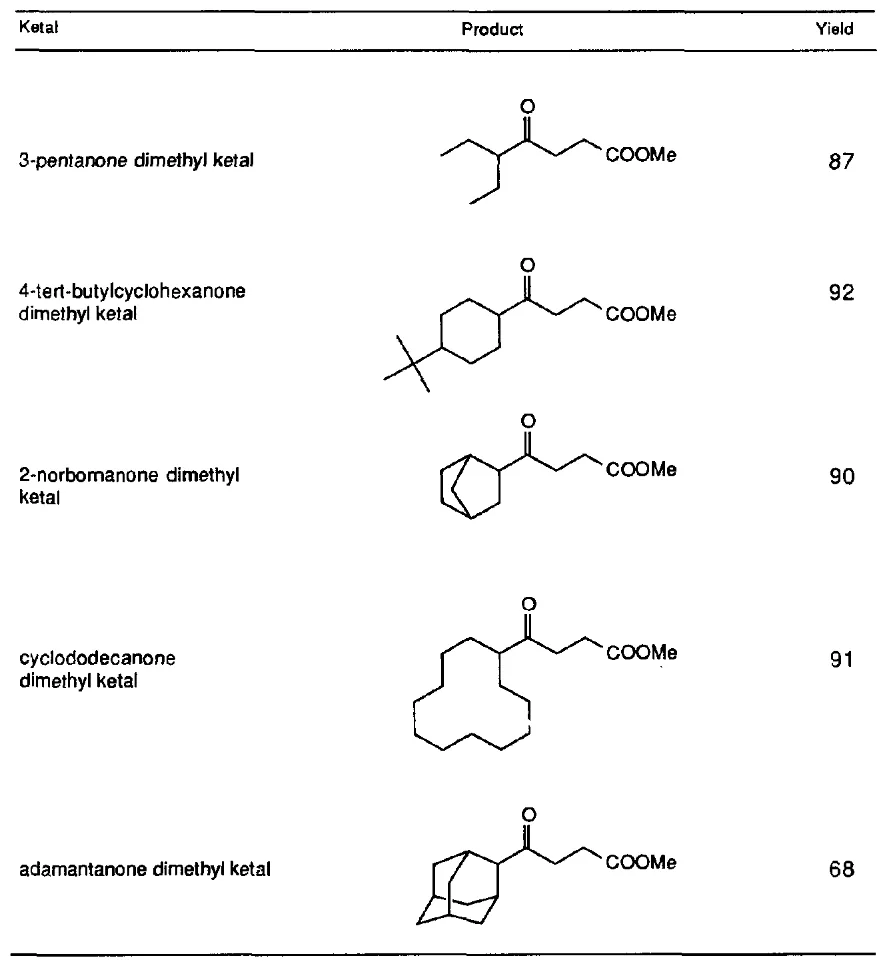
Table II. Reductive Succinoylation
References and Notes
1. Department of Chemistry, Tokyo Institute of Technology, Meguro, Tokyo 152, Japan.
2. Nakamura, E.; Kuwajima, I. J. Am. Chem. Soc. 1977, 99, 961.
3. Mukaiyama, T.; Banno, K.; Narasaka, K. J. Am. Chem. Soc. 1974, 96, 7503.
4. Cf., Hengartner, U.; Chu, V. Org. Synth. 1978, 58, 83.
5. Nakamura, E.; Hashimoto, K.; Kuwajima, I. J. Org. Chem. 1977, 42, 4166.
6. Nakamura, E.; Shimizu, M.; Kuwajima, I.; Sakata, J.; Yokoyama, K.; Noyori, R. J. Org. Chem. 1983, 48, 932.
7. (a) Shimada, J.-i.; Hashimoto, K.; Kim, B. H.; Nakamura, E.; Kuwajima, I. J. Am. Chem. Soc. 1984, 106, 1759; Kuwajima, I. In "Current Trends in Organic Synthesis", Nozaki, H., Ed.; Pergamon Press: Oxford, 1983; pp. 311-322.
8. Nakamura, E.; Shimada, J.-i.; Kuwajima, I. J. Chem. Soc., Chem. Commun. 1983, 498.
9. Bloomfield, J. J.; Owsley, D. C.; Nelke, J. M. Org. React. 1976, 23, 259.
Appendix
Chemical Abstracts Nomenclature (Collective Index Number); (Registry Number)
Spiro[4.5]decane-1,4-dione (9); (39984-92-4)
Ethyl 4-cyclohexyl-4-oxobutanoate: Cyclohexanebutanoic acid, γ-oxo-, ethyl ester (9); (54966-52-8)
Boron trifluoride etherate: Ethyl ether, compd. with boron fluoride (BF3) (1:1) (8); Ethane, 1,1′-oxybis-, compd. with trifluoroborane (1:1) (9); (109-63-7)
Cyclohexanone diethyl ketal (8); Cyclohexane, 1,1-diethoxy- (9); (1670-47-9)
1,2-Bis(trimethylsilyloxy)cyclobut-1-ene: Silane, (1-cyclobuten-1,2-ylenedioxy)bis[trimethyl- (8); Silane, [1-cyclobutene-1,2-diylbis(oxy)]bis[trimethyl- (10); (17082-61-0)
Trifluoroacetic acid: Acetic acid, trifluoro- (8,9); (76-05-1)
Tin tetrachloride: Tin chloride (8); Stannane, tetrachloro- (9); (7646-78-8)