Organic Syntheses, Volume 65 (1987)
(2H-1-Benzopyran-3-carboxylic acid, 5,6,7,8-tetrahydro-2-oxo-, methyl ester)
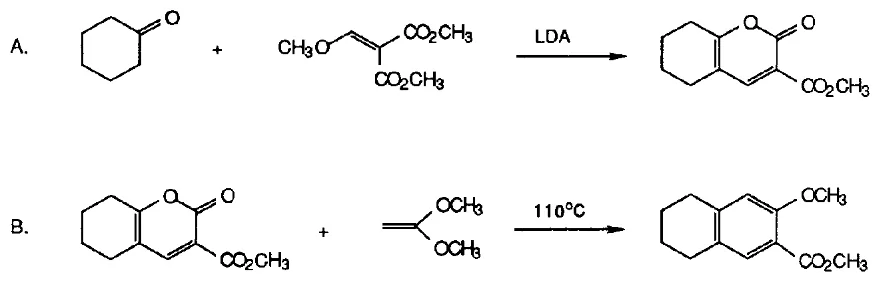
Submitted by Dale L. Boger and Michael D. Mullican.1
Checked by Drew B. Burns and K. Barry Sharpless.
1. Procedure
A. Methyl 2-oxo-5,6,7,8-tetrahydro-2H-1-benzopyran-3-carboxylate. A dry, 500-mL, round-bottomed flask with a sidearm containing a magnetic stirring bar is fitted with a septum and a three-way stockcock or stopcock (in the editors’ view) equipped with an argon-filled balloon (Note 1). The air in the flask is replaced with argon (Note 2). Tetrahydrofuran (100 mL, Note 3) and diisopropylamine (4.7 g, 46 mmol, Note 4) are introduced into the flask through the septum using dry syringes (Note 5). The flask is immersed in an ice-water bath and a 2.8 M solution of butyllithium in hexane (17 mL, 46 mmol, Note 6) is added to the stirred solution using a syringe (10 min). The yellow solution is allowed to stir at 0°C for an additional 15 min. The resulting solution containing lithium diisopropylamide is immersed in a dry ice-2-propanol bath (−78°C) and a solution of cyclohexanone (3.74 g, 38.1 mmol, Note 7) in tetrahydrofuran (50 mL) is added using a syringe (30 min). The reaction is allowed to warm slowly to −5°C over 1.75 hr. The resulting solution containing the lithium enolate of cyclohexanone is recooled to −30°C to −25°C and a solution of dimethyl methoxymethylenemalonate (8.1 g, 46 mmol, Note 8) in tetrahydrofuran (20 mL) is added using a syringe (15 min). The reaction is allowed to warm to ambient temperature over 3.5 hr (Note 9). The reddish-orange solution is poured slowly onto aqueous 5% hydrochloric acid (300 mL) and the resulting yellow solution is extracted with methylene chloride (4 × 80 mL). The combined organic layers are dried over anhydrous sodium sulfate, filtered, and concentrated under reduced pressure to approximately 15 mL. The solution is applied to a medium pressure liquid chromatography column (25 × 500 mm, Note 10) packed with silica gel and 30% ethyl acetate-hexane. The eluant (30% ethyl acetate-hexane) is passed through the column at a rate of 20 mL/min; 20-mL fractions are collected (Note 11). The fractions are analyzed by thin-layer chromatography on analytical silica gel plates containing UV indicator (ethyl ether eluant). The fractions containing the product are combined and concentrated under reduced pressure to give 4.9 g (62%, 62-68%) of methyl 2-oxo-5,6,7,8-tetrahydro-2H-1-benzopyran-3-carboxylate as a white solid: mp 107-108°C (ethyl acetate-hexane, Note 12).
B. 6-Methoxy-7-methoxycarbonyl-1,2,3,4-tetrahydronaphthalene. 1,1-Dimethoxyethylene (1.1 g, 12.5 mmol, Note 13) is added to a solution of methyl 2-oxo-5,6,7,8-tetrahydro-2H-1-benzopyran-3-carboxylate (507 mg, 2.44 mmol) in dry toluene (2.5 mL, Note 14) in a dry, 11 × 13 mm, resealable glass tube (Note 15). The tube is flushed with argon and sealed with a Teflon plug. The reaction is warmed at 110°C in an oil bath for 15 hr (Note 16). The reaction is cooled and concentrated under reduced pressure. Purification of the product is effected by gravity chromatography on a 1.5 × 16-cm column of silica gel (30% ethyl ether-hexane eluant) collecting 5-mL fractions (Note 17). The fractions are analyzed by thin-layer chromatography (50% ethyl ether-hexane eluant) and those containing the product are combined and concentrated under reduced pressure to give 451 mg (84%, 84-86%) of 6-methoxy-7-methoxycarbonyl-1,2,3,4-tetrahydronaphthalene as a white solid: mp 98.5-99.5°C (methanol-water, Note 18).
2. Notes
1. The flask containing the stirring bar was dried at 120°C in an oven for several hours. The warm flask was fitted with a septum and a three-way stopcock.
2. This procedure is described in detail in Org. Synth. 1971, 51, 39.
3. Tetrahydrofuran was distilled from benzophenone ketyl under a nitrogen atmosphere.
4. Diisopropylamine was distilled from calcium hydride under a nitrogen atmosphere and stored over activated 3 Å sieve pellets.
5. The hypodermic syringes and needles were dried for several hours in an oven at 120°C and allowed to cool to ambient temperature in a desiccator.
6. Butyllithium was purchased from Aldrich Chemical Company, Inc.
7. Cyclohexanone was distilled before use.
8. Technical grade dimethyl methoxymethylenemalonate was purchased from Fluka Chemical Corporation and was purified by recrystallization from ether (2x), mp 43.0-44.0°C. It can be prepared by the procedure described for diethyl ethoxymethylenemalonate.2
9. Gradual warming to room temperature over 3.5 hr is necessary to ensure reasonable yields. Shorter times result in significantly lower yields.
10. The use of medium pressure liquid chromatography is described by Meyers.3
11. The checkers found that MPLC can be replaced by ordinary flash chromatography (30% EtOAc-hexane eluant, 6-cm I.D. column, ~ 200-240 g of flash-grade silica gel 230-400 mesh, 250-mL fractions). The crude product was dissolved in CH2Cl2 to which was added several grams of silica gel. This mixture was concentrated under reduced pressure and the resulting solid was applied to the top of the column.
12. The product has the following spectral properties: 1H NMR (CDCl3) δ: 1.80 (m, 4 H, CH2CH2), 2.46 (m, 4 H, CH2CH2C=), 3.86 (s, 3 H, -CO2CH3), 7.99 (s, 1 H, vinyl); IR (CHCl3) νmax cm−1: 3040, 2975, 1765, 1745, 1555, 1270, 1220, 1155.
13. 1,1-Dimethoxyethylene was purchased from Wiley Organics and used without further purification.
14. Toluene was distilled from calcium hydride under a nitrogen atmosphere.
15. The resealable glass tube was fabricated from a chromatography column purchased from Ace Glass Company. The tube was permanently sealed on one end and the other end remained internally threaded. A solid, threaded, Teflon plug equipped with an O-ring was used to seal the tube. Various sizes of such tubes are now available from Ace Glass Company.
16. Caution: The reaction should be run behind a shield in a fume hood for protection in case of explosion. Pressure will build up in the tube since 1,1-dimethoxyethylene boils at 89°C and carbon dioxide is formed.
17. The checkers found that gravity chromatography can be replaced by ordinary flash chromatography (30% ethyl ether-hexane eluant, 2.5-cm I.D. column ~ 40 g of flash grade silica gel, 20-mL fractions). In at least one case, the checkers found that pure product could be isolated in high yield (98%) without recrystallization.
18. The product has the following spectral properties: 1H NMR (CDCl3) δ: 1.80 (m, 4 H, CH2CH2), 2.75 (m, 4 H, CH2CH2C=), 3.86 (s, 6 H, -OCH3 and -CO2CH3), 6.65 (s, 1 H, C-5 H), 7.53 (s, 1 H, C-8 H); IR (CHCl3) νmax cm−1: 3040, 2970, 1725, 1610, 1280, 1080, lit.4 mp 99-100°C.
3. Discussion
This procedure describes the preparation and inverse electron demand (LUMOdiene controlled)5 Diels-Alder reaction of an electron-deficient diene. While extensive studies on the preparative utility of the normal (HOMOdiene controlled)5 Diels-Alder reaction have been detailed, few complementary studies on the preparative value of the inverse electron demand Diels-Alder reaction have been described.6 Table I details representative 3-carbomethoxy-2-pyrones which have been prepared by procedures similar to that described herein and Tables II and III detail their inverse electron demand Diels-Alder reactions with electron-rich dienophiles.
A use of the LUMOdiene controlled Diels-Alder reactions of 3-carbomethoxy-2-pyrones in the preparation of a full range of oxygenated aromatics [e.g., benzene, 1-, 2-, or 3-phenol, symmetrical and unsymmetrical o-catechol, resorcinol, and pyrogallol introduction (equation 1)]6f as well as their application in the total synthesis of sendaverine, 6,7-benzomorphans, juncusol, imeluteine and rufescine, has been described.6f
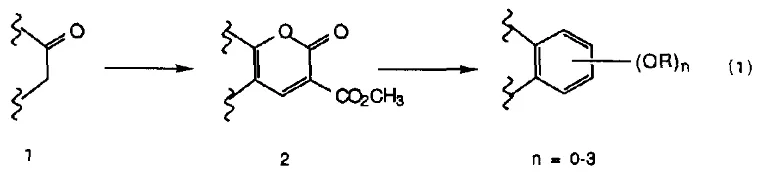
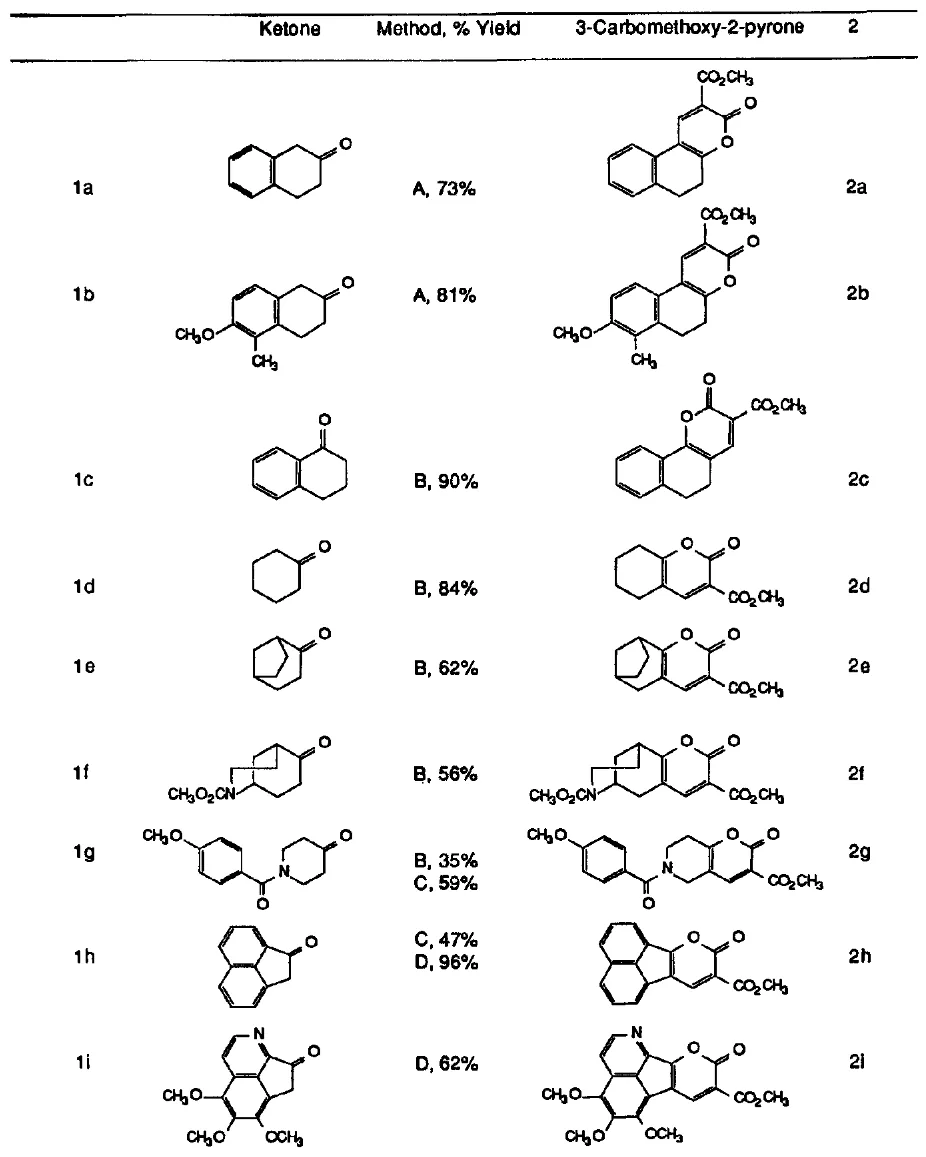
Table I. Preparation of 3-Carbomethoxy-2-pyrones.6f
aMethod A: The enolate of 1 was generated with 2.2 equiv of NaH in THF (0.2 M) at 0 to 25°C. Method B: the enolate of 1 was generated with 1.2 equiv of LDA in THF (0.2 M) at −78 to −5°C. Method C: the enolate of 1 was generated with 1.2 equiv of LDA in THF (0.2 M) at −78 to −5°C and closure to the α-pyrone was effected with acetic anhydride treatment at 100 to 130°C. Method D: the enolate of 1 was generated with 2.2 equiv of NaH in THF (0.2 M) at 0 to 25°C and closure to the α-pyrone was effected with catalytic p-toluenesulfonic acid treatment in refluxing toluene with distillative removal of methanol.
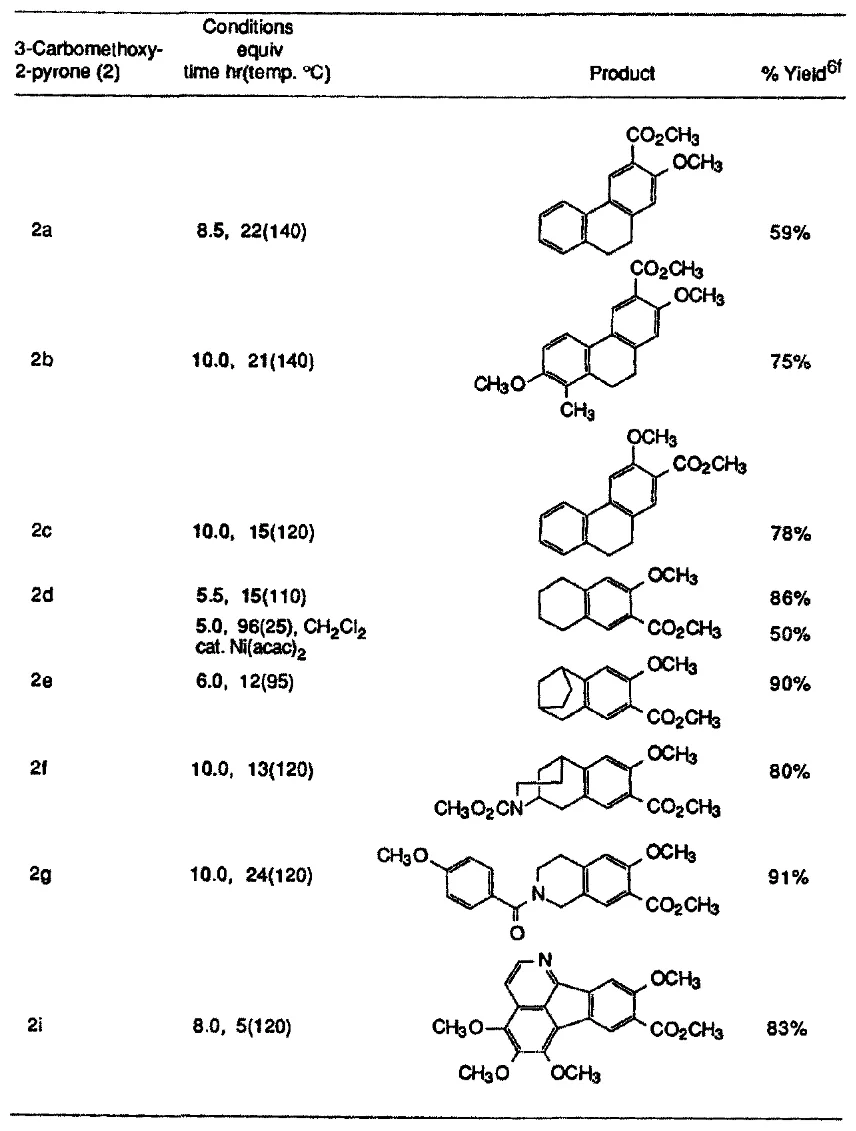
Table II. Diels-Alder Reaction of 3-Carbomethoxy-2-pyrones (2) with 1,1-Dimethoxyethylene: Salicylate Formation
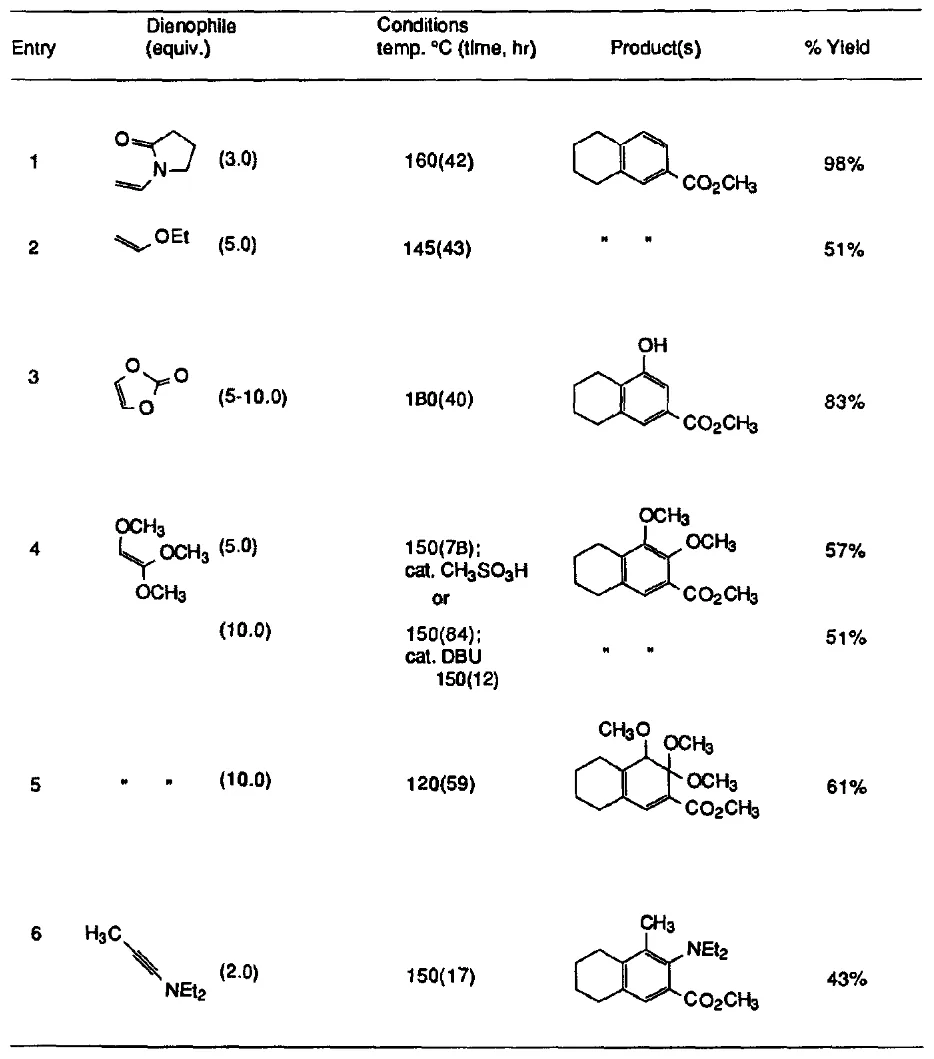
Table III. Diels Alder Reactions of 3-Carbomethoxy-2-pyrone (2d)6f.
References and Notes
1. Department of Medicinal Chemistry, University of Kansas, Lawrence, KS 66045.
2. Fuson, R. C.; Parham, W. E.; Reed, L. J. J. Org. Chem. 1946, 11, 194.
3. Meyers, A. I.; Slade, J.; Smith, R. K.; Mihelich, E. D.; Hershenson, F. M.; Liang, C. D. J. Org. Chem. 1979, 44, 2247.
4. Arnold, R. T.; Zaugg, H. E.; Sprung, J. J. Am. Chem. Soc. 1941, 63, 1314
5. Houk, K. N. J. Am. Chem. Soc. 1973, 95, 4092.
6. (a) Ireland, R. E.; Anderson, R. C.; Badoud, R.; Fitzsimmons, B. J.; McGarvey, G. J.; Thaisrivongs, S.; Wilcox, C. S. J. Am. Chem. Soc. 1983, 105, 1988; (b) Bryson, T. A.; Donelson, D. M. J. Org. Chem. 1977, 42, 2930; (c) Corey, E. J.; Watt, D. S. J. Am. Chem. Soc. 1973, 95, 2303; (d) Markl, G.; Fuchs, R. Tetrahedron Lett. 1972, 4695; (e) Behringer, H; Heckmaier, P. Chem. Ber. 1969, 102, 2835; (f) Boger, D. L.; Mullican, M. D. Tetrahedron Lett. 1982, 23, 4551, 4555; Boger, D. L.; Patel, M.; Mullican, M. D. Tetrahedron Lett. 1982, 23, 4559; Boger, D. L.; Mullican, M. D. J. Org. Chem. 1984, 49, 4033 and 4045; Boger, D. L.; Brotherton, C. E. J. Org. Chem. 1984, 49, 4050; and references cited therein.
Appendix
Chemical Abstracts Nomenclature (Collective Index Number); (Registry Number)
Methyl 2-oxo-5,6,7,8-tetrahydro-2H-1-benzopyran-3-carboxylate: 2H-1-Benzopyran-3-carboxylic acid, 5,6,7,8-tetrahydro-2-oxo-, methyl ester (11); (85531-80-2)
Diisopropylamine (8); 2-Propanamine, N-(1-methylethyl)- (9); (108-18-9)
Butyllithium: Lithium, butyl- (8,9); (109-72-8)
Cyclohexanone (8,9); (108-94-1)
Dimethyl methoxymethylenemalonate: Malonic acid, (methoxymethylene)-, dimethyl ester (8); Propanedioic acid, (methoxymethylene)-, dimethyl ester (9); (22398-14-7)
6-Methoxy-7-methoxycarbonyl-1,2,3,4-tetrahydronaphthalene: 2-Naphthalenecarboxylic acid, 5,6,7,8-tetrahydro-3-methoxy-, methyl ester (10); (78112-34-2)
1,1-Dimethoxyethylene: Ethene, 1,1-dimethoxy- (9); (922-69-0)