Sijbren Otto - Catalysis of Diels-Alder Reactions in Water
Searching for a suitable system for studying Lewis-acid catalysis of Diels-Alder reactions in water, several points have to be considered.
First, the use of water limits the choice of Lewis-acid catalysts. The most active Lewis acids such as BF3, TiCl4 and AlCl3 react violently with water and cannot be used. However, bivalent transition metal ions and trivalent lanthanide ions have proven to be active catalysts in aqueous solution for other organic reactions and are anticipated to be good candidates for the catalysis of aqueous Diels-Alder reactions.
Furthermore, the number of diene - dienophile combinations that can be expected to undergo a Lewis-acid catalysed Diels-Alder reaction is limited. Studies by Wijnen leave little doubt that the rate of typical Diels-Alder reactions, where the dienophile is activated by one or more carbonyl functionalities, does not respond to the presence of Lewis acids in aqueous solution11d, at least not beyond the extent that is expected for non-specific interactions (salt effects). No coordination of the Lewis acid to the dienophile was observed in these cases, which is perhaps not surprising. Water is about the worst solvent one can imagine with respect to hard Lewis acid - Lewis base interactions, since water itself interacts extremely efficiently with the Lewis acid as well as the Lewis base (see section 1.5.2). Interestingly, as far as we know, all the examples of organic reactions where proof exists that true Lewis-acid catalysis takes place involve bidentate substrates62. Apparently interaction of monodentate compounds with Lewis acids in water is not strong enough to allow efficient catalysis. But even when bidentate coordination is achieved, success is not guaranteed, as is demonstrated by the examples in Scheme 2.363. Juglone (2.1) binds efficiently to bivalent zinc and copper ions but is deactivated upon coordination due to the deprotonation of the hydroxyl moiety. Alternatively, 2.2 is activated, but more towards undesired reactions (among them the Michael addition of water) than towards the Diels-Alder addition. Catalysis of the reaction of 2.3 was not successful either, since this compound showed little to no tendency to coordinate to hard metal ions in aqueous solution.
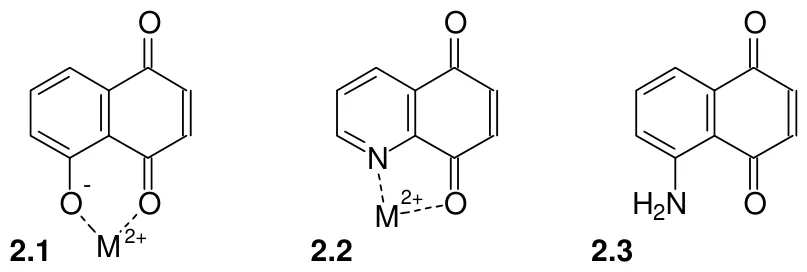
Scheme 2.3. Unsuccessful attempts63 to catalyse Diels-Alder reactions in water. M = Zn2+ or Cu2+.
Fortunately, azachalcone derivatives (2.4a-g, Scheme 2.4) turned out to be extremely suitable dienophiles for Lewis-acid catalysed Diels-Alder reactions with cyclopentadiene (2.5). This reaction is outlined in Scheme 2.4 and a large part of this thesis will be devoted to the mechanistic details of this process. The presence of a chromophore in 2.4 allows kinetic studies as well as complexation studies by means of UV-vis spectroscopy. Furthermore, the reactivity of 2.4 is such that also the uncatalysed reaction can be followed, allowing quantitative comparison with the catalysed reaction.
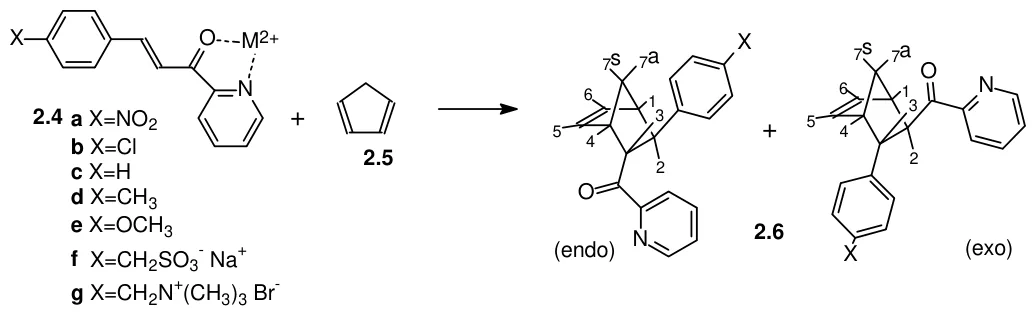
Scheme 2.4.
2.2.1 Synthesis
The synthesis of 3-phenyl-1-(2-pyridyl)-2-propen-1-one (2.4c) via an aldol reaction of 2-acetylpyridine with benzaldehyde has been described in the literature64. Compound 2.4a-e have been prepared in high yields, using slightly modified versions of these literature procedures.
The highly water-soluble dienophiles 2.4f and 2.4g have been synthesised as outlined in Scheme 2.5. Both compounds were prepared from p-(bromomethyl)benzaldehyde (2.8) which was synthesised by reducing p-(bromomethyl)benzonitrile (2.7) with diisobutylaluminium hydride following a literature procedure65. 2.4f was obtained in two steps by conversion of 2.8 to the corresponding sodium sulfonate (2.9), followed by an aldol reaction with 2-acetylpyridine. In the preparation of 2.4g the sequence of steps had to be reversed. Here, the aldol condensation of 2.8 with 2-acetylpyridine was followed by nucleophilic substitution of the bromide of 2.10 by trimethylamine. Attempts to prepare 2.4f from 2.10 by treatment with sodium sulfite failed, due to decomposition of 2.10 under the conditions required for the substitution by sulfite anion.
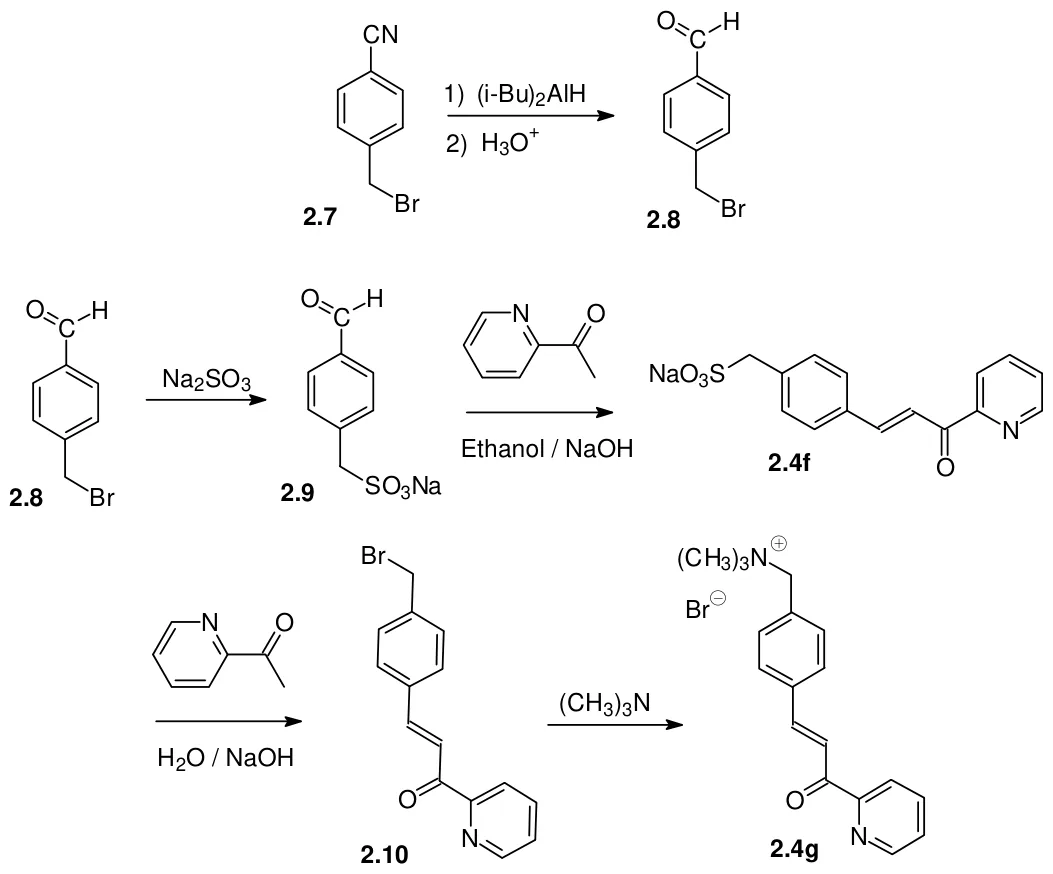
Scheme 2.5. Synthesis of the ionic dienophiles 2.4f and 2.4g.
2.2.2 Effect of the solvent on the rate of the uncatalysed reaction
Before elaborating on the effect of Lewis acids on the Diels-Alder reaction of 2.4 with 2.5, some features of the uncatalysed reaction will be discussed. The kinetics of the Diels-Alder reaction of 2.4 with 2.5 can be studied by following the disappearance of the absorbance of the dienophile using UV-vis spectroscopy66. In the absence of catalysts, the rate of the reaction is low, so that initial rate methods are required in order to obtain reliable rate constants. Of the dienophiles, 2.4a is the most reactive, as is expected for a normal electron demand Diels-Alder reaction on the basis of FMO considerations (see Section 1.2.2). 2.4b-e are increasingly less reactive and unfortunately, the Diels-Alder reaction of these compounds cannot compete with spontaneous decomposition. Both ionic dienophiles turned out to be sufficiently stable. The second-order rate constants of the reaction of 4.2a and 4.2g or 2.4a and 2.4g (in the editors’ view) have been determined in water and three organic solvents. The results are shown in Table 2.1.
Table 2.1. Second-order rate constants (k2) for the uncatalysed Diels-Alder reaction of 2.4a and 2.4g with 2.5 in different solvents at 25°C.
| solvent | 2.4a | 2.4g | |
|---|---|---|---|
| k2 (M−1s−1) | krela | k2 (M−1s−1) | |
| acetonitrile | 1.40·10−5 | 1 | |
| ethanol | 3.83·10−5 | 2.7 | 2.22·10−5 |
| water | 4.02·10−3 | 287 | 2.45·10−3 |
| 2,2,2-trifluoroethanol | 6.75·10−3 | 482 | |
a Rate constant relative to the reaction in acetonitrile.
The solvents listed in Table 2.1 were chosen to cover a broad range in solvent properties. In fact hexane was initially also among them, but unfortunately the rate of the reaction in this solvent is extremely low. It turned out that in this solvent spontaneous decomposition of 2.4a competes with the Diels-Alder reaction.
It is obvious that the reaction is accelerated markedly by water. However, for the first time, the Diels-Alder reaction is not fastest in water, but in 2,2,2-trifluoroethanol (TFE). This might well be a result of the high Brønsted acidity of this solvent. Indirect evidence comes from the pH-dependence of the rate of reaction in water (Figure 2.1). Protonation of the pyridyl nitrogen obviously accelerates the reaction.
Comparison of the water-induced acceleration of the reaction of 2.4a with the corresponding effect on 2.4g is interesting, since 2.4g contains an ionic group remote from the reaction centre. The question arises whether this group has an influence on the acceleration of the Diels-Alder reaction by water. Comparison of the data in Table 2.1 demonstrates that this is not the case. The acceleration upon going from ethanol to water amounts a factor 105 (±10) for 2.4a versus 110 (±11) for 2.4g. Apparently, the introduction of a hydrophilic group remote from the reaction centre has no effect on the aqueous acceleration of the Diels-Alder reaction.
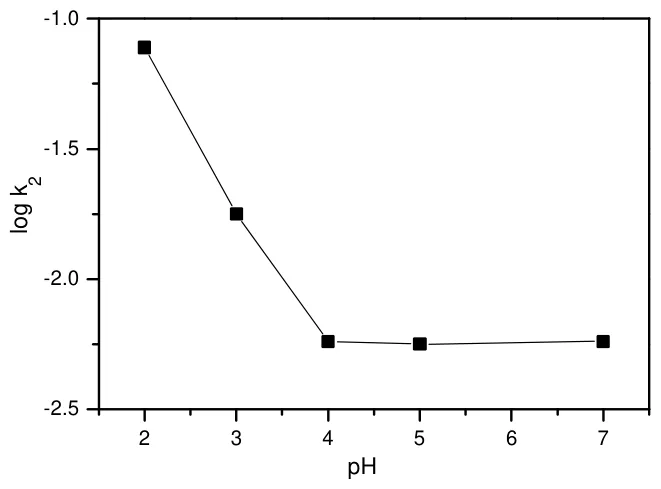
Figure 2.1. pH Dependence of the rate of the Diels-Alder reaction between 2.4a and 2.5 in water at 25 °C.
2.2.3 Solvent and substituent effects on the Cu²⁺-catalysed reaction
The rate of the uncatalysed reaction in all four solvents is rather slow. (The half-life at [2.5] = 1.00 mM is at least 28 hours). However, upon complexation of Cu2+ ion to 2.4a-g the rate of the Diels-Alder reaction between these compounds and 2.5 increases dramatically. Figure 2.2 shows the apparent rate of the Diels-Alder reaction of 2.4a with 2.5 in water as a function of the concentration of copper(II)nitrate. At higher catalyst concentrations the rate of the reaction clearly levels off, most likely due to complete binding of the dienophile to the catalyst. Note that in the kinetic experiments the concentration of the catalyst is orders of magnitude higher than the concentration of dienophile. Use of an excess of catalyst is inevitable when using UV-vis techniques and therefore very low concentrations of 2.4.
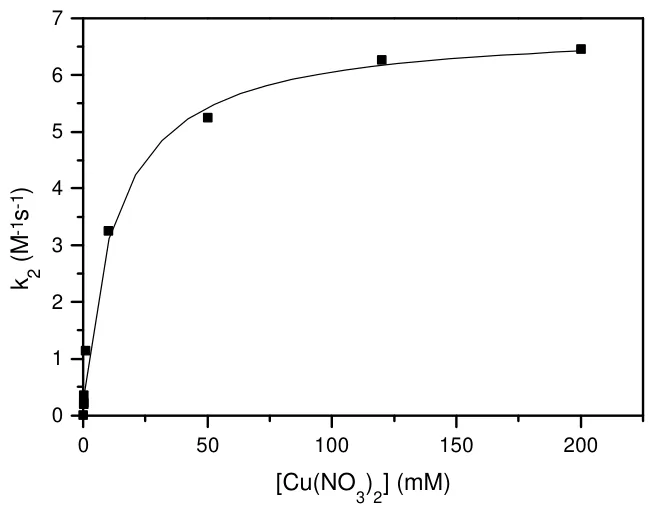
Figure 2.2. Second-order rate constant for the Diels-Alder reaction of 2.4a with 2.5 in aqueous solution as a function of the concentrations of copper(II)nitrate.
In organic solvents Lewis-acid catalysis also leads to large accelerations of the Diels-Alder reaction. Table 2.2 shows the rate constants for the Cu2+-catalysed Diels-Alder reaction between 2.4a and 2.5 in different solvents.
Table 2.2. Apparent second-order rate constants (kapp) for the Cu2+-ion catalysed reaction of 2.4a and 2.4g with 2.5 and ratios of the rate constants for the catalysed and uncatalysed reaction in different solvents at 25 °C.
| solvent | [Cu2+] (mM) | 2.4a | 2.4g | |
|---|---|---|---|---|
| kapp (M−1s−1) | kapp / kuncat. | kapp (M−1s−1) | ||
| acetonitrile | 10 | 2.21 | 1.58·106 | 0.497 |
| ethanol | 10 | 0.769 | 2.01·104 | 0.543 |
| water | 10 | 3.25 | 8.08·102 | 2.13 |
| 2,2,2-trifluoroethanol | 0.10 | 15.6 | 2.31·103 | |
Relative to the uncatalysed reaction in acetonitrile, the presence of Lewis acids leads to accelerations in the order of 106-107. The relatively large solvent effect of water observed in the uncatalysed reaction (Table 2.1) is strongly diminished for the catalysed reaction. This trend can be rationalised as follows. For the Lewis-acid catalysed reactions the hydrogen bonding part of the acceleration will be largely taken over by the Lewis-acid, so it is likely that only the hydrophobic effect will remain. This contribution will not be unaffected by the catalyst either, since the catalyst will partly destroy the hydrophobic character of the hydration shell of the dienophile in the initial state. This will result in a significantly smaller aqueous solvent effect on the catalysed reaction. Note that the effect of the catalyst in acetonitrile, quantified by the ratio of the rate constants for the catalysed reaction and the uncatalysed counterpart, is larger than in any of the protic solvents. This trend further underlines the observation that the activation of Diels-Alder reactions by hydrogen-bonding and by Lewis-acid catalysis are not additive.
Surprisingly, the highest catalytic activity is observed in TFE. One might envisage this to be a result of the poor interaction between TFE and the copper(II) cation, so that the cation will retain most of its Lewis-acidity. In the other solvents the interaction between their electron-rich hetero atoms and the cation is likely to be stronger, thus diminishing the efficiency of the Lewis-acid catalysis. The observation that Cu(NO3)2 is only poorly soluble in TFE and much better in the other solvents used, is in line with this reasoning.
Rate constants for the Diels-Alder reaction of 2.4b-e have also been determined. The results are shown in Table 2.3. These data allow an analysis of the influence of substituents on the Lewis-acid catalysed Diels-Alder reaction. This is interesting, since there are indications for a relatively large charge separation in the activated complex of the catalysed reaction compared to the uncatalysed one in organic solvents67. This charge separation might induce a larger effect of substituents on the rate of the catalysed reaction. The data of Table 2.3 have been analysed in terms of the Hammett equation68:
Table 2.3. Apparent second-order rate constants (M−1s−1) of the Cu2+-catalysed Diels-Alder reaction of 2.4b-e with 2.5 in different solvents at 25°C.
| solvent | 2.4b | 2.4c | 2.4d | 2.4e | 2.4g |
|---|---|---|---|---|---|
| acetonitrile | 0.594 | 0.472 | 0.240 | 0.0689 | 0.497 |
| ethanol | 0.382 | 0.309 | 0.162 | 0.0510 | 0.543 |
| water | 1.23 | 1.11 | 0.654 | 0.262 | 2.13 |
| 2,2,2-trifluoroethanol | 3.31 | 3.22 | 1.52 | 0.549 |
$$\log\left(\frac{k_x}{k_0}\right) = \rho \cdot \sigma_x \qquad (2.1)$$
Herein kx is the rate constant for a dienophile with substituent x; k0 is the corresponding rate constant for unsubstituted 2.4c; σx is the substituent constant for substituent x and ρ is the reaction constant, defined as the slope of the plot of log (kx / k0) versus σx. The parameter ρ is a measure of the sensitivity of the reactions towards introduction of substituents. Figure 2.3 and Table 2.4 show the results of correlating the kinetic data for the reaction of 2.4a-e with 2.5 with σ+.
The fact that good correlations are observed with σ+ rather than with σ, is indicative of a strong influence of the substituent through a direct resonance interaction with a positive charge in the reacting system. The ρ-values are positive, which is expected for substituted dienophiles in a normal electron demand Diels-Alder reaction. Furthermore, the ρ-values do not exceed unity and are not significantly different from literature values reported for the uncatalysed reaction69. It is tempting to conclude that the charge separation in the activated complex of the catalysed reactions is also not significantly different from that in the uncatalysed reaction. However this conclusion is not valid. Since it is reasonable to assume that the initial state of the catalysed reaction (the dienophile - Lewis-acid complex) is more polarised than the initial state of the uncatalysed reaction, it is not justified to make a direct comparison between the activated complexes of the rate-limiting step for the uncatalysed and catalysed reactions simply on the basis of ρ-values. Moreover, the ρ-values are likely to reflect, to a small extent, the substituent effect on the complexation step.
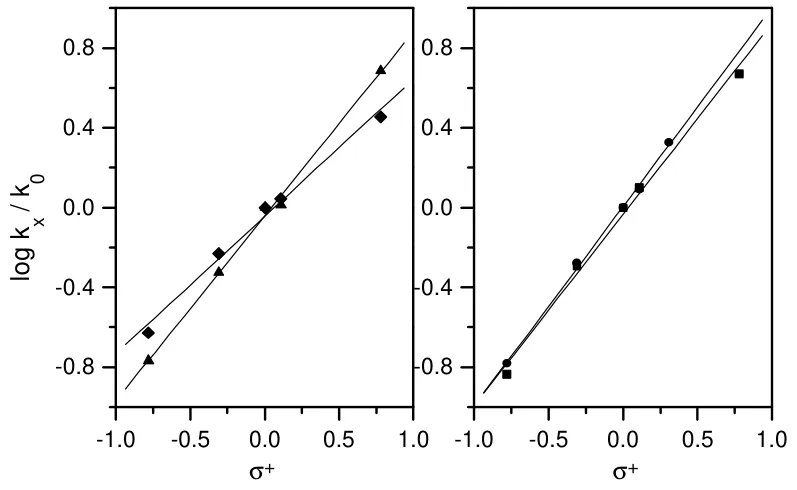
Figure 2.3. Hammett plots for the Diels-Alder reaction of 2.4a-e with 2.5 in water (◆); 1,1,1-trifluoroethanol or 2,2,2-trifluoroethanol (in the editors’ view) (▲); ethanol (●) and acetonitrile (■).
Among the different solvents, water occupies a special position with a relatively small ρ-value. This is anticipated, since water is the solvent with the strongest interactions with the partial charges of the reacting system and the substituents. Substituent effects are usually larger in solvents that only weakly interact with these partial charges70 and, hence, have maximal values in vacuum71. The ρ-values are of comparable magnitude in the different solvents, which makes it unlikely that there is a significant change in the extent of charge separation during the Diels-Alder reaction upon changing the solvent72.
The rate constants for the catalysed Diels-Alder reaction of 2.4g with 2.5 (Table 2.3) demonstrate that the presence of the ionic group in the dienophile does not diminish the accelerating effect of water on the catalysed reaction. Comparison of these rate constants with those for the nonionic dienophiles even seems to indicate a modest extra aqueous rate enhancement of the reaction of 2.4g. It is important to note here that no detailed information has been obtained about the exact structure of the catalytically active species in the organic solvents. For example, ion pairing is likely to occur in the organic solvents.
Table 2.4. Solvent effect on the Hammett ρ-values for the Diels-Alder reaction of 2.4 with 2.5 catalysed by Cu(NO3)2 at 25°C.
| solvent | [Cu2+] (mM) | ρ | r |
|---|---|---|---|
| acetonitrile | 10 | 0.96 | 0.997 |
| ethanola | 10 | 1.00 | 0.999 |
| water | 10 | 0.69 | 0.997 |
| 2,2,2-trifluoroethanol | 0.10 | 0.90 | 0.990 |
a For unknown reasons the point for 2.4a in the Hammett plot for ethanol strongly deviates from the otherwise good correlation. The data for 2.4a in ethanol have therefore not been used in the calculation of ρ. Instead the data for another compound 2.4 with X = CO2CH3 (k2 = 0.655 M−1s−1) were used in the correlation.
2.2.4 Variation of the catalyst
In the previous section efficient catalysis of the Diels-Alder reaction by copper(II)nitrate was encountered. Likewise, other bivalent metal ions that share the same row in the periodic system show catalytic activity. The effects of cobalt(II)nitrate, nickel(II)nitrate, copper(II)nitrate and zinc(II)nitrate will be described in this section. Of the lanthanides, LaCl3, Yb(OTf)3 and Eu(NO3)3 have been tested, but these salts failed to reveal any catalytic activity with respect to the Diels-Alder reaction of 2.4. Also Kobayashi’s Sc(OTf)3 did not significantly promote this reaction. Likewise, salts of soft metals, PdCl2 and Hg(NO3)2, have been tested, but these salts catalysed the hydration and oligomerisation of the diene rather than the desired Diels-Alder reaction.
The mechanism by which Lewis-acids can be expected to affect the rate of the Diels-Alder reaction in water is depicted in Scheme 2.6. The first step in the cycle comprises rapid and reversible coordination of the Lewis-acid to the dienophile, leading to a complex in which the dienophile is activated for reaction with the diene. After the irreversible Diels-Alder reaction, the product has to dissociate from the Lewis-acid in order to make the catalyst available for another cycle. The overall rate of the reaction is determined by Ka, kcat, and Kd.
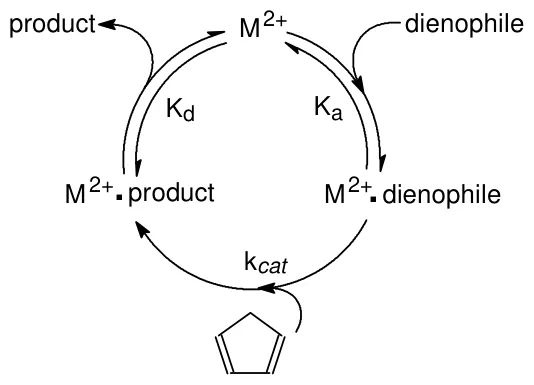
Scheme 2.6. Catalytic cycle for a Lewis-acid catalysed Diels-Alder reaction.
In the kinetic runs always a large excess of catalyst was used. Under these conditions Kd does not influence the apparent rate of the Diels-Alder reaction. Kinetic studies by UV-vis spectroscopy require a low concentration of the dienophile (~10−5 M). The use of only a catalytic amount of Lewis-acid will seriously hamper complexation of the dienophile because of the very low concentrations of both reaction partners under these conditions. The contributions of Ka and kcat to the observed apparent rate constant have been determined by measuring kapp and Ka separately73.
In determining the values of Ka use is made of the pronounced shift of the UV-vis absorption spectrum of 2.4 upon coordination to the catalytically active ions as is illustrated in Figure 2.474. The occurrence of an isosbestic point can be regarded as an indication that there are only two species in solution that contribute to the absorption spectrum: free and coordinated dienophile. The exact method of determination of the equilibrium constants is described extensively in reference 75 and is summarised in the experimental section. Since equilibrium constants and rate constants depend on the ionic strength, from this point onward, all measurements have been performed at constant ionic strength of 2.00 M using potassium nitrate as background electrolyte76.
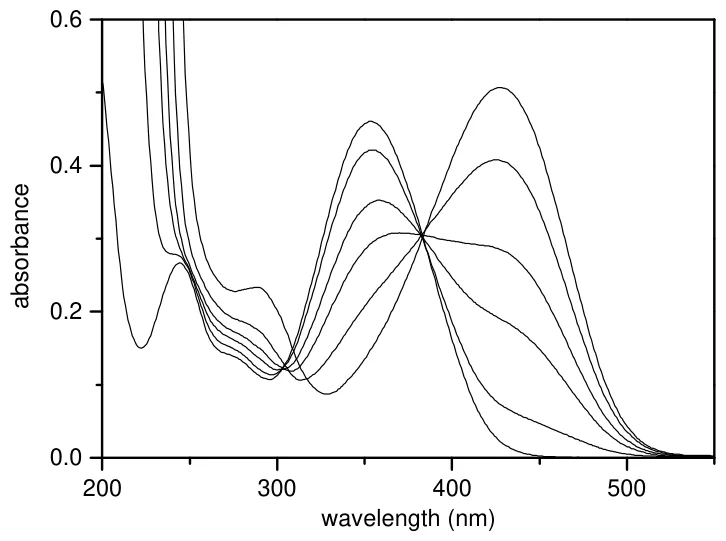
Figure 2.4. UV-vis absorption spectrum of 2.4e in water at concentrations of copper(II)nitrate varying between 0 and 10 mM.
The equilibrium constants obtained using the metal-ion induced shift in the UV-vis absorption spectrum are in excellent agreement with the results of the Lineweaver-Burke or Lineweaver-Burk (in the editors’ view) analysis77 of the rate constants at different catalyst concentrations. For the copper(II)ion catalysed reaction of 2.4a with 2.5 the latter method gives a value for Ka of 432 versus 425 using the spectroscopic method.
From the equilibrium constant and the apparent rate constant, the rate constant for reaction of the metal-ion (Mn+) coordinated dienophile (kcat) can be calculated using equation 2.2 (derived in Appendix 2.1).
$$k_{app} = \frac{K_a \cdot [\mathrm{M}^{n+}]_t \cdot k_{cat}}{1 + K_a \cdot [\mathrm{M}^{n+}]_t} \qquad (2.2)$$
Equilibrium constants and second-order rate constants for Co2+, Ni2+, Cu2+ and Zn2+ catalysed of the reaction or catalysis of the reaction (in the editors’ view) of 2.4c with 2.5 in water at constant ionic strength (2.00 M KNO3) are shown in Table 2.5. Clearly, Cu2+ is the best catalyst with respect to both complexation and rate of reaction with 2.5. The trend observed in rate and equilibrium constants follows the empirical Irving-Williams order78 Co2+ < Ni2+ < Cu2+ > Zn2+. This order is usually observed for equilibrium constants of binding processes and catalytic activities of these metal ions. This order can be accounted for using ligand field theory79.
Table 2.5. Apparent second-order rate constants (kapp) for the catalysed Diels-Alder reaction between 1c and 2 or 2.4c and 2.5 (in the editors’ view), equilibrium constants for complexation of 2.4c to different Lewis-acids (Ka) and second-order rate constants for the reaction of these complexes with 2.5 (kcat) in water at 2M ionic strength at 25°C.
| Lewis-acid | kapp (M−1s−1)a | Ka (M−1) | kcat (M−1s−1) |
|---|---|---|---|
| Co2+ | 4.53·10−2 | 1.17·102 | 8.40·10−2 |
| Ni2+ | 8.26·10−2 | 6.86·102 | 9.46·10−2 |
| Cu2+ | 2.36 | 1.16·103 | 2.56 |
| Zn2+ | 4.29·10−2 | 7.28·101 | 1.18·10−1 |
a For [M2+] = 10 mM.
The presence of a ligand in an octahedral arrangement around a metal ion causes a splitting in the energy level of the d-electrons of the metal into two new levels: t2g and eg (Figure 2.5). Depending on the occupation of the d-orbitals, this ligand field splitting results in a stabilisation of the complex. The extent of splitting is dependent on the ligand and follows the spectrochemical series. In general, bidentate ligands increase the splitting when compared to water. Hence, in the metal-2.4 complexes ligand field splitting gives rise to an extra stabilisation as compared to the aquo complex. On the basis of these observations and considering the occupation of the t2g and eg levels for the different ions, ranging from d7 to d10, one would expect the order Co2+ < Ni2+ > Cu2+ > Zn2+ with respect to the magnitude of Ka. However, copper(II) occupies a special position, which is a result of the Jahn-Teller effect. Of the three electrons in the eg level, two are present in the dz2 orbital and only one in the dx2-dy2 or dx2−y2 (in the editors’ view) orbital. Consequently, those ligands that occupy the four equatorial sites experience repulsion due to only one d-electron and are bound more strongly than those that occupy the two axial positions, where they experience the two electrons of the dz2 orbital. When combining the Jahn-Teller effect with ligand field theory, one arrives at the Irving-Williams series.
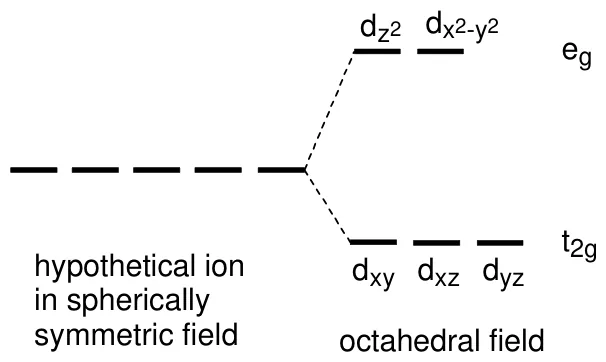
Figure 2.5. Splitting of the d energy level in an octahedral complex.
A quantitative correlation between rate and equilibrium constants for the different metal ions is absent. The observed rate enhancements are a result of catalysis by the metal ions and are clearly not a result of protonation of the pyridyl group, since the pH’s of all solutions were within the region where the rate constant is independent of the pH (Figure 2.1).
Catalysis by the four metal ions was also compared with respect to their sensitivity towards substituents in the dienophile. To this end the equilibrium constants for complexation of 2.4a-g to the four different ions were determined. The results are shown in Table 2.6.
Table 2.6. Equilibrium constants from or for (in the editors’ view) complexation of 2.4a, 2.4b, and 2.4d-g to different metal ions (Ka) and second-order rate constants for the Diels-Alder reaction of these complexes with 2 or 2.5 (in the editors’ view) (kcat) in water at 2.00 M ionic strength and 25°C.
| Co2+ | Ni2+ | Cu2+ | Zn2+ | |||||
|---|---|---|---|---|---|---|---|---|
| Ka | kcat | Ka | kcat | Ka | kcat | Ka | kcat | |
| 2.4a | 86.9 | 2.84·10−1 | 3.18·102 | 5.69·10−1 | 4.25·102 | 11.1 | 34.5 | 5.03·10−1 |
| 2.4b | 112 | 1.02·10−1 | 5.79·102 | 1.18·10−1 | 1.06·103 | 2.82 | 57.3 | 1.22·10−1 |
| 2.4d | 127 | 4.67·10−2 | 9.47·102 | 4.61·10−2 | 1.55·103 | 1.36 | 88.1 | 5.81·10−2 |
| 2.4e | 178 | 2.11·10−2 | 1.50·103 | 1.91·10−2 | 2.76·103 | 0.518 | 161 | 2.48·10−2 |
| 2.4f | 1.32·103 | 2.59 | ||||||
| 2.4g | 77 | 1.64·10−1 | 5.04·102 | 1.57·10−1 | 8.86·102 | 5.72 | 50.3 | 2.17·10−1 |
Good to excellent Hammett plots were obtained using σ+ substituent constants (see Figure 2.6). Surprisingly, literature examples of good Hammett correlations of stability constants are rare80. The ρ-values are shown in Table 2.7.
Table 2.7. Hammett ρ-values for complexation of 2.4a-e to different Lewis-acids and for rate constants (kcat) of the Diels-Alder reaction of 2.4a-e with 2.5 catalysed by different Lewis-acids in water at 2.00 M ionic strength at 25°C.
| Lewis-acid | complexation | rate constants | ||
|---|---|---|---|---|
| ρ | r | ρ | r | |
| Co2+ | −0.19 | 0.981 | 0.72 | 0.999 |
| Ni2+ | −0.44 | 0.999 | 0.94 | 0.999 |
| Cu2+ | −0.51 | 0.997 | 0.85 | 0.999 |
| Zn2+ | −0.42 | 0.991 | 0.84 | 0.998 |
As anticipated, the complexation is characterised by negative ρ-values, indicating that the binding process is favoured by electron donating substituents. The order of the ρ-values for complexation of the different Lewis-acids again follows the Irving-Williams series.
The effect of substituents on the rate of the reaction catalysed by different metal ions has also been studied. Correlation with σ+ resulted in perfectly linear Hammett plots. Now the ρ-values for the four Lewis-acids are of comparable magnitude and do not follow the Irving-Williams order. Note that the substituents have opposing effects on complexation, which is favoured by electron donating substituents, and reactivity, which is increased by electron withdrawing substituents. The effect on the reactivity is clearly more pronounced than the effect on the complexation equilibrium.
So far the four metal ions have been compared with respect to their effect on (1) the equilibrium constant for complexation to 2.4c, (2) the rate constant of the Diels-Alder reaction of the complexes with 2.5 and (3) the substituent effect on processes (1) and (2). We have tried to correlate these data with some physical parameters of the respective metal-ions. The second ionisation potential of the metal should, in principle, reflect its Lewis acidity. Furthermore the values for kcat might be strongly influenced by the Lewis-acidity of the metal. A quantitative correlation between these two parameters is, however, not observed. Alternatively, the acidity of the hexaaquo metal cation can be taken as a measure of Lewis-acidity but this parameter did not exhibit a satisfactory correlation with the above data either.
2.2.5 Endo-exo selectivity
The reaction between 2.4 and 2.5 yields four products: two enantiomeric endo products and two enantiomeric exo products. In this section the effect of the solvent, the Lewis-acid and the substituents on the endo-exo selectivity are described. Chapter 3 will mainly focus on aspects dealing with the enantioselectivity of the reaction.
The endo and the exo isomer (Scheme 2.4) give rise to two different NMR-spectra with several peaks that are well separated. From the integration of those signals the endo-exo ratio can be determined. Measurement of the endo-exo ratio by GC was not successful, most likely because the adducts are subject to a retro-Diels-Alder reaction at elevated temperatures. Assignment of the signals to the different isomers was based on COSY and NOESY spectra. Interpretation of the spectra starts with the identification of the long-range coupling between H7s and H2, characteristic for norbornene systems81. The chemical shifts of the other protons can now easily be deduced. Discrimination between endo and exo adduct was subsequently based upon the following considerations. A NOE signal between H3 and a proton on the phenyl ring and a long-range coupling between H2 and a proton of the phenyl ring are both characteristic for the endo-isomer. Furthermore, the downfield shift of H3 is larger in the endo isomer, where it experiences the influence of the nearby carbonyl-pyridyl group, than in the endo or exo (in the editors’ view) adduct, where H3 is situated next to the phenyl group. Comparison of the NMR data with literature data reported for the Diels-Alder adducts of cyclopentadiene and substituted cinnamic acids81 further supports the assignments.
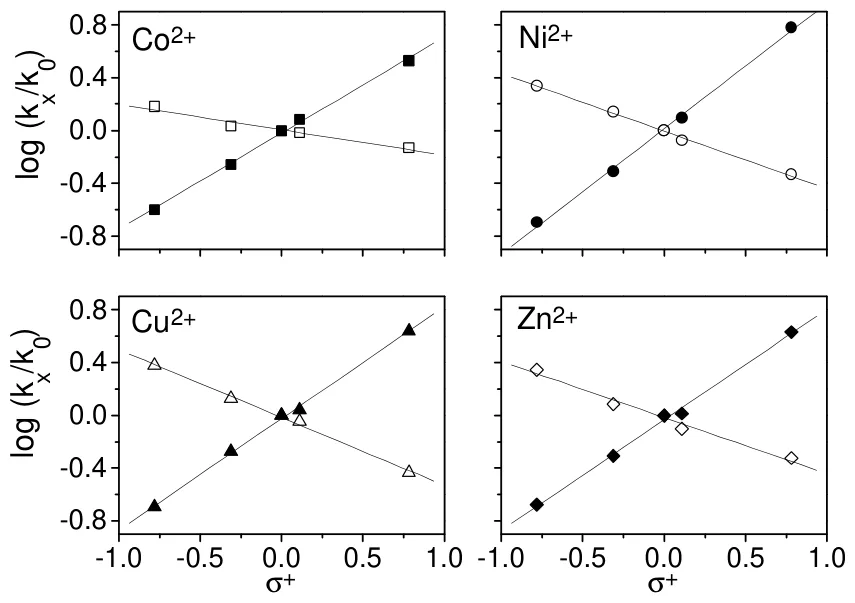
Figure 2.6. Hammett plots for the equilibrium constant Ka of binding of 2.4 to Co2+, Ni2+, Cu2+ and Zn2+ (open symbols), and for the rate constants of reaction of the metal-ion - 2.4 complex with 2.5 (solid symbols).
The effects of the solvent on the endo-exo selectivity of the uncatalysed and Cu2+-catalysed reaction are shown in Table 2.8. For the uncatalysed reaction the endo isomer is preferred over the exo isomer. This tendency becomes even more pronounced in more polar and protic solvents, which is in good agreement with previous studies of the solvent effect on the selectivity of Diels-Alder reactions (see Section 1.2.3). For the Cu2+-catalyzed reaction the differences between the selectivities in the four solvents are much smaller. Obviously, water does not induce a higher selectivity in this case and there appears to be no indication for enforced hydrophobic interactions favouring the endo activated complex. Possibly, this effect is overwhelmed by differences in efficiency of activation by the Lewis-acid in the different solvents. It should be noted that the energy differences underlying the aqueous enhancement of endo-exo selectivity are in the range of 4 kJ/mole. In contrast, water lowers the activation energy for the Diels-Alder reaction of 2.4a and 2.5 by 14 kJ/mol.
Table 2.8. Solvent effect on the endo-exo selectivity (% endo - % exo) of the uncatalysed and Cu2+-ion catalysed Diels-Alder reaction between 2.4c and 2.5 at 25°C.
| solvent | uncatalysed | 10 mM Cu2+ |
|---|---|---|
| acetonitrile | 67-33 | 94-6 |
| ethanol | 77-23 | 96-4 |
| water | 84-16 | 93-7 |
| 2,2,2-trifluoroethanol | 87-13 |
Table 2.9 shows the endo-exo selectivities for the Diels-Alder reaction between 2.4c and 2.5 catalysed by Brønsted-acid and four different metal ions in water.
Table 2.9. Effect of different catalysts on the selectivity of the Diels-Alder reaction between 2.4c and 2.5 in water at 25°C.
| catalyst | % endo - % exo |
|---|---|
| 10 mM Co(NO3)2 | 87-13 |
| 10 mM Ni(NO3)2 | 86-14 |
| 10 mM Cu(NO3)2 | 93-7 |
| 10 mM Zn(NO3)2 | 86-14 |
| 10 mM HCl | 94-6 |
Copper is clearly the most selective metal-ion catalyst. Interestingly, proton catalysis also leads to high selectivities. This is a strong indication that selectivity in this catalysed Diels-Alder reaction does not result from steric interactions.
Table 2.10 shows the effect of substituents on the endo-exo ratio. Under homogeneous conditions there is hardly any substituent effect on the selectivity. Consequently the substituents must have equal effects on the Gibbs energies of the endo and the exo activated complex.
Table 2.10. Substituent effect on the selectivity of the Cu2+-catalysed reaction of 2.4 with 2.5 in water at 25°C.
| dienophile | % endo - % exo |
|---|---|
| 1a or 2.4a; 1b–1e likewise 2.4b–2.4e (in the editors’ view) | 88-12a |
| 1b | 92-8a |
| 1c | 93-7 |
| 1d | 93-7 |
| 1e | 93-7 |
a The dienophile was not completely dissolved.
In summary, the effects of a number of important parameters on the catalysed reaction between 2.4 and 2.5 have been examined, representing the first detailed study of Lewis-acid catalysis of a Diels-Alder reaction in water. Crucial for the success of Lewis-acid catalysis of this reaction is the bidentate character of 2.4. In Chapter 4 attempts to extend the scope of Lewis-acid catalysis of Diels-Alder reactions in water beyond the restriction to bidentate substrates will be presented.