Jean-Pierre Senet - The Recent Advance in Phosgene Chemistry
1-1 History of phosgene chemistry
The story of phosgene discovery (Ref. 1)
In the early beginning of the 19th century, chlorine gas was still uniformly considered as a combination of muriatic acid (hydrochloric acid) and oxygen called « oxymuriatic acid ».
However, in 1810, Dr. John Davy, Sir Humphry Davy’s younger brother, expressed the opinion that oxymuriatic acid was, as a matter of fact, an elementary substance. This opinion was not at all accepted and several scientists, in order to refute the arguments of Dr. Davy, tried therefore to remove oxygen content of oxymuriatic acid by treatment with charcoal at a white heat or with carbon monoxide [Scheme 1].
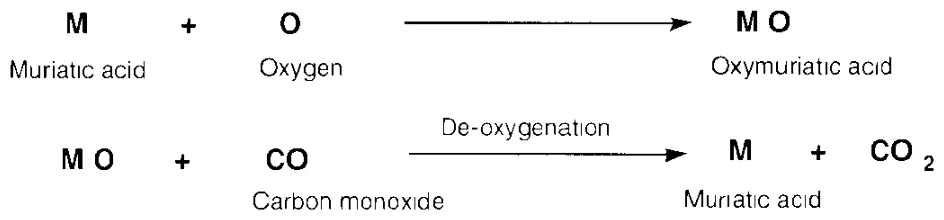
Scheme 1. Expected de-oxygenation of oxymuriatic acid (chlorine).
This was the opening of the so called « chlorine controversy » between Dr. John Davy and Dr. Murray, fervent supporter of the official theory. This debate took the form of letters contributed to « Nicholson’s Journal », both authors arguing from their own experiments.
In an experiment of fundamental importance, after having exposed a mixture of one volume of carbonic oxide and one volume of oxymuriatic acid to bright sunshine, Dr. Davy noticed that the color of the chlorine has entirely disappeared, and that the remaining gas occupied the space of one volume. After addition of ammonia, he found no traces of carbonic oxide and observed an effervescence of the ammoniacal salt formed with nitric acid. He also noticed that the new gas resulting from the evident action of oxymuriatic acid and carbonic oxide did not fume when thrown into atmosphere and that it had a most intolerable suffocating odor and that water absorbed it very slowly.
These results were however again contested by Dr. Murray who, to support his opinion that oxymuriatic acid and carbon monoxide do not react, quoted unsuccessful trials from French chemists Gay-Lussac and Thenard :
« … mais à quelque dose qu’on ait mêlé le gaz acide muriatique oxigéné sec, et le gaz oxide de carbone préparé avec le fer et le carbonate de barite, quelque forte qu’ait été la lumière à laquelle on les a exposés, enfin quelque long qu’ait été le contact, il n’y a point eu d’action ».
At last, in an important and well-argued letter read to the Royal Society on February 6, 1812, Dr. Davy refuted all the arguments of Dr. Murray and, on the basis of careful and indisputable experiments, proved the reality of the new gas [Scheme 2].

Scheme 2. The discovery of phosgene.
To designate it, he suggested a simple name, that of Phosgene (or phosphene), from ancient Greek roots or roots φῶς and γίγνομαι: the Greek words are missing from the print (in the editors’ view) « light » and « to produce ».
The infancy of the phosgene chemistry
In spite of his neat discovery, Dr. Davy has not foreseen the prolific potentiality of phosgene as an outstanding building block and reagent in chemistry. However, while treating phosgene with ammonia, he was very close to another discovery of extreme importance, that of the elucidation of the nature of urea.
Dr. Davy noticed that phosgene dissolves in alcohol, but without mentioning any reaction.
In 1833, French chemist Jean-Baptiste Dumas while adding absolute ethyl alcohol in a flask containing phosgene, discovered its first synthetic derivative (Ref. 2). He noticed a strong and instant heating, and after work-up and analysis, he identified the resulting compound as a new chloroxicarbonic ether (ethyl chloroformate).
Dumas immediately had an inkling of the importance of phosgene chemistry with this prediction :
« L’acide chloroxicarbonique, qui peut tout aussi bien être considéré comme un chlorure d’oxide de carbone, offre une composition si simple et si remarquable que, s’il réalisait toutes les réactions que l’on a droit d’en espérer, on parviendrait à reproduire, à son aide, les combinaisons les plus curieuses de la chimie organique ».
Translation : « Phosgene exhibits such a simple and remarkable composition that, should it realize all the reactions one is entitled to hope for, one could reproduce, thanks to it, the strangest combinations in organic chemistry ».
All investigations since then have clearly fulfilled the expectation of Dumas who may be therefore considered as the pioneer in the chemistry of phosgene.
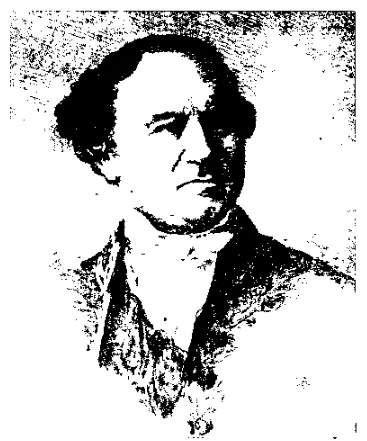
Jean-Baptiste DUMAS (1800-1884)
Pioneer in the Chemistry of Phosgene
1-2 Toxicity of phosgene
Phosgene is a highly toxic gas which was used as a chemical weapon during World War I.
At high concentration, it causes severe pulmonary irritation and can induce delayed pulmonary edema. It is the reason why all persons who have been exposed to phosgene, even in very low concentration, must see a physician immediately. Some relationships between phosgene concentrations in air and physiological effects on humans are summarized in table 1-1. The table 1-2 gives comparison between some toxic gases.
Table 1-1. Concentration-effect relationships of phosgene exposure in humans (Ref. 3).
| Perception of odor | > 0.4 ppm |
| Recognition of odor | > 1.5 ppm |
| Irritation in eyes, nose, throat, and bronchi | > 3 ppm |
| Beginning of lung damage | > 30 ppm-min |
| Clinical pulmonary edema | > 150 ppm-min |
| L(CT)0 | ~ 300 ppm-min |
| L(CT)50 | ~ 500 ppm-min |
| L(CT)100 | ~ 1300 ppm-min |
Table 1-2. Comparison between some toxic gases.
| Gas | Odor identification, ppm | L(CT)0-30 min exp., ppm |
|---|---|---|
| Phosgene | 1.5 | 10 |
| Chlorine | 1 | 873 |
| Carbon monoxide | No | 4 000 |
| Ammonia | 5 | 30 000 |
Due to these high toxicity properties, the presence of large quantities of phosgene on a site must be strictly treated as major hazard. The regulatory requirements in transportation and safety know-how in the handling and storage of phosgene, have restricted its uses to specialized companies. Custom synthesis is a common practice in this field, because the transportation of raw materials to phosgene producers is preferred to the transportation of phosgene itself.
1-3 Breakdown of phosgene consumption in the industry
Although information in this field is generally kept confidential, worldwide phosgene production is estimated to range from 6 to 8 millions tons/year.
The breakdown of phosgene consumption is the following :
– Di and polyisocyanates (TDI, TMDI) for polyurethanes … 85%
– Aromatic polycarbonates … 10%
– Manufacture of fine chemicals … 5%
The consumption of phosgene for fine chemicals, about 300,000 T/year is roughly divided into :
– 50% for peresters and percarbonates used as polymerization initiators,
– 25 % for agrochemicals,
– 25 % for pharmaceuticals and dyestuffs.
1-4 Classification of phosgene reactions
Since the pioneering study by Dumas, phosgene chemistry, especially devoted to fine chemicals, has grown tremendously and still remains in an active field of investigation with 2500 papers and patents published each year. Almost all the chemical reactions of phosgene can be divided into two classes, depending on wether or whether (in the editors’ view) the structural unit remains in the final product or not.
First class : Reaction of phosgene as a building block to introduce the structural unit « carbonyl ». Some examples are given in table 1-3.
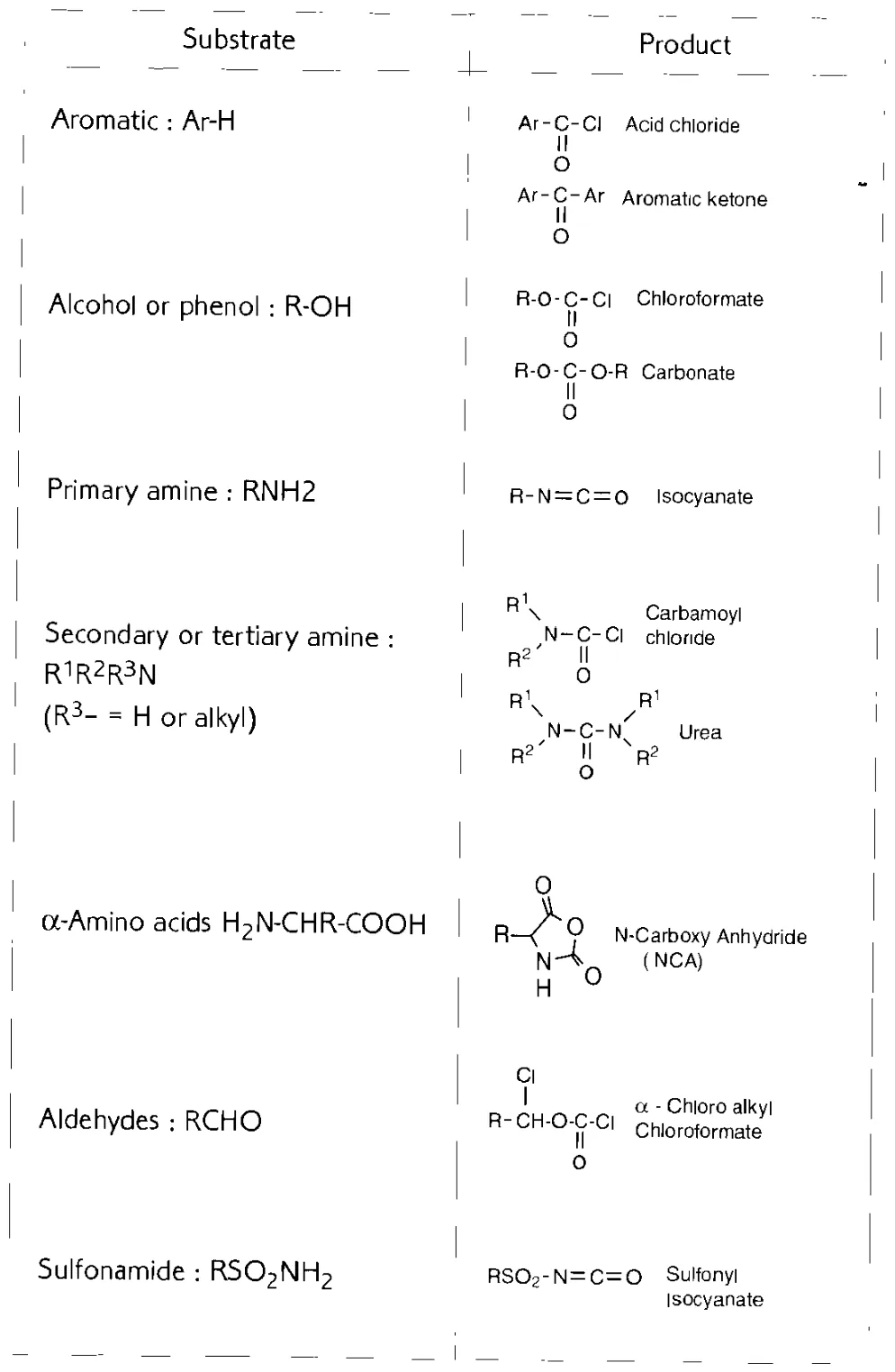
Table 1-3. Examples of phosgene reactions to introduce the group >C=O.
Second class : Phosgene and derivatives as reagents
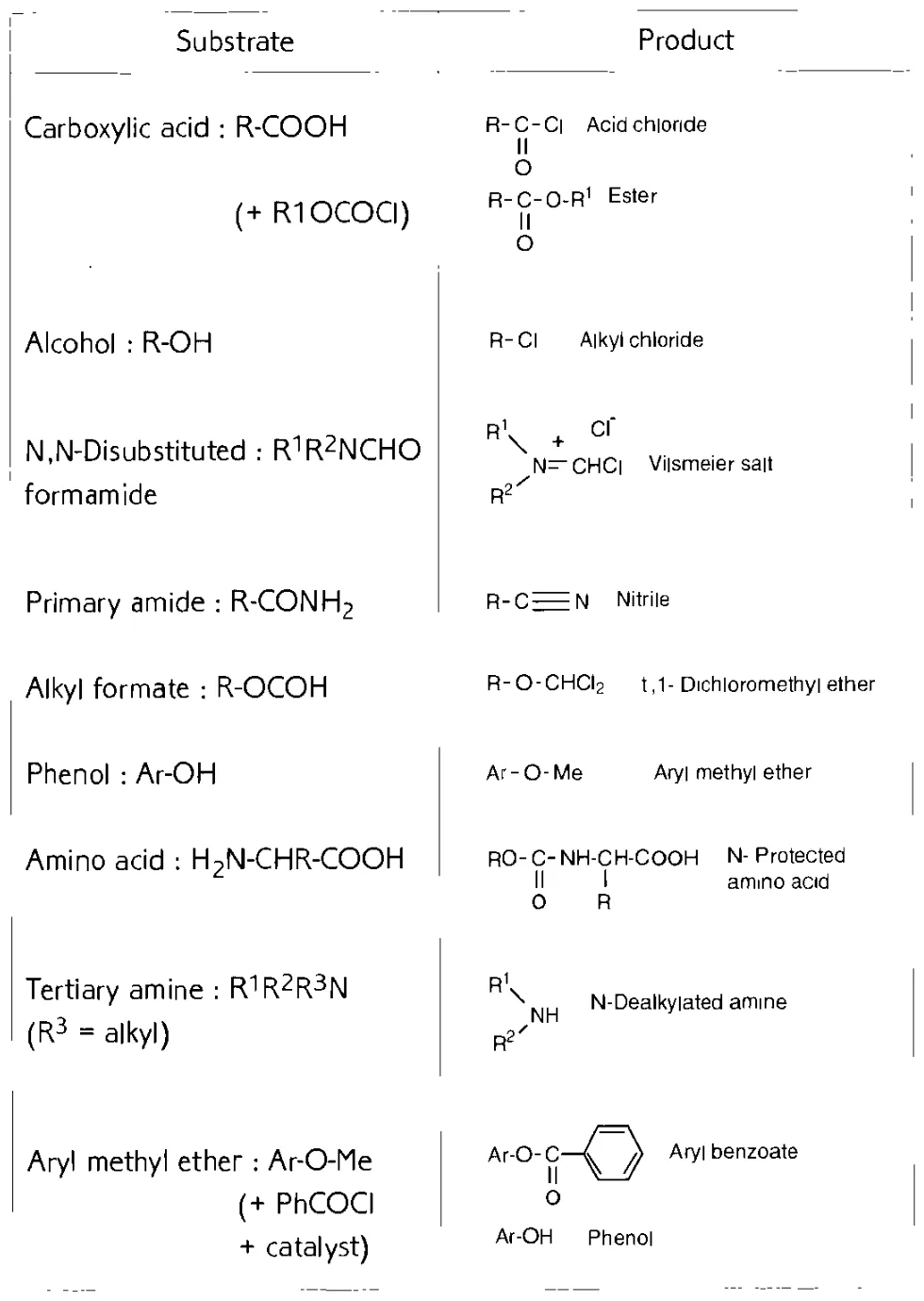
Table 1-4. Examples of phosgene and derivatives as reagents.